ensign
Ensign is a military rank.
All 1 facts, and where they come from
Facts
1 facts · 0 confirmed by two sources · 0 cited · 1 from one source
Where this comes from
Papalocal keeps its own record. It started from these sources; what each one said is kept here as it was copied, so a change on their side never changes this page by itself. Tap one to read its version.
What Wikidata says · copied November 17, 2026 · revision 2538713704
- Described as
- lowest ranking commissioned officer, etymologically the carrier of the ensign flag
- Other names
- flag bearer, standard bearer
- What it is
- military rank
- Wikipedias with a page
- 20
Wikidata item Q14595679 (wikidata.org/wiki/Q14595679), public domain (CC0). Copied 2026-11-17.
What Wikipedia says · copied November 17, 2026 · revision 1383757494
Ensign (; Late Middle English, from Old French enseigne ["mark", "symbol", "signal"; "flag", "standard", "pennant"], from Latin insignia [plural]) is a junior rank of a commissioned officer in the armed forces of some countries, normally in the infantry or navy.
As the junior officer in an infantry regiment was traditionally the carrier of the regimental colours, the rank acquired the name "ensign". This rank has generally been replaced in army ranks by second lieutenant. An ensign was generally the lowest-ranking commissioned officer, except where the rank of subaltern existed.
In contrast, the Arab rank of ensign (لواء, liwa'), as the word is usually rendered into English, is not the carrier of a unit's ensign but the commander of that unit, and is today the equivalent of major general.
According to Thomas Venn's 1672 Military and Maritime Discipline in Three Books, an ensign's duties included not only carrying the colors but assisting the captain and lieutenant of a company and, in their absence, exercising their authority.
"Ensign" is enseigne in French, and chorąży in Polish, each of which derives from a term for a flag. The same origin is the Soviet and the Russian rank of praporshchik, which was the top non-commissioned rank. The Spanish alférez and Portuguese alferes is a junior-officer rank below lieutenant associated with carrying the flag, and so is often translated as "ensign". Unlike the rank in other languages, the Spanish and Portuguese etymology has nothing to do with flags, but instead comes from the Arabic for "cavalier" or "knight".
Fähnrich, in German, comes from an older German military title, Fahnenträger (flag-bearer); however, it is an officer-cadet rank, not a junior officer. The same applies to the Dutch vaandrig, which has a parallel etymology.
The Finnish vänrikki derives from the same Germanic root word through the Swedish fänrik, but denotes the lowest rank of reserve officer in the Finnish ground forces, and is distinct from cadet ranks.
In the Swedish armed forces, fänrik is the lowest commissioned rank.
In the German Landsknecht armies (c. 1480), there existed the equivalent rank of cornet, for a man who carried the troop standard (known as a "cornet"). The cognate Dutch term kornet is still used in the Netherlands' artillery and cavalry units.
From the Wikipedia article “Ensign (rank)” (en.wikipedia.org/wiki/Ensign_(rank)), by its contributors, under CC BY-SA 4.0 (creativecommons.org/licenses/by-sa/4.0/). Copied 2026-11-17; not changed.
Confirmed Two sources agree. Cited One source, and it names where it got it. One source One source, without a reference of its own. Sources disagree The sources disagree. We show the best-supported value and keep theirs below.
People connected 7
Military rank
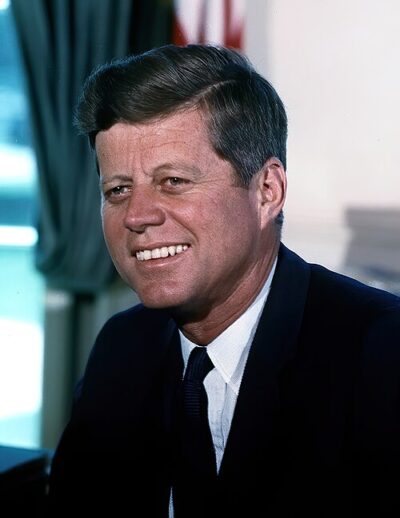 John F. Kennedy (1941–1942)president of the United States from 1961 to 1963 (1917–1963)
 Sunita Williams (1987)American astronaut and naval officer
 Hunter BidenAmerican businessman and lobbyist (born 1970)
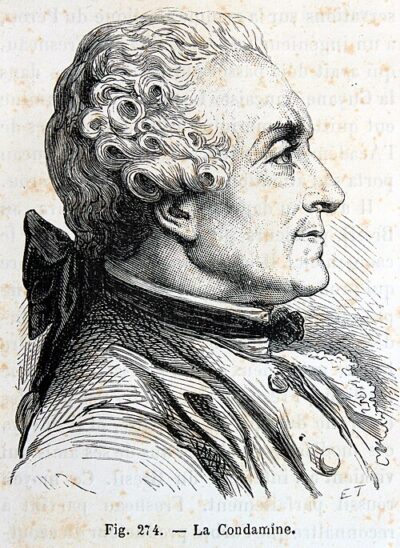 Charles Marie de La CondamineFrench explorer, geographer, and mathematician (1701-1774)
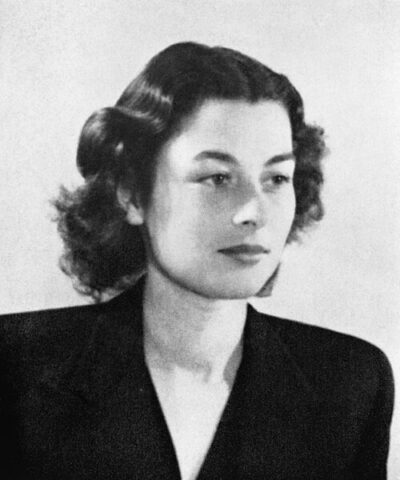 Violette SzaboFrench-British SOE spy
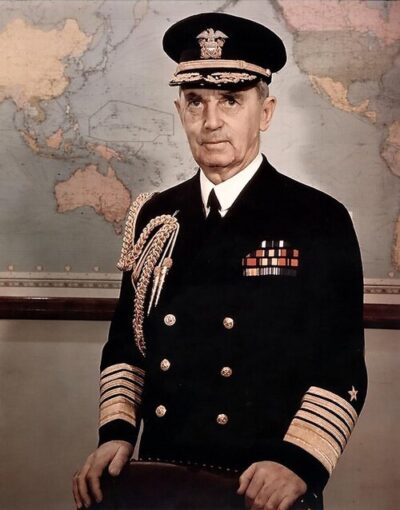 William D. Leahy (1899–)United States admiral, ambassador to France, Chief of Staff (1875–1959)