
Fermat Prize
Fermat Prize is a science award. It was created in 1989. It is given by Institut de Mathématiques de Toulouse.
- Given by
- Institut de Mathématiques de Toulouse
- Country
- France
- Created
- 1989
All 6 facts, and where they come from
Facts
6 facts · 0 confirmed by two sources · 0 cited · 6 from one source
Where this comes from
Papalocal keeps its own record. It started from these sources; what each one said is kept here as it was copied, so a change on their side never changes this page by itself. Tap one to read its version.
What Wikidata says · copied November 17, 2026 · revision 2342799244
- Described as
- award
- What it is
- science award
- Created
- 1989
- Country
- France
- Given by
- Institut de Mathématiques de Toulouse
- Named after
- Pierre de Fermat
- Official website
- http://www.math.univ-toulouse.fr/FermatPrize
- Wikipedias with a page
- 17
Wikidata item Q1367879 (wikidata.org/wiki/Q1367879), public domain (CC0). Copied 2026-11-17.
What Wikipedia says · copied November 17, 2026 · revision 1375531376
The Fermat Prize of mathematical research biennially rewards research works in fields where the contributions of Pierre de Fermat have been decisive:
Statements of variational principles
Foundations of probability and analytic geometry
Number theory.
The spirit of the prize is focused on rewarding the results of research accessible to the greatest number of professional mathematicians within these fields. The Fermat Prize was created in 1989 and is awarded once every two years in Toulouse by the Institut de Mathématiques de Toulouse. The amount of the Fermat Prize has been fixed at 20,000 Euros for the twelfth edition (2011).
From the Wikipedia article “Fermat Prize” (en.wikipedia.org/wiki/Fermat_Prize), by its contributors, under CC BY-SA 4.0 (creativecommons.org/licenses/by-sa/4.0/). Copied 2026-11-17; not changed.
Confirmed Two sources agree. Cited One source, and it names where it got it. One source One source, without a reference of its own. Sources disagree The sources disagree. We show the best-supported value and keep theirs below.
People connected 10
Won it
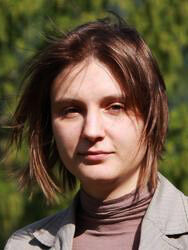 Maryna Viazovska (2019)Ukrainian mathematician (born 1984)
 Peter Scholze (2015)German mathematician
 Martin Hairer (2013)Austrian-British mathematician working in stochastic analysis
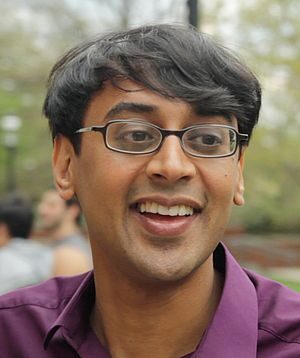 Manjul Bhargava (2011)Indo-Canadian mathematician
 Cédric Villani (2009)French mathematician and politician
 Elon Lindenstrauss (2009)Israeli mathematician
 Wendelin Werner (2001)Mathematician and Fields Medallist
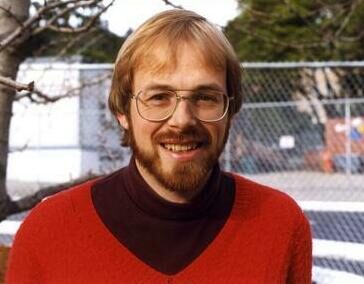 Richard Taylor (2001)British mathematician
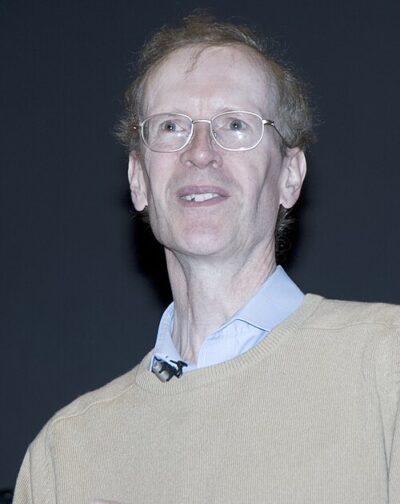 Andrew Wiles (1995)English mathematician (1953–)
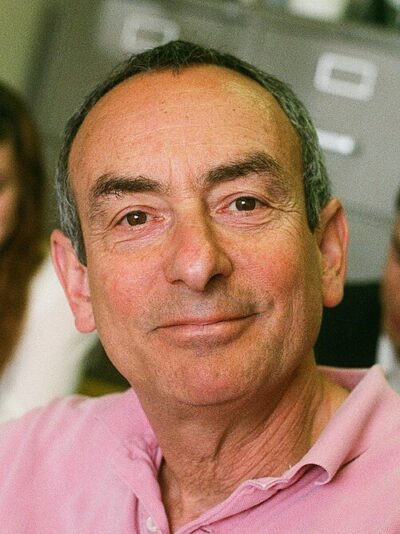 Kenneth Ribet (1989)American mathematician,researcher and supervisor
