
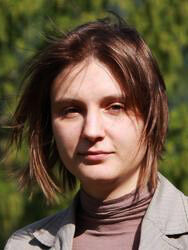
Maryna Viazovska
Maryna Viazovska is an Ukrainian mathematician. Born December 2, 1984, in Kyiv. Educated at Kyiv Natural Science Lyceum No. 145 and Faculty of Mechanics and Mathematics, Taras Shevchenko National University of Kyiv. Awards include Salem Prize, Clay Research Award and European Prize in Combinatorics.
Facts
35 facts · 1 confirmed by two sources · 20 cited · 14 from one source
What’s different
- Born: we show December 2, 1984 (Confirmed). Wikidata also lists November 2, 1984
Where this comes from
Papalocal keeps its own record. It started from these sources; what each one said is kept here as it was copied, so a change on their side never changes this page by itself. Tap one to read its version.
What Wikidata says · copied November 16, 2026 · revision 2567782707
- Described as
- Ukrainian mathematician (born 1984)
- Other names
- Maryna Sergiivna Viazovska, Maryna S. Viazovska
- Born
- December 2, 1984 · 3 references; November 2, 1984
- Born in
- Kyiv · 1 reference
- Citizen of
- Ukraine (1991–) · 1 reference; Soviet Union (–1991)
- Occupation
- mathematician · 1 reference; university teacher
- Worked for
- Humboldt-Universität zu Berlin (2014–2017); Institute of Mathematics of the National Academy of Sciences of Ukraine; École polytechnique fédérale de Lausanne (2017–); Berlin Mathematical School
- Education
- Kyiv Natural Science Lyceum No. 145 (–2001); Faculty of Mechanics and Mathematics, Taras Shevchenko National University of Kyiv (–2005); University of Kaiserslautern (–2007); University of Bonn (–2013) · 2 references
- Member of
- Academia Europaea (2021–) · 1 reference; German Academy of Sciences Leopoldina (2024–) · 1 reference
- Awards
- Salem Prize (2016) · 1 reference; Clay Research Award (2017) · 1 reference; European Prize in Combinatorics (2017) · 1 reference; SASTRA Ramanujan Prize (2017) · 1 reference; New Horizons in Mathematics Prize (2018) · 1 reference; Ruth Lyttle Satter Prize in Mathematics (2019) · 1 reference; Fermat Prize (2019) · 1 reference; Swiss Science Prize Latsis (2020) · 1 reference; EMS Prize (2020) · 1 reference; Fields medal (2022) · 1 reference; Order of Merit, 1st class (2022) · 1 reference; BBC 100 Women (2022) · 1 reference; honorary doctorate from Sorbonne University (2025) · 1 reference
- Field
- mathematics; number theory · 1 reference
- Spouse
- Daniel Yevtushinsky · 1 reference
- Lived in
- Lausanne · 1 reference
- Website
- https://people.epfl.ch/maryna.viazovska; https://www.math.hu-berlin.de/~viazovsm/
- Wikipedias with a page
- 54
Wikidata item Q23721911 (wikidata.org/wiki/Q23721911), public domain (CC0). Copied November 16, 2026.
What Wikipedia says · copied November 16, 2026 · revision 1376734826
Maryna Sergiivna Viazovska (Ukrainian: Марина Сергіївна Вязовська, pronounced [mɐˈrɪnɐ wʲɐˈzɔu̯sʲkɐ]; born 2 December 1984) is a Ukrainian mathematician known for her work in sphere packing. She is a full professor and Chair of Number Theory at the Institute of Mathematics of the École Polytechnique Fédérale de Lausanne in Switzerland. She was awarded the Fields Medal in 2022.
- Born, in its opening lines
- December 2, 1984
From the Wikipedia article “Maryna Viazovska” (en.wikipedia.org/wiki/Maryna_Viazovska), by its contributors, under CC BY-SA 4.0 (creativecommons.org/licenses/by-sa/4.0/). Copied November 16, 2026; not changed.
Confirmed Two sources agree. Cited One source, and it names where it got it. One source One source, without a reference of its own. Sources disagree The sources disagree. We show the best-supported value and keep theirs below.
