
Free Soil Party
The Free Soil Party is an anti-slavery but non-abolitionist political party in the United States, precursor to the Republican party. It was founded in 1848. Its headquarters are in Buffalo. It stands for abolitionism.
- Country
- United States
- Founded
- 1848
- Ideology
- abolitionism
All 7 facts, and where they come from
Facts
7 facts · 0 confirmed by two sources · 0 cited · 7 from one source
Where this comes from
Papalocal keeps its own record. It started from these sources; what each one said is kept here as it was copied, so a change on their side never changes this page by itself. Tap one to read its version.
What Wikidata says · copied November 16, 2026 · revision 2515902756
- Described as
- anti-slavery but non-abolitionist political party in the United States, precursor to the Republican party
- Other names
- Free Soilers
- What it is
- political party
- Followed by
- Republican Party
- Founded
- 1848
- Ended
- 1854
- Headquarters
- Buffalo
- Country
- United States
- Ideology
- abolitionism
- Wikipedias with a page
- 27
Wikidata item Q1346993 (wikidata.org/wiki/Q1346993), public domain (CC0). Copied 2026-11-16.
What Wikipedia says · copied November 16, 2026 · revision 1382640484
The Free Soil Party, renamed the Free Democratic Party in 1852, was a political party in the United States from 1848 to 1854, when it merged into the Republican Party. The party was focused on opposing the expansion of slavery into the western territories of the United States. The 1848 presidential election took place in the aftermath of the Mexican–American War and debates over the extension of slavery into the Mexican Cession. After the Whig Party and the Democratic Party nominated presidential candidates who were unwilling to rule out the extension of slavery into the Mexican Cession, anti-slavery Democrats and Whigs joined with members of the Liberty Party (an abolitionist political party) to form the new Free Soil Party. Running as the Free Soil presidential candidate, former president Martin Van Buren won 10.1 percent of the popular vote, the strongest popular vote performance by a third party up to that point in U.S. history.
Though Van Buren and many other Free Soil supporters rejoined the Democrats or the Whigs after the 1848 election, Free Soilers retained a presence in Congress over the next six years. Led by Salmon P. Chase of Ohio, John P. Hale of New Hampshire, and Charles Sumner of Massachusetts, the Free Soilers strongly opposed the Compromise of 1850, which temporarily settled the issue of slavery in the Mexican Cession. Hale ran as the party's presidential candidate in the 1852 presidential election, taking just under five percent of the vote. The 1854 Kansas–Nebraska Act repealed the long-standing Missouri Compromise and outraged many Northerners, contributing to the collapse of the Whigs and spurring the creation of a new, broad-based anti-slavery Republican Party. Most Free Soilers joined the Republican Party, which emerged as the dominant political party in the United States in the Third Party System (1856–1894).
From the Wikipedia article “Free Soil Party” (en.wikipedia.org/wiki/Free_Soil_Party), by its contributors, under CC BY-SA 4.0 (creativecommons.org/licenses/by-sa/4.0/). Copied 2026-11-16; not changed.
Confirmed Two sources agree. Cited One source, and it names where it got it. One source One source, without a reference of its own. Sources disagree The sources disagree. We show the best-supported value and keep theirs below.
People connected 4
Party members
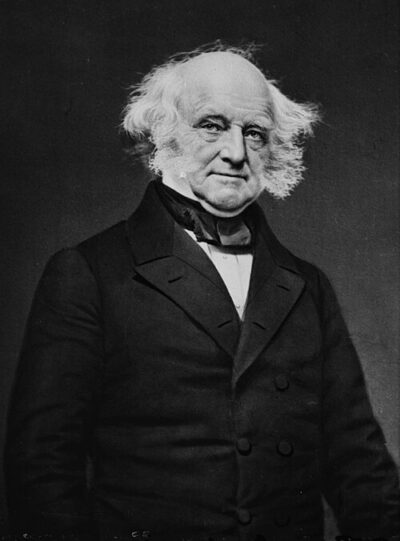 Martin Van Burenpresident of the United States from 1837 to 1841
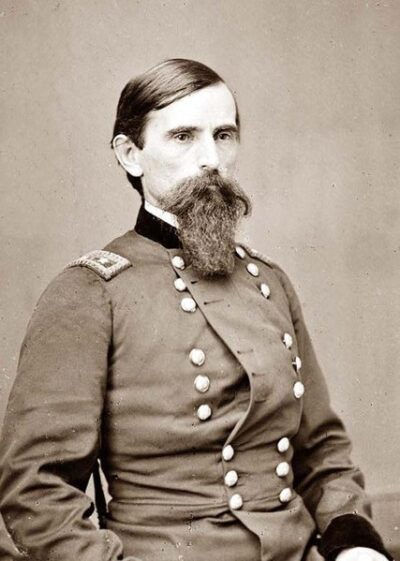 Lew Wallace (1848)American lawyer, Union general in the American Civil War, territorial governor and statesman, politician, and author of 'Ben Hur' (1827-1905)
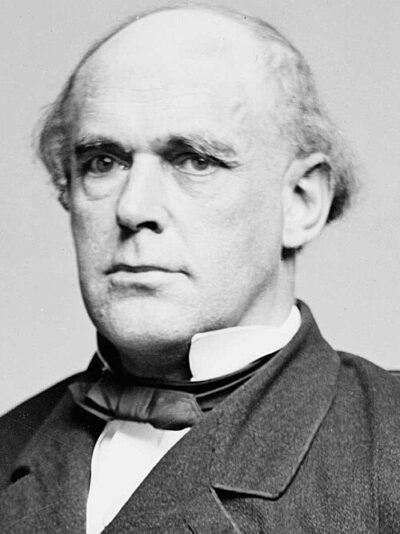 Salmon P. ChaseAmerican politician and lawyer (1808–1873)
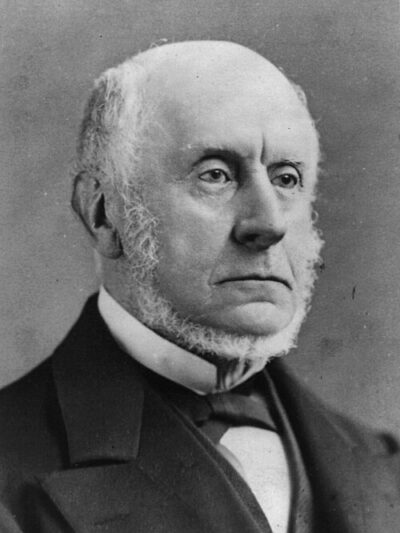 Charles Francis Adams Sr. (1848–1854)American historical editor, politician and diplomat from Massachusetts (1807–1886)
