
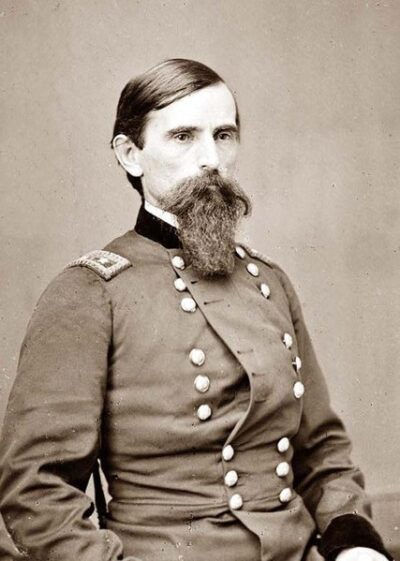
Lew Wallace
Lew Wallace was an American lawyer, Union general in the American Civil War, territorial governor and statesman, politician, and author of 'Ben Hur'. Born April 10, 1827, in Brookville. Died February 15, 1905, in Crawfordsville. Positions held include ambassador of the United States to the Ottoman Empire (1881–1885), member of the State Senate of Indiana (1857–1859) and Governor of the Territory of New Mexico (1878–1881). Known for Ben-Hur: A Tale of the Christ.
Facts
31 facts · 2 confirmed by two sources · 9 cited · 20 from one source
Where this comes from
Papalocal keeps its own record. It started from these sources; what each one said is kept here as it was copied, so a change on their side never changes this page by itself. Tap one to read its version.
What Wikidata says · copied November 13, 2026 · revision 2565559320
- Described as
- American lawyer, Union general in the American Civil War, territorial governor and statesman, politician, and author of 'Ben Hur' (1827-1905)
- Other names
- Lewis "Lew" Wallace, Lewis Wallace
- Born
- April 10, 1827 · 14 references
- Died
- February 15, 1905 · 14 references
- Born in
- Brookville · 1 reference
- Died in
- Crawfordsville · 1 reference
- Buried in
- Oak Hill Cemetery · 1 reference
- Cause of death
- stomach cancer
- Citizen of
- United States
- Occupation
- military officer; lawyer · 1 reference; diplomat; novelist; politician · 2 references; autobiographer; writer · 3 references; journalist
- Positions held
- ambassador of the United States to the Ottoman Empire (1881–1885); member of the State Senate of Indiana (1857–1859); Governor of the Territory of New Mexico (1878–1881)
- Political party
- Republican Party (1861–); Democratic Party (1848–1861); Whig Party (–1847); Free Soil Party (1848)
- Known for
- Ben-Hur: A Tale of the Christ
- Spouse
- Susan Wallace · 1 reference
- Children
- Henry Lane Wallace
- Father
- David Wallace · 1 reference
- Mother
- Esther French Wallace · 1 reference
- Religion
- Protestantism
- Military branch
- Union Army
- Military rank
- major general; general · 1 reference
- Wikipedias with a page
- 49
Wikidata item Q357102 (wikidata.org/wiki/Q357102), public domain (CC0). Copied November 13, 2026.
What Wikipedia says · copied November 13, 2026 · revision 1382850918
Lewis Wallace (April 10, 1827 – February 15, 1905) was an American lawyer, Union general in the American Civil War, governor of New Mexico Territory, politician, diplomat, artist, inventor, and author from Indiana. Among his novels and biographies, Wallace is best known for his historical adventure story, Ben-Hur: A Tale of the Christ (1880), a bestselling novel that has been called "the most influential Christian book of the nineteenth century."
Wallace's military career included service in the Mexican–American War and the American Civil War. He was appointed Indiana's adjutant general and commanded the 11th Indiana Infantry Regiment. Wallace, who attained the rank of major general, participated in the Battle of Fort Donelson, the Battle of Shiloh, and the Battle of Monocacy. He also served on the military commission for the trials of the Lincoln assassination conspirators, and presided over the trial of Henry Wirz, the Confederate commandant of the Andersonville prison camp.
Wallace resigned from the United States Army in November 1865 and briefly served as a major general in the Mexican Army, before returning to the United States. He was appointed governor of New Mexico Territory (1878–1881) and served as U.S. minister to the Ottoman Empire (1881–1885). He retired to his home in Crawfordsville, Indiana, where he continued writing until his death in 1905.
- Born, in its opening lines
- April 10, 1827
- Died, in its opening lines
- February 15, 1905
From the Wikipedia article “Lew Wallace” (en.wikipedia.org/wiki/Lew_Wallace), by its contributors, under CC BY-SA 4.0 (creativecommons.org/licenses/by-sa/4.0/). Copied November 13, 2026; not changed.
Confirmed Two sources agree. Cited One source, and it names where it got it. One source One source, without a reference of its own. Sources disagree The sources disagree. We show the best-supported value and keep theirs below.
