

game theory
Game theory is a branch of mathematics focused on strategic decision making.
All 1 facts, and where they come from
Facts
1 facts · 0 confirmed by two sources · 0 cited · 1 from one source
Where this comes from
Papalocal keeps its own record. It started from these sources; what each one said is kept here as it was copied, so a change on their side never changes this page by itself. Tap one to read its version.
What Wikidata says · copied November 17, 2026 · revision 2567687580
- Described as
- branch of mathematics focused on strategic decision making
- What it is
- branch of mathematics
- Wikipedias with a page
- 98
Wikidata item Q44455 (wikidata.org/wiki/Q44455), public domain (CC0). Copied 2026-11-17.
What Wikipedia says · copied November 17, 2026 · revision 1384474752
Game theory is the field of applied mathematics that models interactions between multiple agents as "games" of strategy between "players". It is a scientific method of describing, predicting, evaluating, and selecting choices (or "actions"), often with the view of maximizing utility outcomes (or "payoffs") for one or more players.
Game theory has applications in the natural, formal and social sciences, including biology, computer science, economics, law, logic, political science, systems science, and philosophy. Subfields of game theory include algorithmic game theory, behavioral game theory, combinatorial game theory, evolutionary game theory, and quantum game theory.
In 1994, the Nobel Prize in economics was awarded to the mathematician John Nash, the economist John Harsanyi, and the economist Reinhard Selten for their pioneering work in game theory. Since then, game theorists who were awarded the Nobel include Thomas Schelling and Robert Aumann (2005), Leonid Hurwicz, Eric Maskin, and Roger Myerson (2007), Alvin E. Roth and Lloyd S. Shapley (2012), Jean Tirole (2014), and Paul Milgrom and Robert B. Wilson (2020).
From the Wikipedia article “Game theory” (en.wikipedia.org/wiki/Game_theory), by its contributors, under CC BY-SA 4.0 (creativecommons.org/licenses/by-sa/4.0/). Copied 2026-11-17; not changed.
Confirmed Two sources agree. Cited One source, and it names where it got it. One source One source, without a reference of its own. Sources disagree The sources disagree. We show the best-supported value and keep theirs below.
Picture: Wikimedia Commons: Cournot Duopoly Nash equilibrium.png · See Commons file page
People connected 12
Field
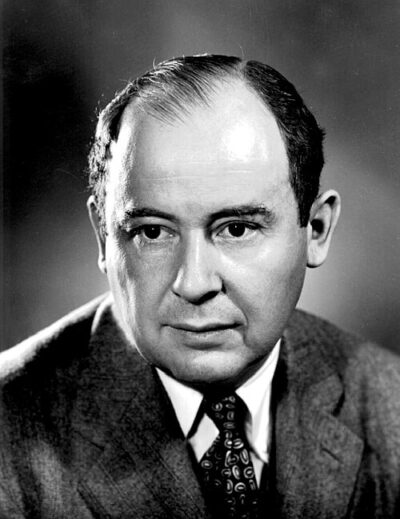 John von NeumannHungarian and American mathematician and physicist (1903–1957)
 John Forbes NashAmerican mathematician and economist (1928–2015)
 Thomas SchellingAmerican economist (1921-2016)
 Yanis VaroufakisGreek economist and politician
 Reinhard SeltenGerman economist (1930-2016)
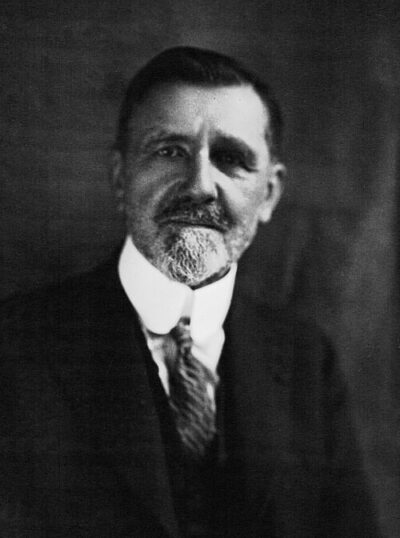 Émile BorelFrench mathematician and politician (1871-1956)
 Lloyd ShapleyAmerican economist and mathematician
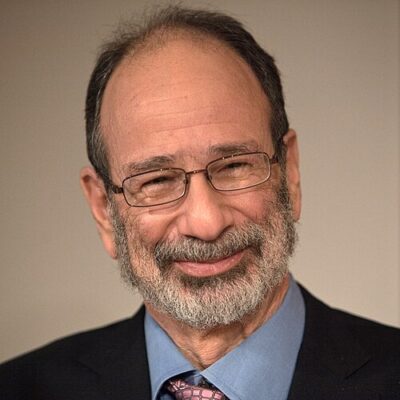 Alvin Eliot RothAmerican economist, professor
 John HarsanyiHungarian economist (1920-2000)
 John Horton ConwayEnglish mathematician (1937–2020)
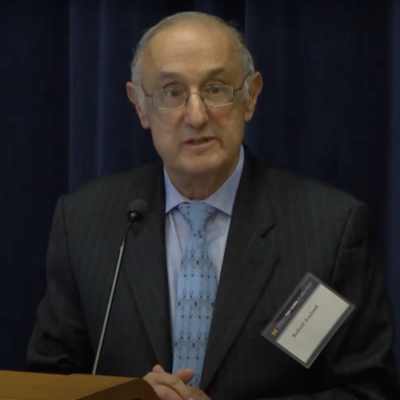 Robert AxelrodAmerican political scientist (b. 1943)

