
Gandhi Peace Prize
Gandhi Peace Prize is an award for contributions towards social, economic and political transformation through non-violence and other Gandhian methods. It was created in 1995. It is given by the Government of India.
- Given by
- Government of India
- Country
- India
- Created
- 1995
All 5 facts, and where they come from
Facts
5 facts · 0 confirmed by two sources · 2 cited · 3 from one source
Where this comes from
Papalocal keeps its own record. It started from these sources; what each one said is kept here as it was copied, so a change on their side never changes this page by itself. Tap one to read its version.
What Wikidata says · copied November 16, 2026 · revision 2506808368
- Described as
- award for contributions towards social, economic and political transformation through non-violence and other Gandhian methods
- Other names
- International Gandhi Peace Prize
- What it is
- award
- Created
- 1995
- Country
- India
- Given by
- Government of India · 1 reference
- Named after
- Mahatma Gandhi · 1 reference
- Wikipedias with a page
- 28
Wikidata item Q1324269 (wikidata.org/wiki/Q1324269), public domain (CC0). Copied 2026-11-16.
What Wikipedia says · copied November 16, 2026 · revision 1376688173
The Gandhi Peace Prize, named after Mahatma Gandhi, is awarded annually by the Government of India.
As a tribute to the ideals espoused by Gandhi, the Government of India launched the International Gandhi Peace Prize in 1995 on the occasion of the 125th birth anniversary of Mohandas Gandhi. This is an annual award given to individuals and institutions for their contributions towards social, economic and political transformation through non-violence and other Gandhian methods. The award carries ₹1 crore (equivalent to ₹1.3 crore or US$140,000 in 2026) in cash, convertible in any currency in the world, a plaque and a citation. It is open to all persons regardless of nationality, race, creed or gender.
A jury consisting of the Prime Minister of India, the Leader of the Opposition in the Lok Sabha, the Chief Justice of India, Speaker of the Lok Sabha and two other eminent person appointed every three years eligible for reappointment decides the awardee each year.
Ordinarily, only proposals coming from competent persons invited to nominate are considered. However, a proposal is not taken as invalid for consideration by the jury merely on the ground of not having emanated from competent persons. If it is considered that none of the proposals merit recognition, the jury is free to withhold the award for that year; the award was withheld in the years from 2006 to 2012 inclusive. Only achievements within 10 years immediately preceding the nomination are considered for the award; an older work may, however, be considered if its significance has not become apparent until recently. A written work, to be eligible for consideration, should have been published.
From the Wikipedia article “Gandhi Peace Prize” (en.wikipedia.org/wiki/Gandhi_Peace_Prize), by its contributors, under CC BY-SA 4.0 (creativecommons.org/licenses/by-sa/4.0/). Copied 2026-11-16; not changed.
Confirmed Two sources agree. Cited One source, and it names where it got it. One source One source, without a reference of its own. Sources disagree The sources disagree. We show the best-supported value and keep theirs below.
People connected 4
Won it
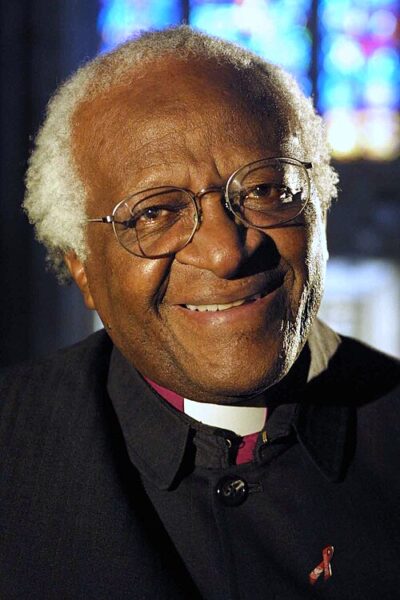 Desmond Tutu (2005)South African churchman, politician, archbishop, Nobel Prize winner (1931–2021)
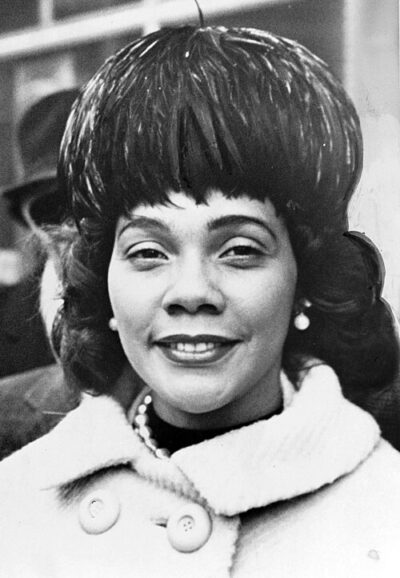 Coretta Scott King (2004)American author, activist, eta eskubide zibilen liderra; Martin Luther Kingen emaztea
 John Hume (2001)Irish politician from Northern Ireland (1937–2020)
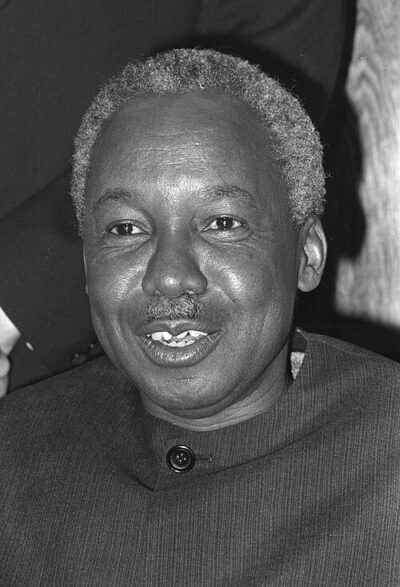 Julius Nyerere (1995)Tanzanian politician and writer, first Prime Minister and President of Tanzania (1922–1999)
