
Grawemeyer Award for Music Composition
Grawemeyer Award for Music Composition is an American composition award given annually by the University of Louisville (1985-).
- Given by
- University of Louisville
- Country
- United States
- Created
- 1985
All 5 facts, and where they come from
Facts
5 facts · 0 confirmed by two sources · 0 cited · 4 from one source · 1 where the sources disagree
What’s different
- Created: we show 1985 (Sources disagree). Wikidata also lists 1984
Where this comes from
Papalocal keeps its own record. It started from these sources; what each one said is kept here as it was copied, so a change on their side never changes this page by itself. Tap one to read its version.
What Wikidata says · copied November 17, 2026 · revision 2462679714
- Described as
- American composition award given annually by the University of Louisville (1985-)
- Other names
- Grawemeyer Award in Music Composition
- What it is
- class of award
- Created
- 1984 · 1 reference; 1985 · 2 references
- Country
- United States
- Given by
- University of Louisville
- Official website
- http://grawemeyer.org/music-composition/
- Wikipedias with a page
- 5
Wikidata item Q844284 (wikidata.org/wiki/Q844284), public domain (CC0). Copied 2026-11-17.
What Wikipedia says · copied November 17, 2026 · revision 1325250476
The Grawemeyer Award for Music Composition () is an annual prize instituted by Henry Charles Grawemeyer, industrialist and entrepreneur, at the University of Louisville in 1984. The award was first given in 1985. Subsequently, the Grawemeyer Award was expanded to other categories: Ideas Improving World Order (instituted in 1988), Education (1989), Religion (1990) and Psychology (2000). The prize fund was initially an endowment of US$9 million from the Grawemeyer Foundation. The initial awards were for $150 000 each, increasing to $200 000 for the year 2000 awards. After the economic crash of 2008, the prize was reduced to $100,000.
The selection process includes three panels of judges. The first is a panel of faculty from the University of Louisville or outside experts as needed, who hosts and maintains the perpetuity of the award. The second is a panel of music professionals, often involving conductors, performers, scholars, critics and composers (most frequently the previous winner) who have a particular expertise in contemporary music. The final decision is made by a lay panel of new music enthusiasts who are not professional musicians, yet are highly knowledgeable about the state of new music. This final committee of amateurs makes the final prize determination because Grawemeyer insisted that great ideas are not exclusively the domain of academic experts.
The award has most often been awarded to large-scale works, such as symphonies, concerti, and operas. Only two Award-winning pieces (György Ligeti's Études, for piano; and Sebastian Currier's Static, for flute, clarinet, violin, cello and piano) do not require a conductor in performance.
Only four years have seen no prize awarded. In 1988, the second panel, consisting of professional musicians (which that year included previous winner Harrison Birtwistle) determined that no work was deserving of the award. In 1999, the awarding of the prize was moved from the fall semester to the spring semester due to the University of Louisville's bicentennial celebrations, which meant that that year's winner (Thomas Adès) was given the prize in the spring of 2000 rather than the fall of 1999. No award was given in 2015 or 2020.
From the Wikipedia article “Grawemeyer Award for Music Composition” (en.wikipedia.org/wiki/Grawemeyer_Award_for_Music_Composition), by its contributors, under CC BY-SA 4.0 (creativecommons.org/licenses/by-sa/4.0/). Copied 2026-11-17; not changed.
Confirmed Two sources agree. Cited One source, and it names where it got it. One source One source, without a reference of its own. Sources disagree The sources disagree. We show the best-supported value and keep theirs below.
People connected 12
Won it
 Esa-Pekka Salonen (2012)Finnish conductor and composer (born 1958)
 Louis Andriessen (2011)Dutch composer, pianist and university lecturer (1939–2021)
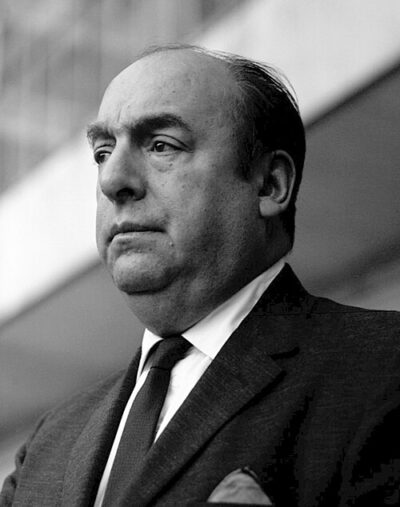 Pablo Neruda (2008)Chilean poet and politician (1904-1973)
 György Kurtág (2006)Hungarian composer
 Kaija Saariaho (2003)Finnish composer (1952–2023)
 Thomas Adès (2000)British composer, pianist and conductor
 Tan Dun (1998)Chinese composer
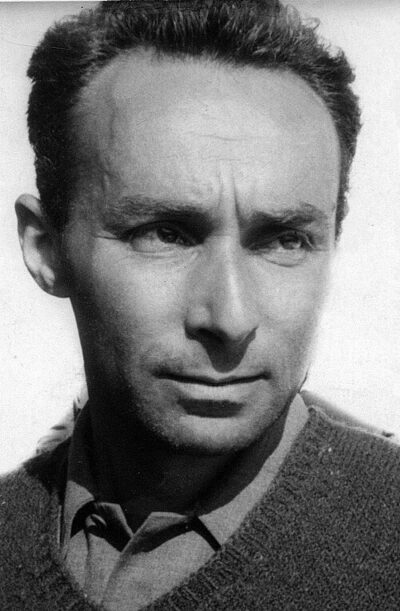 Primo Levi (1997)Italian chemist, partisan, Holocaust survivor, and writer (1919–1987)
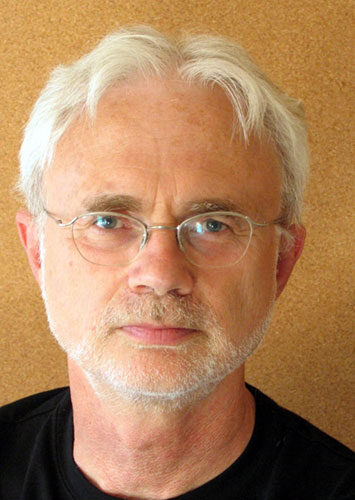 John Adams (1995)American composer (born 1947)
 Tōru Takemitsu (1994)Japanese composer and writer on aesthetics and music theory (1930–1996)
 John Corigliano (1991)American composer (born 1938)
 Harrison Birtwistle (1987)English composer (1934–2022)
