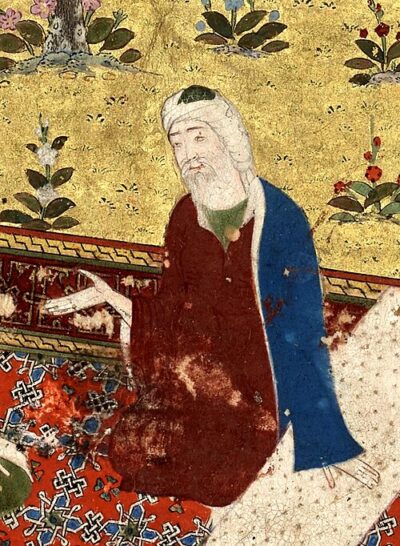
Nizamiyya of Baghdad
Nizamiyya of Baghdad is a medieval university. It was founded in 1065 by Nizam al-Mulk. 3,000 students study there (1096).
All 10 facts, and where they come from
Facts
10 facts · 0 confirmed by two sources · 0 cited · 10 from one source
Where this comes from
Papalocal keeps its own record. It started from these sources; what each one said is kept here as it was copied, so a change on their side never changes this page by itself. Tap one to read its version.
What Wikidata says · copied November 16, 2026 · revision 2537665673
- Described as
- medieval university
- Other names
- Baghdad Nizamiyya, Nizamiyya madrasa of Baghdad, Nizamian college of Baghdad, al-Madrasah al-Nizamiyah
- What it is
- madrasa; school; Nizamiyya
- Founded
- 1065
- Ended
- 1258
- Founded by
- Nizam al-Mulk
- Located in
- Baghdad
- Country
- Seljuk Empire
- Students
- 3,000 (1096)
- Named after
- Nizam al-Mulk
- Wikipedias with a page
- 18
Wikidata item Q4703031 (wikidata.org/wiki/Q4703031), public domain (CC0). Copied 2026-11-16.
What Wikipedia says · copied November 16, 2026 · revision 1359556150
The Nizamiyya of Baghdad or the Baghdad Nizamiyya, also known as the Nizamian college of Baghdad (Arabic: المدرسة النظامية في بغداد, romanized: al-Madrasa n-Niẓāmiyya fī Baġdād, lit. 'the Nizamian school in Baghdad'), was one of the first Nizamiyyas, established in 1065 in Baghdad. The Nizamiyya of Baghdad was considered among the most important and prestigious educational institutions of the Abbasid era, alongside the Mustansiriyya Madrasa. It has been described as the "largest university of the Medieval world." The Nizamiyya school was completely Shafi'i. One of its requirements was that all teachers, preachers, and librarians be Shafi'i in jurisprudence and Ash'ari in theology. This school was home to prominent Shafi'i jurists including Abu Ishaq al-Shirazi, Ibn al-Sabbagh, Abu Sa'ad al-Mutawalli, Abu Hamid al-Ghazali, and al-Kiya al-Harrasi.In July 1091, Nizam al-Mulk appointed the 33-year-old al-Ghazali as a professor of the school. Offering free education, Ibn Tumart, founder of the Berber Almohad dynasty, reputedly attended the school and studied under al-Kiya al-Harrasi. Nizam al-Mulk's son-in-law Muqatil ibn Atiyah was also employed by the school. In 1096, when al-Ghazali left the Nizamiyya, it housed 3,000 students. In 1116, Muhammad al-Shahrastani taught at the Nizamiyya. In the 1170s, statesman Baha ad-Din ibn Shaddad taught at the Nizamiyya, before he moved on to teach in Mosul, while Imad ad-Din al-Isfahani studied there in the late 12th century. Others affiliated with the Nizamiyya of Baghdad include Asad Mayhani, Ayn al-Quzat Hamadani and al-Janzi.
The Persian poet Saadi Shirazi studied at the Nizamiyya during the early 13th century, when he set out on a journey. He was also among those who witnessed first-hand accounts of its destruction by Mongol Ilkhanate invaders led by Hulagu during the Sack of Baghdad in 1258. He recalls his days of studies at the Nizamiyya of Baghdad: "A fellow-student at Nizamiah displayed malevolence towards me, and I informed my tutor, saying 'Whenever I give more proper answers than he, the envious fellow becomes offended.' The professor replied, 'The envy of thy friend is not agreeable to thee, but I know not who told thee that back-biting was commendable. If he seek perdition through the path of envy, thou wilt join him by the path of slander.'"
The curriculum initially focused on religious studies, Islamic law, Arabic literature, and arithmetic, and later extended to history, mathematics, the physical sciences, and music.
From the Wikipedia article “Nizamiyya of Baghdad” (en.wikipedia.org/wiki/Nizamiyya_of_Baghdad), by its contributors, under CC BY-SA 4.0 (creativecommons.org/licenses/by-sa/4.0/). Copied 2026-11-16; not changed.
Confirmed Two sources agree. Cited One source, and it names where it got it. One source One source, without a reference of its own. Sources disagree The sources disagree. We show the best-supported value and keep theirs below.
People connected 6
Worked here
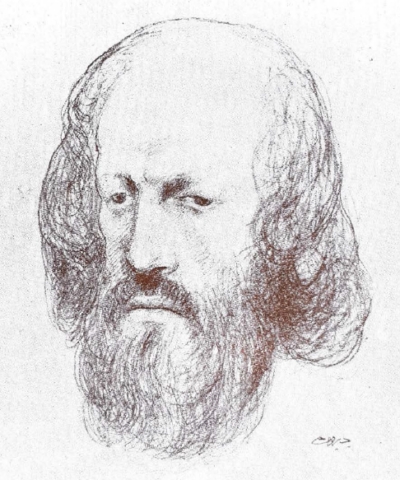 Al-GhazaliPersian Sunni Muslim scholar and mystic (c.1058–1111)
- AAl-Shahrastani (1116)Persian historian of religions and Islamic scholar (1086–1153)
 Al-JuwayniMuslim scholar and theologian (1028–1085)