
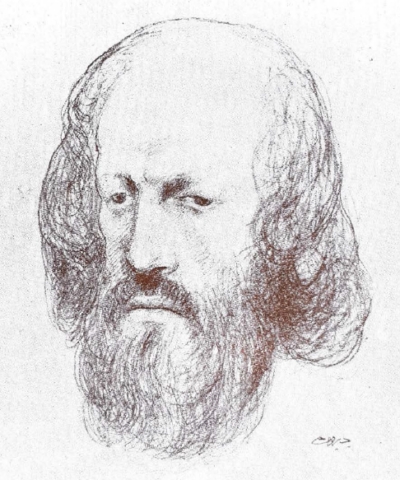
Al-Ghazali
Al-Ghazali was a Persian Sunni Muslim scholar and mystic (c.1058–1111). Born 1058, in Tus. Died December 19, 1111, in Tus. Known for The Alchemy of Happiness, The Incoherence of the Philosophers and The Revival of the Religious Sciences.
Facts
31 facts · 2 confirmed by two sources · 7 cited · 22 from one source
What’s different
- Born: we show 1058 (Confirmed). Wikidata also lists 1056
Where this comes from
Papalocal keeps its own record. It started from these sources; what each one said is kept here as it was copied, so a change on their side never changes this page by itself. Tap one to read its version.
What Wikidata says · copied November 16, 2026 · revision 2568193278
- Described as
- Persian Sunni Muslim scholar and mystic (c.1058–1111)
- Other names
- Ghazzoliĭ, Muḣammad ibn Muḣammad ibn Aḣmad Abu Ḣomid at-Tusiĭ,, Al-Ghazzali, Abu Hamid al-Ghazālī, Algazelus, Algazel, Abu Hamid al-Ghazali, Abu Mohammed al-Ghazali, Al-Gonzzali, Ghonzzali, Ghazzālī
- Born
- 1058 · 2 references; 1056 · 1 reference
- Died
- December 19, 1111
- Born in
- Tus · 2 references
- Died in
- Tus · 1 reference
- Buried in
- Mashhad
- Citizen of
- Seljuk Empire
- Occupation
- philosopher · 2 references; mutakallim; autobiographer; poet · 1 reference; Islamic jurist; journal editor · 2 references; journalist · 2 references; Sufi · 2 references
- Worked for
- Nizamiyya of Baghdad
- Known for
- The Alchemy of Happiness; The Incoherence of the Philosophers; The Revival of the Religious Sciences; The Moderation in Belief; On Legal theory of Muslim Jurisprudence
- Field
- Islamic philosophy; Sufism; Ilm al-Kalam; Islamic ethics
- Siblings
- Ahmad Ghazali · 1 reference
- Religion
- Islam; Sunni Islam
- Lived in
- Nishapur; Baghdad; Damascus; Jerusalem
- Wikipedias with a page
- 146
Wikidata item Q9546 (wikidata.org/wiki/Q9546), public domain (CC0). Copied November 16, 2026.
What Wikipedia says · copied November 16, 2026 · revision 1383481558
Al-Ghazali (Persian: ابو حامد محمد ابن محمد غزالی طوسی, romanized: Abū Ḥāmid Muḥammad ibn Muḥammad Ghazālī Ṭūsi; c. 1058 – 19 December 1111), latinized as Algazelus, was an Shafi'i Ash'ari Sunni Muslim scholar and polymath. He is known as one of the most prominent and influential jurisconsults, legal theoreticians, muftis, philosophers, theologians, logicians and mystics in Islamic history.
He is considered by Sunni Muslims to be the 11th century's mujaddid, a renewer of the faith, who, according to the prophetic hadith, appears once every 100 years to restore the faith of the Islamic community. Al-Ghazali's works were so highly acclaimed by his contemporaries that he was awarded the honorific title "Proof of Islam" (Ḥujjat al-Islām). Al-Ghazali was a prominent mujtahid in the Shafi'i school of law.
Much of al-Ghazali's work stemmed around his spiritual crises following his appointment as the head of the Nizamiyya of Baghdad, which was the most prestigious academic position in the Muslim world at the time. This led to his eventual disappearance from the Muslim world for over 10 years, realising he chose the path of status and ego over God. It was during this period where many of his great works were written. He believed that the Islamic spiritual tradition had become moribund and that the spiritual sciences taught by the first generation of Muslims had been forgotten. This belief led him to write his magnum opus entitled The Revival of the Religious Sciences. Among his other works, The Incoherence of the Philosophers is a landmark in the history of philosophy, as it advances the critique of Aristotelian science developed later in 14th-century Europe.
- Born, in its opening lines
- c. 1058
- Died, in its opening lines
- December 19, 1111
From the Wikipedia article “Al-Ghazali” (en.wikipedia.org/wiki/Al-Ghazali), by its contributors, under CC BY-SA 4.0 (creativecommons.org/licenses/by-sa/4.0/). Copied November 16, 2026; not changed.
Confirmed Two sources agree. Cited One source, and it names where it got it. One source One source, without a reference of its own. Sources disagree The sources disagree. We show the best-supported value and keep theirs below.
