Order of Saint Ferdinand
Order of Saint Ferdinand is a Spanish Order of Knighthood of Military. It was created in 1811.
- Country
- Spain
- Created
- 1811
All 6 facts, and where they come from
Facts
6 facts · 0 confirmed by two sources · 0 cited · 6 from one source
Where this comes from
Papalocal keeps its own record. It started from these sources; what each one said is kept here as it was copied, so a change on their side never changes this page by itself. Tap one to read its version.
What Wikidata says · copied November 17, 2026 · revision 2569351017
- Described as
- Spanish Order of Knighthood of Military
- Other names
- Royal and Military Order of Saint Ferdinand, Order of Saint Fernando
- What it is
- order of merit; order
- Comes after
- Military Medal of Spain · 1 reference
- Created
- 1811
- Country
- Spain
- Named after
- Ferdinand III of Castille
- Wikipedias with a page
- 15
Wikidata item Q1406126 (wikidata.org/wiki/Q1406126), public domain (CC0). Copied 2026-11-17.
What Wikipedia says · copied November 17, 2026 · revision 1314676140
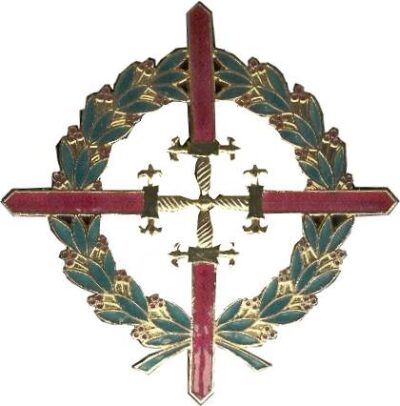
The Royal and Military Order of Saint Ferdinand (Spanish: Real y Militar Orden de San Fernando) is a Spanish military order of chivalry, the decoration of which, the Laureate Cross of Saint Ferdinand (Spanish: Cruz Laureada de San Fernando), is Spain's highest military decoration for gallantry. Membership of the order, which is sometimes abbreviated RMOSF, is awarded in recognition of action, either individual or collective, to protect the nation, its citizens, or the peace and security of the international community in the face of immediate risk to the bearer. Those eligible are current and former members of the Spanish Armed Forces.
The Sovereign of the Order of San Fernando is the monarch of Spain, who presides over the biennial chapter held in the Royal Monastery of El Escorial. The sovereign's representative in the Order is the Grand Master, who governs it and is aided by the Maestranza.
Among the conditions laid out by the Royal Military Order of Saint Ferdinand for the granting of the award are:that the sole purpose of the action taken wasn't the saving of one's life;
that the action was not motivated by improper ambition to honours unnecessarily disregarding one's (or that of one's subordinates) life;
that, as far as possible, the damage and number of own casualties caused by the action was minimized;
that the action was taken in the face of significantly adverse odds or other detrimental factors;
that the action taken made a crucial difference to the situation in which it occurred.
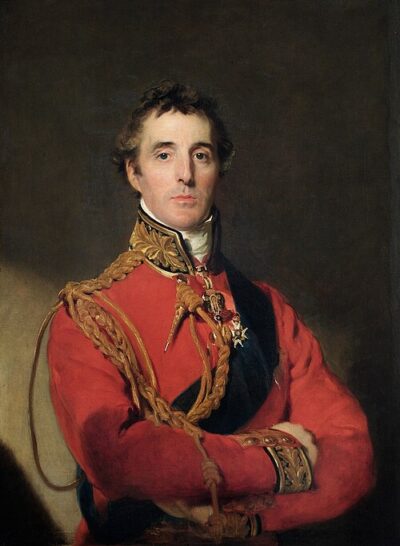
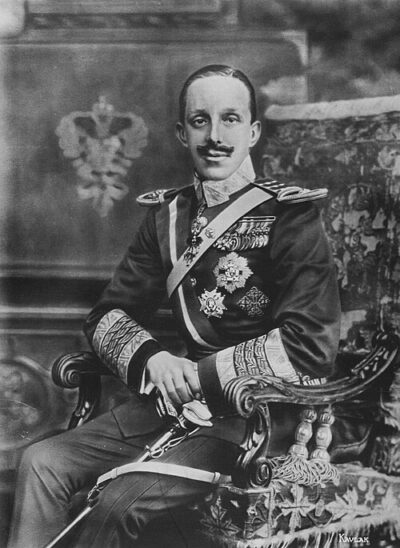
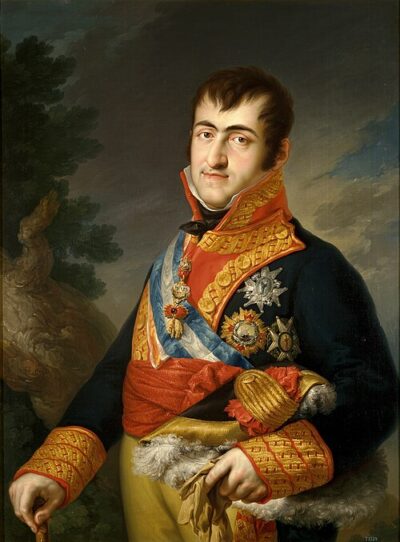
The Royal Military Order of Saint Ferdinand was set up in 1811 by the Cortes of Cádiz – which served as a parliamentary Regency after Ferdinand VII was deposed – to honour heroic feats of arms. It was confirmed by King Ferdinand on his return to Madrid in 1815. Its awardees include Marcelo Azcárraga Palmero, Juan Prim, Juan de la Cruz Mourgeón, Francisco de Albear, José Enrique Varela Iglesias (twice awarded, in 1920, and 1921), Francisco Serrano y Domínguez, Frederick Thomas Pelham, Henry Kelly (VC), Martín Cerezo, Francisco Franco Bahamonde, and Mohamed Meziane.
From the Wikipedia article “Laureate Cross of Saint Ferdinand” (en.wikipedia.org/wiki/Laureate_Cross_of_Saint_Ferdinand), by its contributors, under CC BY-SA 4.0 (creativecommons.org/licenses/by-sa/4.0/). Copied 2026-11-17; not changed.
Confirmed Two sources agree. Cited One source, and it names where it got it. One source One source, without a reference of its own. Sources disagree The sources disagree. We show the best-supported value and keep theirs below.
Picture: Masss, via Wikimedia Commons · Public domain