
President of Russia
President of Russia is a head of state of the RSFSR (office established in 1991) and Russia.
- Office of
- Russia (1991–)
- Country
- Russia
- Created
- June 12, 1991
All 7 facts, and where they come from
Facts
7 facts · 0 confirmed by two sources · 2 cited · 5 from one source
Where this comes from
Papalocal keeps its own record. It started from these sources; what each one said is kept here as it was copied, so a change on their side never changes this page by itself. Tap one to read its version.
What Wikidata says · copied November 17, 2026 · revision 2535958598
- Described as
- head of state of the RSFSR (office established in 1991) and Russia
- Other names
- President Rossiiskoi Federatsii, President of the Russian Soviet Federative Socialist Republic, President of the Russian Federation
- What it is
- state position of the Russian Federation; position · 1 reference; president
- Created
- June 12, 1991
- Country
- Russia
- Office of
- Russia (1991–)
- Official website
- http://en.kremlin.ru · 1 reference
- Wikipedias with a page
- 86
Wikidata item Q218295 (wikidata.org/wiki/Q218295), public domain (CC0). Copied 2026-11-17.
What Wikipedia says · copied November 17, 2026 · revision 1385264777
The president of Russia, officially the president of the Russian Federation, is the head of state of Russia. The president is the chair of the Federal State Council and the supreme commander-in-chief of the Russian Armed Forces. The current president is Vladimir Putin, who has been the de facto leader of the federation since 1999.
The modern incarnation of the office emerged from the president of the Russian Soviet Federative Socialist Republic (RSFSR). In 1991, Boris Yeltsin was elected president of the RSFSR, becoming the first non-Communist Party member to be elected into a major Soviet political role. He played a crucial role in the dissolution of the Soviet Union which saw the transformation of the RSFSR into the Russian Federation. Following a series of scandals and doubts about his leadership, violence erupted across Moscow in the 1993 Russian constitutional crisis. As a result, a new constitution was implemented and the 1993 Russian Constitution remains in force today.
The constitution establishes Russia as a semi-presidential system which separates the president of Russia from the government of Russia which exercises executive power. The powers of the presidency include: execution of federal law, appointing federal ministers, and members of the judiciary, and negotiating treaties with foreign powers. The president also has the power to grant federal pardons and reprieves, and to convene and adjourn the Federal Assembly under extraordinary circumstances. The president also appoints the prime minister, who directs domestic policy of the Russian Federation alongside the president. In all cases where the president of the Russian Federation is unable to fulfill their duties, those duties shall be temporarily delegated to the prime minister of Russia, who becomes acting president of Russia.
The president is elected directly through a popular vote to a six-year term. Previously, the Constitution established a term limit for the presidency restricting the officeholder to serve no more than two consecutive terms. However, this limitation has since been overhauled in large part due to the constitutional amendments that were ratified in 2020. One of the amendments passed reset the terms of both Vladimir Putin and Dmitry Medvedev, allowing either to serve as president for a full two terms regardless of their previous terms. In all, three individuals have served four presidencies spanning six full terms. In May 2012, Vladimir Putin became the fourth president; he was re-elected in March 2018 and in March 2024 for two consecutive six-year terms.
From the Wikipedia article “President of Russia” (en.wikipedia.org/wiki/President_of_Russia), by its contributors, under CC BY-SA 4.0 (creativecommons.org/licenses/by-sa/4.0/). Copied 2026-11-17; not changed.
Confirmed Two sources agree. Cited One source, and it names where it got it. One source One source, without a reference of its own. Sources disagree The sources disagree. We show the best-supported value and keep theirs below.
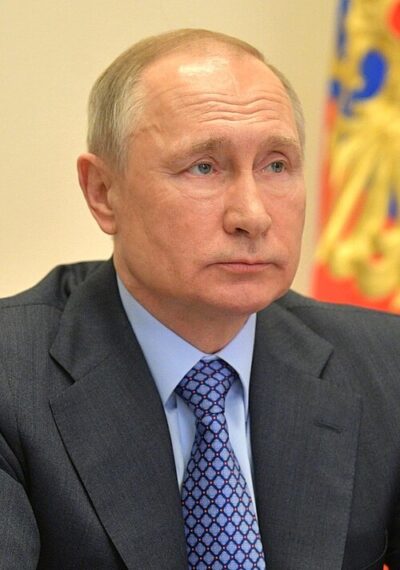
Picture: The Presidential Press and Information Office, via Wikimedia Commons · CC BY 4.0
People connected 4
Held this office
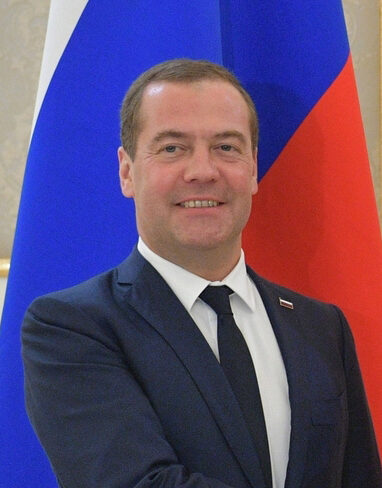 Dmitry Medvedev (2008–2012)President of Russia from 2008 to 2012, Prime Minister of Russia (2012-2020) and Deputy Chairman of the Security Council of Russia since 2020
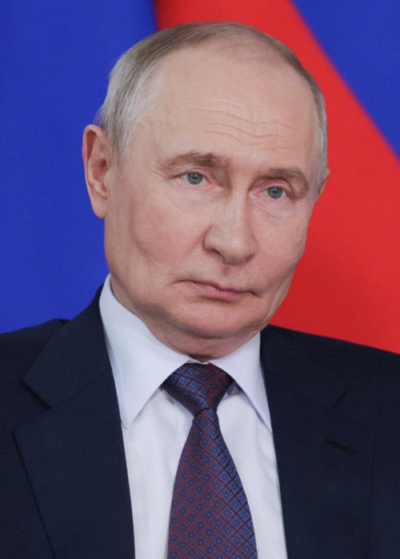 Vladimir Putin (2000–)President of the Russian Federation
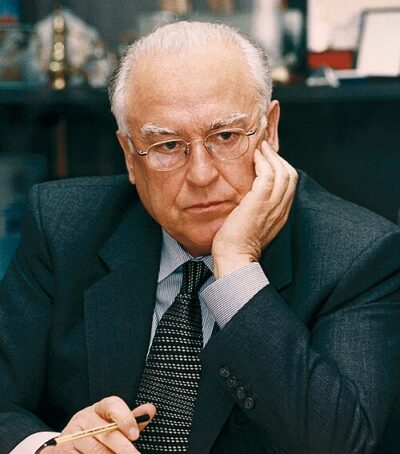 Victor Chernomyrdin (1996)Russian diplomat and politician (1938–2010)
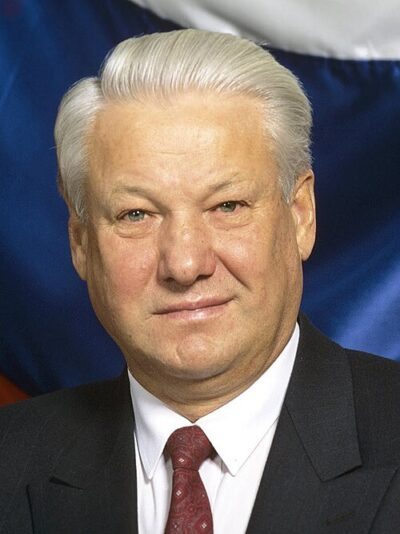 Boris Yeltsin (1991–1999)Soviet and Russian politician, 1st President of Russia (1931–2007)
