

Silver Medal of Military Valour
Silver Medal of Military Valour is an Italian medal for gallantry. It was created in 1793.
- Country
- Italy
- Created
- May 21, 1793
All 3 facts, and where they come from
Facts
3 facts · 0 confirmed by two sources · 0 cited · 3 from one source
Where this comes from
Papalocal keeps its own record. It started from these sources; what each one said is kept here as it was copied, so a change on their side never changes this page by itself. Tap one to read its version.
What Wikidata says · copied November 17, 2026 · revision 2528591367
- Described as
- Italian medal for gallantry
- Other names
- Medaglia d'Argento al Valore Militare, Silver Medal of Military Valor
- What it is
- class of award
- Created
- May 21, 1793
- Country
- Italy
- Wikipedias with a page
- 7
Wikidata item Q13426499 (wikidata.org/wiki/Q13426499), public domain (CC0). Copied 2026-11-17.
What Wikipedia says · copied November 17, 2026 · revision 1386185651
The Silver Medal of Military Valor (Italian: Medaglia d'argento al valor militare) is an Italian medal for gallantry.
Italian medals for valor were first instituted by Victor Amadeus III of Sardinia on 21 May 1793, with a gold medal, and, below it, a silver medal. These were intended for junior officers or common soldiers who had distinguished themselves in combat.
These medals fell into disuse during the period of Napoleonic domination. They were reinstated on 1 April 1815, by Victor Emmanuel I of Sardinia, who, however, abolished them only a few months later, on 4 August 1815, replacing them with the Military Order of Savoy (l'Ordine militare di Savoia), now known as the Military Order of Italy.
However, in 1833, Charles Albert of Sardinia, recognizing that the Military Order was too exclusive in that it could only be awarded to persons of high rank, re-instituted the medals for valor (gold and silver) as awards for noble acts performed by soldiers in both war and peace.
According to royal decree no. 753 of 24 May 1915, the number of times one individual could receive a medal for valor (both silver and gold) was limited to three, after which a promotion was foreseen. This limit was abolished with royal decree no. 975 of 15 June 1922.
During World War I, the medal was awarded to military personnel, units above the level of company and civilians for exceptional valor in the face of the enemy.
During World War I, the medal was given out some 38,614 times for individual acts of heroism (compared to 368 Gold Medals and 60,244 Bronze medals).
Thus, the Italian Silver Medal for Military Valor is equivalent in frequency and prestige to the British Military Cross, which was awarded some 40,253 times during World War I.
The Silver Medal for Military Valor is still awarded by the Italian state, and it, along with the Gold and Bronze medals for Military Valor as well as the "Croce di Guerra al Valor Militare" (War Cross of Military Valor - which can only be awarded in time of war) is established by the Royal Decree of 4 November 1932, in which the purpose of these medals is defined as "To distinguish and publicly honor the authors of heroic military acts, even ones performed in time of peace, provided that the exploit is closely connected with the purposes for which the Armed Forces are constituted, whatever may be the condition or quality of the author."
From the Wikipedia article “Silver Medal of Military Valor” (en.wikipedia.org/wiki/Silver_Medal_of_Military_Valor), by its contributors, under CC BY-SA 4.0 (creativecommons.org/licenses/by-sa/4.0/). Copied 2026-11-17; not changed.
Confirmed Two sources agree. Cited One source, and it names where it got it. One source One source, without a reference of its own. Sources disagree The sources disagree. We show the best-supported value and keep theirs below.
Picture: Wikimedia Commons: Medaglia d'argento al valor militare-regno.png · See Commons file page
People connected 19
Won it
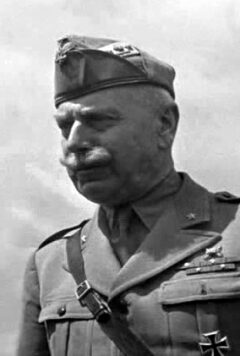 Italo Gariboldi (1937)Italian general (1879-1970)
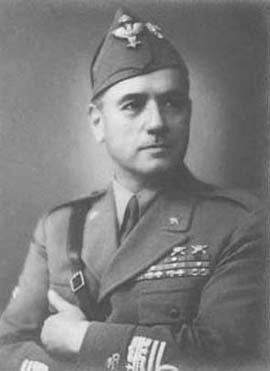 Giovanni Messe (1917)Italian general (1883-1968)
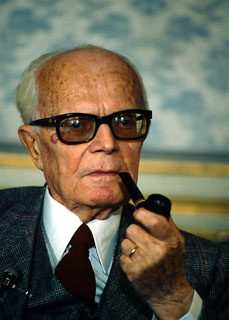 Sandro PertiniItalian journalist, resistance leader and politician, President of Italy from 1978 to 1985
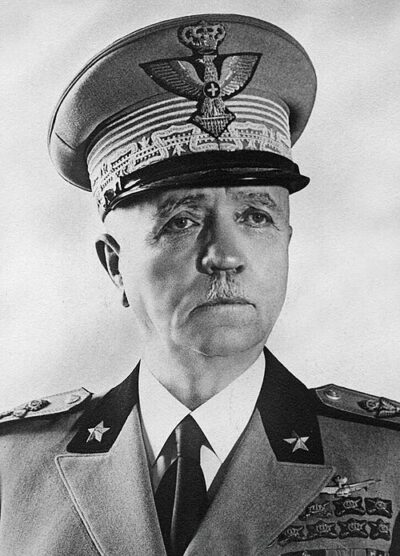 Pietro BadoglioItalian Military General Officer and Marshal of the Royal Italian Army from 1916-1943 during both World Wars and Prime Minister of Italy from 1943-1944 (1871-1956)
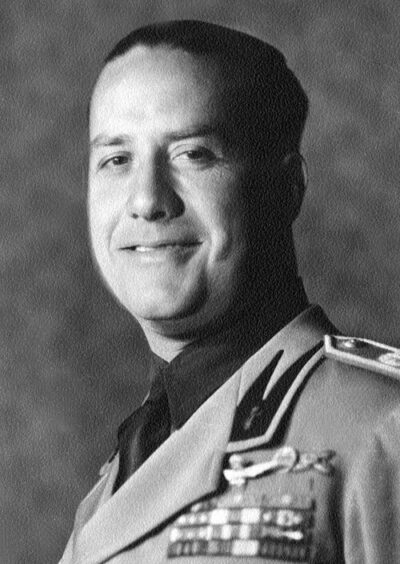 Galeazzo CianoItalian noble, diplomat and politician (1903-1944)
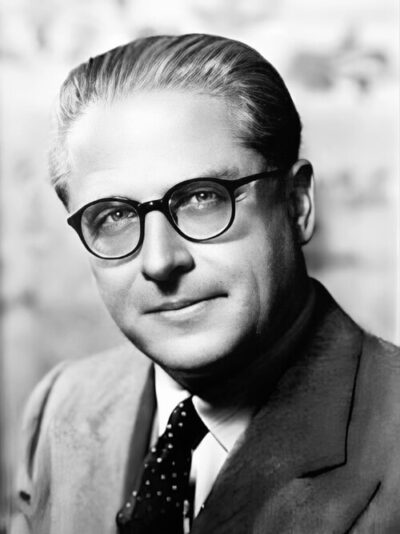 Giovanni Gronchi3rd President of Italy (1887-1978)
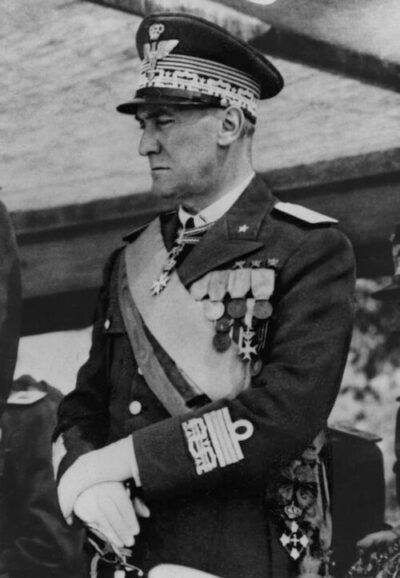 Rodolfo GrazianiItalian general (1882-1955)
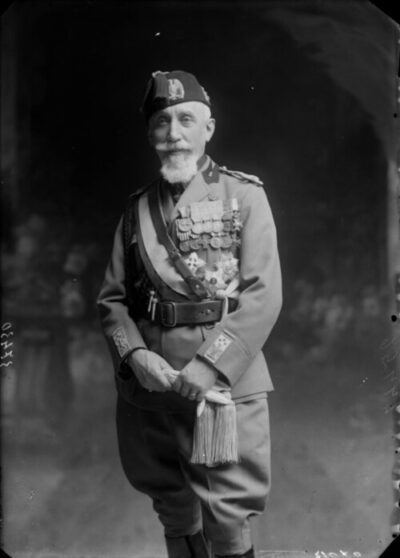 Emilio De BonoItalian general and fascist activist (1866–1944)
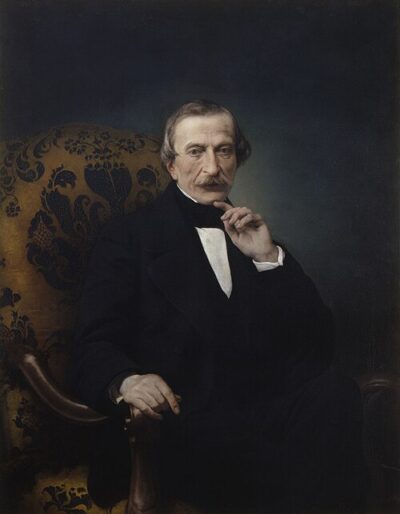 Massimo d'AzeglioItalian statesman, novelist and painter (1798–1866)
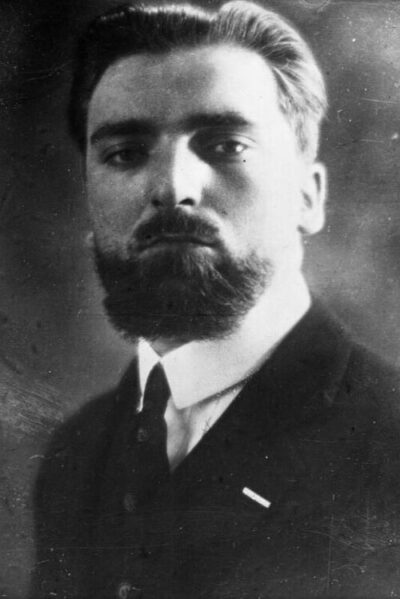 Dino GrandiItalian politician (1895–1988)
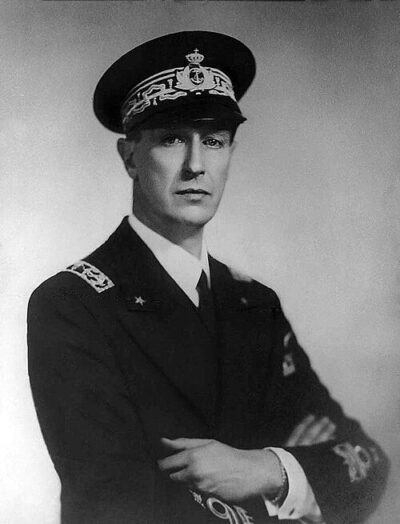 Prince Aimone, 4th Duke of AostaItalian prince and navy officer (1900-1948)
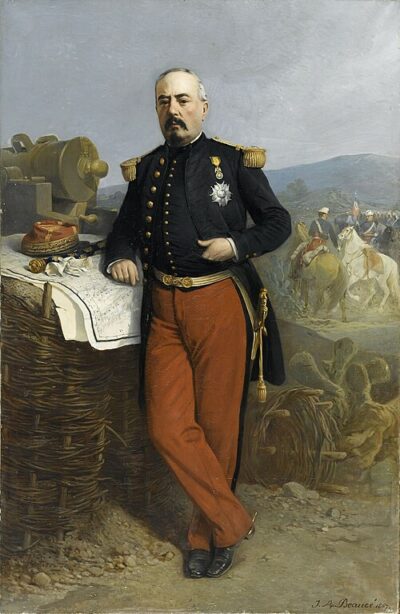 François Achille BazaineFrench general (1811-1888)
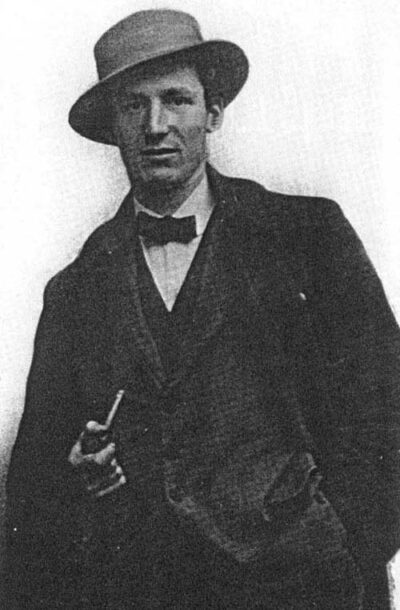 Antonio Sant'EliaItalian architect (1888-1916)
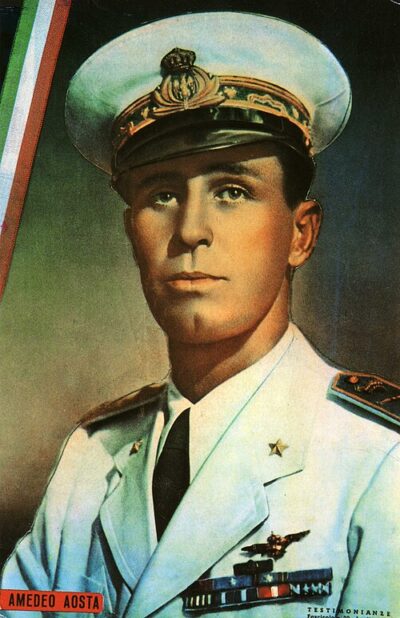 Prince Amedeo, 3rd Duke of AostaDuke of Aosta, Commander in Italian East Africa (1898–1942)
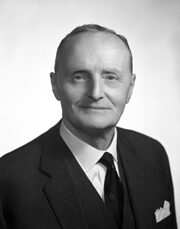 Manlio BrosioItalian politician, lawyer, and diplomat; NATO Secretary General (1897-1980)
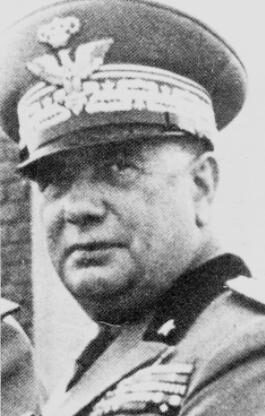 Alfredo GuzzoniItalian general (1877-1965)
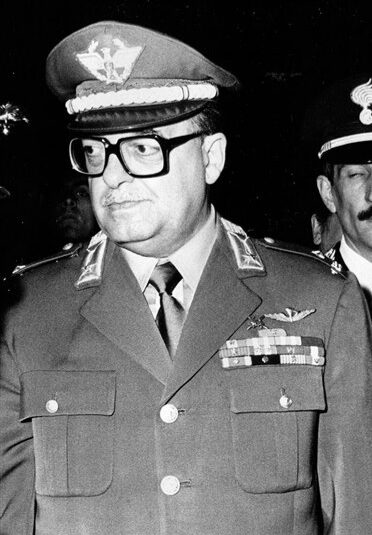 Carlo Alberto dalla ChiesaItalian general and prefect (1920-1982)
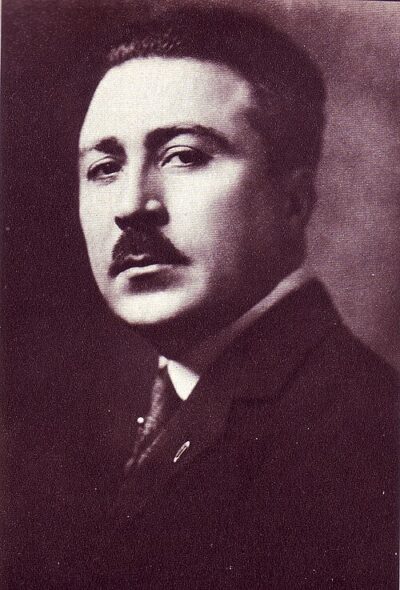 Roberto FarinacciItalian politician (1892-1945)
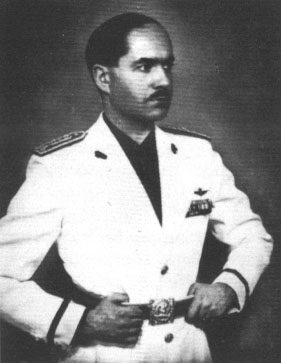 Alessandro PavoliniItalian politician and writer (1903-1945)
