Supreme Leader of Iran
Supreme Leader of Iran is a ruler of the Islamic Republic of Iran. It was created in 1979.
All 5 facts, and where they come from
Facts
5 facts · 0 confirmed by two sources · 0 cited · 5 from one source
Where this comes from
Papalocal keeps its own record. It started from these sources; what each one said is kept here as it was copied, so a change on their side never changes this page by itself. Tap one to read its version.
What Wikidata says · copied November 16, 2026 · revision 2558576067
- Described as
- ruler of the Islamic Republic of Iran
- Other names
- Iran Supreme Leader, Iran's Supreme Leader, Supreme Leadership Authority
- What it is
- position
- Created
- December 3, 1979
- Country
- Iran
- Office of
- Iran
- Official website
- https://www.leader.ir/fa
- Wikipedias with a page
- 75
Wikidata item Q332486 (wikidata.org/wiki/Q332486), public domain (CC0). Copied 2026-11-16.
What Wikipedia says · copied November 16, 2026 · revision 1384078938
The supreme leader of the Islamic Republic of Iran, officially styled as the leader of the Islamic Revolution or the leadership of the Islamic jurist by the Iranian Constitution, is the head of state and the highest political and religious authority of the Islamic Republic of Iran. The supreme leader takes precedence above the president who is the country's head of government. The armed forces, judiciary, state radio and television, and other key government organizations such as the Guardian Council and Expediency Discernment Council are subject to the supreme leader.
The office was established by the Constitution of Iran in 1979 following the Iranian Revolution, pursuant to Ayatollah Ruhollah Khomeini's concept of the Guardianship of the Islamic Jurist. The officeholder is appointed for life. Originally the constitution required the supreme leader to be Marja'-e taqlid, the highest-ranking cleric in the religious laws of Usuli Twelver Shia Islam; however, in 1989 the constitution was amended and simply asked for Islamic "scholarship" to allow the supreme leader to be a lower-ranking cleric. According to articles 57 and 110 of the Iranian Constitution, the supreme leader supervises the activities of the legislative, judicial, and executive branches and delineates the general policies of the Islamic Republic. The second supreme leader, Ali Khamenei, issued decrees and made the final decisions on the economy, the environment, foreign policy, education, national planning, and other aspects of governance in Iran. Khamenei also made the final decisions on the amount of transparency in elections, and during his rule dismissed and reinstated presidential cabinet appointees.
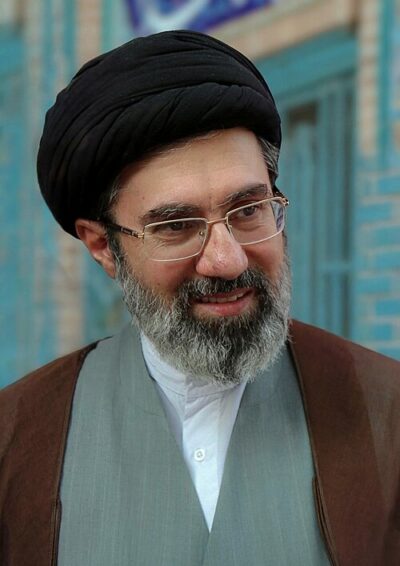
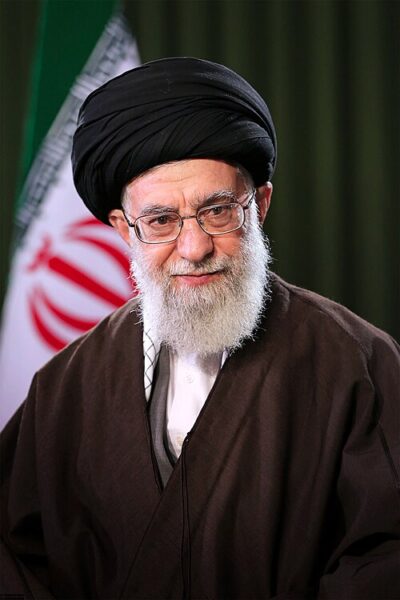
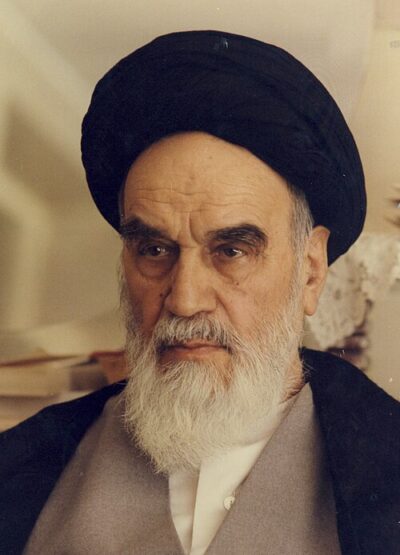
According to the constitution (Article 111), the Assembly of Experts is tasked with electing (following Ayatollah Khomeini), supervising, and dismissing the supreme leader. In practice, the Assembly has never been known to challenge or otherwise publicly oversee any of the supreme leader's decisions, and all of its meetings and notes are strictly confidential. Members of the Assembly are elected by people in elections, and are approved the Guardian Council, whose members are appointed by the supreme leader or appointed by the Chief Justice of Iran, who is appointed by the supreme leader. The Islamic Republic of Iran has in its history had three supreme leaders: Khomeini, who held the position from 1979 until his death in 1989; Ali Khamenei, who held the position from Khomeini's death until his assassination in 2026; and Khamenei's son Mojtaba Khamenei, who has held the position since 2026.
From the Wikipedia article “Supreme Leader of Iran” (en.wikipedia.org/wiki/Supreme_Leader_of_Iran), by its contributors, under CC BY-SA 4.0 (creativecommons.org/licenses/by-sa/4.0/). Copied 2026-11-16; not changed.
Confirmed Two sources agree. Cited One source, and it names where it got it. One source One source, without a reference of its own. Sources disagree The sources disagree. We show the best-supported value and keep theirs below.
Picture: khamenei.ir, via Wikimedia Commons · CC BY 4.0