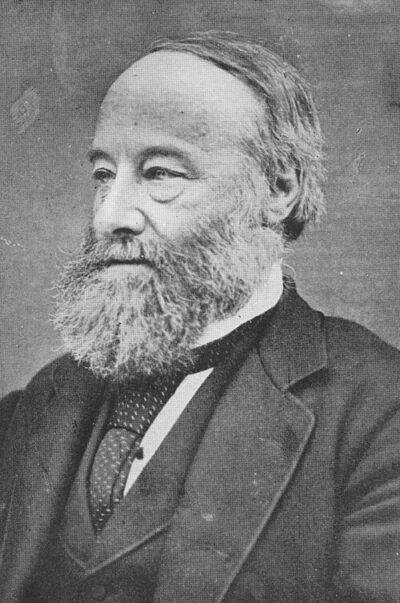
thermodynamics
Thermodynamics is a branch of physics concerned with heat, work, temperature, and thermal or internal energy.
All 2 facts, and where they come from
Facts
2 facts · 0 confirmed by two sources · 1 cited · 1 from one source
Where this comes from
Papalocal keeps its own record. It started from these sources; what each one said is kept here as it was copied, so a change on their side never changes this page by itself. Tap one to read its version.
What Wikidata says · copied November 17, 2026 · revision 2535920239
- Described as
- branch of physics concerned with heat, work, temperature, and thermal or internal energy
- Other names
- thermo-dynamics, thermal science, pyro-dynamics
- What it is
- branch of physics; academic discipline · 1 reference
- Wikipedias with a page
- 157
Wikidata item Q11473 (wikidata.org/wiki/Q11473), public domain (CC0). Copied 2026-11-17.
What Wikipedia says · copied November 17, 2026 · revision 1383796974
Thermodynamics is a branch of physics that deals with heat, work, and temperature, and their relation to energy, entropy, and the physical properties of matter and radiation. The behavior of these quantities is governed by the four laws of thermodynamics, which convey a quantitative description using measurable macroscopic physical quantities but may be explained in terms of microscopic constituents by statistical mechanics. Thermodynamics applies to various topics in science and engineering, especially physical chemistry, biochemistry, chemical engineering, and mechanical engineering, as well as other complex fields such as meteorology.
Historically, thermodynamics developed out of a desire to increase the efficiency of early steam engines, particularly through the work of French physicist Sadi Carnot (1824). Scots-Irish physicist Lord Kelvin is the first to have formulated a concise definition of thermodynamics in 1854 which states, "Thermo-dynamics is the subject of the relation of heat to forces acting between contiguous parts of bodies, and the relation of heat to electrical agency." German physicist and mathematician Rudolf Clausius restated Carnot's principle known as the Carnot cycle and gave the theory of heat a more accurate and sounder basis. His most important paper, "On the Moving Force of Heat", published in 1850, first stated the second law of thermodynamics. In 1865 he named the concept of entropy. In 1870 he introduced the virial theorem, which applied to heat.
The initial application of thermodynamics to mechanical heat engines was quickly extended to the study of chemical compounds and chemical reactions. Chemical thermodynamics studies the nature of the role of entropy in the process of chemical reactions and has provided the bulk of expansion and knowledge of the field. Other formulations of thermodynamics emerged. Statistical thermodynamics, or statistical mechanics, concerns itself with statistical predictions of the collective motion of particles from their microscopic behavior. In 1909, Constantin Carathéodory presented a purely mathematical approach in an axiomatic formulation, a description often referred to as geometrical thermodynamics.
From the Wikipedia article “Thermodynamics” (en.wikipedia.org/wiki/Thermodynamics), by its contributors, under CC BY-SA 4.0 (creativecommons.org/licenses/by-sa/4.0/). Copied 2026-11-17; not changed.
Confirmed Two sources agree. Cited One source, and it names where it got it. One source One source, without a reference of its own. Sources disagree The sources disagree. We show the best-supported value and keep theirs below.
Picture: Wikimedia Commons: Heat engine summary.png · See Commons file page
People connected 7
Field
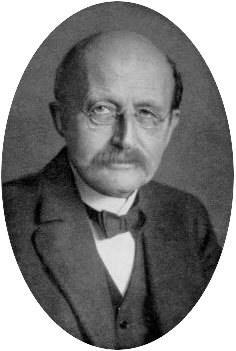 Max PlanckGerman theoretical physicist (1858–1947)
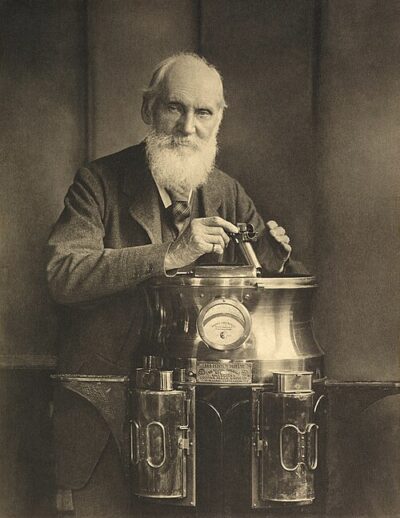 William Thomson, 1st Baron KelvinBritish physicist and engineer (1824–1907)
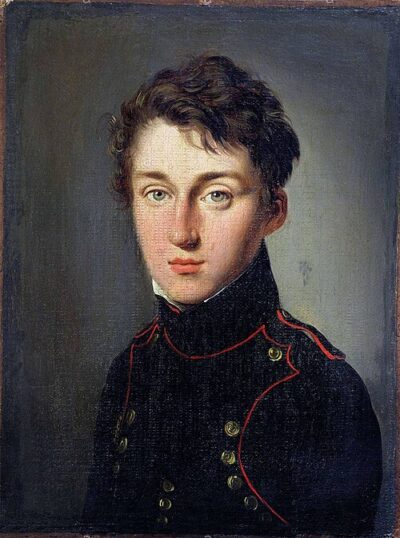 Nicolas CarnotFrench physicist (1796–1832)
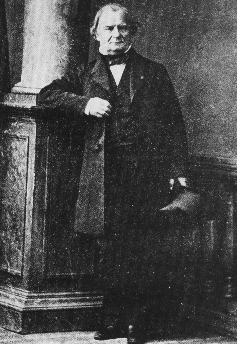 Benoît Paul Émile ClapeyronFrench physicist (1799-1864)
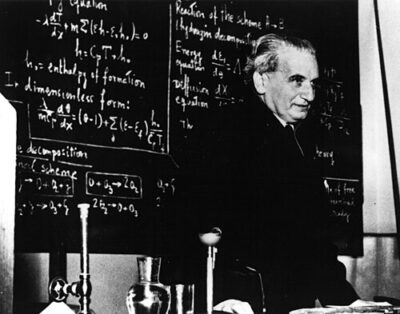 Theodore von KármánHungarian-American mathematician, aerospace engineer and physicist (1881–1963)
 Peter Guthrie TaitScottish mathematical physicist (1831–1901)