
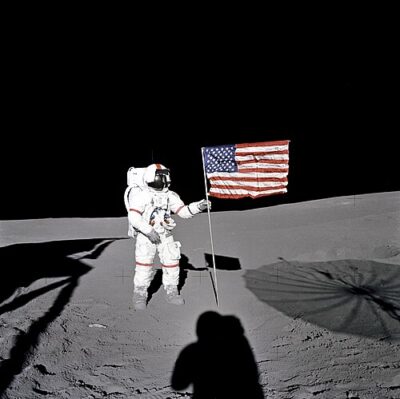
Alan Shepard
Alan Shepard was an American astronaut, first American in space, lunar explorer. Born November 18, 1923, in Derry. Died July 21, 1998, in Pebble Beach. Positions held include Chief of the Astronaut Office (2 times) (1963–1974). Educated at Naval War College and Admiral Farragut Academy. Awards include Distinguished Flying Cross, Congressional Space Medal of Honor and NASA Exceptional Service Medal.
Facts
35 facts · 2 confirmed by two sources · 10 cited · 23 from one source
Where this comes from
Papalocal keeps its own record. It started from these sources; what each one said is kept here as it was copied, so a change on their side never changes this page by itself. Tap one to read its version.
What Wikidata says · copied November 13, 2026 · revision 2568214347
- Described as
- American astronaut, first American in space, lunar explorer (1923–1998)
- Other names
- Alan Bartlett Shepard Jr., Alan Bartlett Shepard
- Born
- November 18, 1923 · 12 references
- Died
- July 21, 1998 · 4 references
- Born in
- Derry · 1 reference
- Died in
- Pebble Beach · 1 reference
- Buried in
- Forest Hill Cemetery · 1 reference
- Cause of death
- leukemia · 1 reference
- Citizen of
- United States
- Occupation
- naval officer; astronaut (1959–1974); aircraft pilot; entrepreneur
- Positions held
- Chief of the Astronaut Office (2 times) (1963–1974)
- Worked for
- National Aeronautics and Space Administration
- Education
- Naval War College; Admiral Farragut Academy · 1 reference; United States Naval Test Pilot School; United States Naval Academy · 1 reference; Pinkerton Academy · 1 reference
- Member of
- Mercury Seven · 1 reference
- Awards
- Distinguished Flying Cross; Congressional Space Medal of Honor (1978) · 1 reference; NASA Exceptional Service Medal; National Aviation Hall of Fame (1977) · 1 reference; Langley Gold Medal (1964); NASA Distinguished Service Medal (2 times) (1961, 1977) · 1 reference; NASA Exceptional Achievement Medal; United States Astronaut Hall of Fame; International Space Hall of Fame (1981) · 2 references
- Spouse
- Louise Brewer Shepard (1945–)
- Children
- Laura Shepard Churchley
- Father
- Alan B. Shepard · 1 reference
- Mother
- Pauline Renza Shepard · 1 reference
- Religion
- Christian Science
- Military branch
- United States Navy
- Military rank
- rear admiral (1971–) · 1 reference
- Wikipedias with a page
- 71
Wikidata item Q174979 (wikidata.org/wiki/Q174979), public domain (CC0). Copied November 13, 2026.
What Wikipedia says · copied November 13, 2026 · revision 1380960516
Alan Bartlett Shepard Jr. (November 18, 1923 – July 21, 1998) was an American astronaut. In 1961, he became the second person and the first American to travel into space and, in 1971, he became the fifth and oldest person to walk on the Moon, at age 47.
A graduate of the United States Naval Academy at Annapolis, Shepard saw action with the surface navy during World War II. He became a naval aviator in 1947, and a test pilot in 1950. He was selected as one of NASA's original Mercury Seven astronauts in 1959, and in May 1961 he made the first crewed Project Mercury flight, Mercury-Redstone 3, in a spacecraft he named Freedom 7. His craft entered space, but was not capable of achieving orbit. He became the second person, and the first American, to travel into space. In the final stages of Project Mercury, Shepard was scheduled to pilot the Mercury-Atlas 10 (MA-10), which was planned as a three-day mission. He named Mercury Spacecraft 15B Freedom 7 II in honor of his first spacecraft, but the mission was canceled.
Shepard was designated as the commander of the first crewed Project Gemini mission, but was grounded in October 1963 due to Ménière's disease, an inner-ear ailment that caused episodes of extreme dizziness and nausea. This was surgically corrected in 1968, and in 1971, Shepard commanded the Apollo 14 mission, piloting the Apollo Lunar Module Antares. He was the only one of the Mercury Seven astronauts to walk on the Moon. During the mission, he hit two golf balls on the lunar surface.
Shepard was chief of the Astronaut Office from November 1963 to August 1969 (the approximate period of his grounding), and from June 1971 until April 30, 1974. On August 25, 1971, he was promoted to rear admiral, the first astronaut to reach that rank. He retired from the United States Navy and NASA on July 31, 1974.
- Born, in its opening lines
- November 18, 1923
- Died, in its opening lines
- July 21, 1998
From the Wikipedia article “Alan Shepard” (en.wikipedia.org/wiki/Alan_Shepard), by its contributors, under CC BY-SA 4.0 (creativecommons.org/licenses/by-sa/4.0/). Copied November 13, 2026; not changed.
Confirmed Two sources agree. Cited One source, and it names where it got it. One source One source, without a reference of its own. Sources disagree The sources disagree. We show the best-supported value and keep theirs below.
