
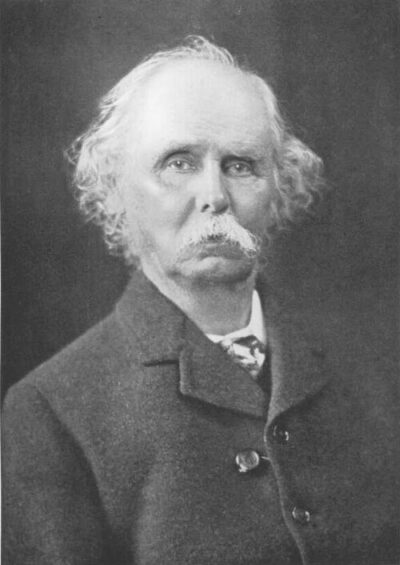
Alfred Marshall
Alfred Marshall was a British economist. Born July 26, 1842, in London. Died July 13, 1924, in Cambridge. Known for Principles of Economics. Educated at St John's College and Merchant Taylors' School. Awards include Adam Smith Prize and Fellow of the British Academy.
Facts
28 facts · 2 confirmed by two sources · 5 cited · 21 from one source
Where this comes from
Papalocal keeps its own record. It started from these sources; what each one said is kept here as it was copied, so a change on their side never changes this page by itself. Tap one to read its version.
What Wikidata says · copied November 16, 2026 · revision 2567361424
- Described as
- British economist (1842–1924)
- Born
- July 26, 1842 · 7 references
- Died
- July 13, 1924 · 7 references
- Born in
- London · 1 reference
- Died in
- Cambridge · 3 references
- Buried in
- Cambridge City Crematorium
- Citizen of
- United Kingdom of Great Britain and Ireland
- Occupation
- economist · 1 reference; philosopher; university teacher · 1 reference
- Worked for
- University College, Bristol; University of Oxford; University of Cambridge; University of Bristol
- Education
- St John's College; Merchant Taylors' School; University of Cambridge
- Member of
- Royal Swedish Academy of Sciences; American Academy of Arts and Sciences; Academy of Sciences of Turin (1918–) · 1 reference; Accademia Nazionale dei Lincei (1896–) · 1 reference
- Known for
- Principles of Economics
- Awards
- Adam Smith Prize; Fellow of the British Academy
- Field
- economics; economy · 1 reference; neoclassical economics · 1 reference
- Spouse
- Mary Paley Marshall (1877–) · 1 reference
- Lived in
- Marshall House, Cambridge (1886–1924)
- Wikipedias with a page
- 75
Wikidata item Q13529 (wikidata.org/wiki/Q13529), public domain (CC0). Copied November 16, 2026.
What Wikipedia says · copied November 16, 2026 · revision 1379800362
Alfred Marshall (26 July 1842 – 13 July 1924) was an English economist and one of the most influential economists of his time. His book Principles of Economics (1890) was the dominant economic textbook in England for many years, and brought the ideas of supply and demand, marginal utility, and costs of production into a coherent whole, popularizing the modern neoclassical approach which dominates microeconomics to this day. As a result, he is known as the father of scientific economics.
- Born, in its opening lines
- July 26, 1842
- Died, in its opening lines
- July 13, 1924
From the Wikipedia article “Alfred Marshall” (en.wikipedia.org/wiki/Alfred_Marshall), by its contributors, under CC BY-SA 4.0 (creativecommons.org/licenses/by-sa/4.0/). Copied November 16, 2026; not changed.
Confirmed Two sources agree. Cited One source, and it names where it got it. One source One source, without a reference of its own. Sources disagree The sources disagree. We show the best-supported value and keep theirs below.
