
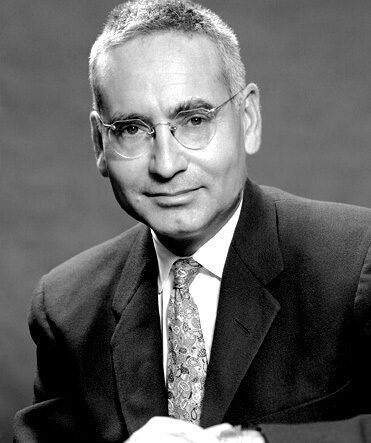
Alvin M. Weinberg
Alvin M. Weinberg was an American nuclear physicist. Born April 20, 1915, in Chicago. Died October 18, 2006, in Oak Ridge. Educated at University of Chicago and Theodore Roosevelt High School. Awards include Atoms for Peace Award, Harvey Prize and Fellow of the American Physical Society.
Facts
19 facts · 2 confirmed by two sources · 5 cited · 12 from one source
Where this comes from
Papalocal keeps its own record. It started from these sources; what each one said is kept here as it was copied, so a change on their side never changes this page by itself. Tap one to read its version.
What Wikidata says · copied November 16, 2026 · revision 2560278036
- Described as
- American nuclear physicist (1915–2006)
- Other names
- Alvin Weinberg, Alvin Martin Weinberg
- Born
- April 20, 1915 · 4 references
- Died
- October 18, 2006 · 5 references
- Born in
- Chicago
- Died in
- Oak Ridge
- Citizen of
- United States
- Occupation
- physicist · 1 reference; nuclear physicist
- Education
- University of Chicago; Theodore Roosevelt High School
- Member of
- National Academy of Sciences; American Academy of Arts and Sciences; American Philosophical Society (1977–) · 1 reference
- Awards
- Atoms for Peace Award; Harvey Prize (1982) · 1 reference; Fellow of the American Physical Society; Ernest Orlando Lawrence Award (1960); Enrico Fermi Award (1980); Golden Plate Award (1961) · 1 reference
- Field
- nuclear physics · 2 references
- Wikipedias with a page
- 22
Wikidata item Q449188 (wikidata.org/wiki/Q449188), public domain (CC0). Copied November 16, 2026.
What Wikipedia says · copied November 16, 2026 · revision 1377021616
Alvin Martin Weinberg (; April 20, 1915 – October 18, 2006) was an American nuclear physicist who was the administrator of Oak Ridge National Laboratory (ORNL) during and after the Manhattan Project. He came to Oak Ridge, Tennessee, in 1945 and remained there until his death in 2006. He was the first to use the term "Faustian bargain" to describe nuclear energy.
A graduate of the University of Chicago, which awarded him his doctorate in mathematical biophysics in 1939, Weinberg joined the Manhattan Project's Metallurgical Laboratory in September 1941. The following year he became part of Eugene Wigner's Theoretical Group, whose task was to design the nuclear reactors that would convert uranium into plutonium.
Weinberg replaced Wigner as director of research at ORNL in 1948, and became director of the laboratory in 1955. Under his direction it worked on the Aircraft Nuclear Propulsion program, and pioneered many innovative reactor designs, including the pressurized water reactors (PWRs) and boiling water reactors (BWRs) which have since become the dominant reactor types in commercial nuclear power plants, and Aqueous Homogeneous Reactor designs.
In 1960, Weinberg was appointed to the President's Science Advisory Committee in the Eisenhower administration and later served on it in the Kennedy administration. After leaving the ORNL in 1973, he was named director of the Office of Energy Research and Development in Washington, D.C., in 1974. The following year he founded and became the first director of the Institute for Energy Analysis at Oak Ridge Associated Universities (ORAU).
- Born, in its opening lines
- April 20, 1915
- Died, in its opening lines
- October 18, 2006
From the Wikipedia article “Alvin M. Weinberg” (en.wikipedia.org/wiki/Alvin_M._Weinberg), by its contributors, under CC BY-SA 4.0 (creativecommons.org/licenses/by-sa/4.0/). Copied November 16, 2026; not changed.
Confirmed Two sources agree. Cited One source, and it names where it got it. One source One source, without a reference of its own. Sources disagree The sources disagree. We show the best-supported value and keep theirs below.
