

Ernest Orlando Lawrence Award
Ernest Orlando Lawrence Award is an American award for contributions in research and development supporting the Department of Energy. It was created in 1960. It is given by the United States Department of Energy.
- Given by
- United States Department of Energy
- Country
- United States
- Created
- 1960
All 6 facts, and where they come from
Facts
6 facts · 0 confirmed by two sources · 0 cited · 6 from one source
Where this comes from
Papalocal keeps its own record. It started from these sources; what each one said is kept here as it was copied, so a change on their side never changes this page by itself. Tap one to read its version.
What Wikidata says · copied November 16, 2026 · revision 2569345198
- Described as
- American award for contributions in research and development supporting the Department of Energy
- Other names
- E.O. Lawrence Award, E. O. Lawrence Award
- What it is
- award
- Created
- 1960
- Country
- United States
- Given by
- United States Department of Energy
- Named after
- Ernest Lawrence
- Official website
- https://science.osti.gov/lawrence
- Wikipedias with a page
- 12
Wikidata item Q1356190 (wikidata.org/wiki/Q1356190), public domain (CC0). Copied 2026-11-16.
What Wikipedia says · copied November 16, 2026 · revision 1361091963
The Ernest Orlando Lawrence Award was established in 1959 in honor of Ernest Lawrence, a scientist who helped elevate American physics to the status of world leader in the field.
Lawrence was the inventor of the cyclotron, an accelerator of subatomic particles, and a 1939 Nobel Laureate in physics for that achievement. The Radiation Laboratory he developed at Berkeley during the 1930s ushered in the era of "big science", in which experiments were no longer done by an individual researcher and a few assistants on the table-top of an academic lab but by large, multidisciplinary teams of scientists and engineers in entire buildings full of sophisticated equipment and huge scientific machines. During World War II, Lawrence and his accelerators contributed to the Manhattan Project, and he later played a leading role in establishing the U.S. system of national laboratories, two of which (Lawrence Berkeley and Lawrence Livermore) now bear his name.
Shortly after Lawrence's death in August 1958, John A. McCone, Chairman of the United States Atomic Energy Commission, wrote to President Eisenhower suggesting the establishment of a memorial award in Lawrence's name. President Eisenhower agreed, saying, "Such an award would seem to me to be most fitting, both as a recognition of what he has given to our country and to mankind, and as a means of helping to carry forward his work through inspiring others to dedicate their lives and talents to scientific effort." The first Lawrence Awards were given in 1960.
The Ernest Orlando Lawrence Award is bestowed by the Secretary of the U.S. Department of Energy to mid-career scientists and engineers in recognition of exceptional scientific, technical, and/or engineering achievements related to the broad missions of the U.S. Department of Energy and its programs. The Lawrence Award is administered by the Department of Energy's Office of Science.
Each Lawrence Award recipient receives a citation signed by the Secretary of Energy, a gold medal bearing the likeness of Ernest Orlando Lawrence, and a $20,000 honorarium.
From the Wikipedia article “Ernest Orlando Lawrence Award” (en.wikipedia.org/wiki/Ernest_Orlando_Lawrence_Award), by its contributors, under CC BY-SA 4.0 (creativecommons.org/licenses/by-sa/4.0/). Copied 2026-11-16; not changed.
Confirmed Two sources agree. Cited One source, and it names where it got it. One source One source, without a reference of its own. Sources disagree The sources disagree. We show the best-supported value and keep theirs below.
Picture: Wikimedia Commons: EOL-Medal.jpg · See Commons file page
People connected 17
Won it
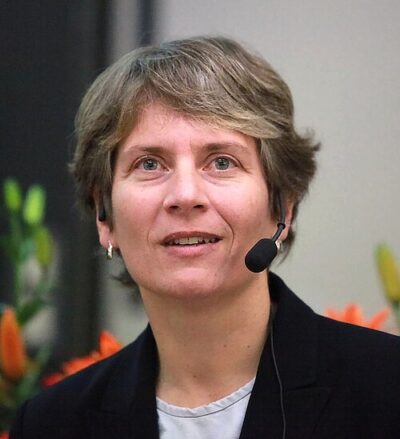 Carolyn Bertozzi (2014)American chemist (born 1966)
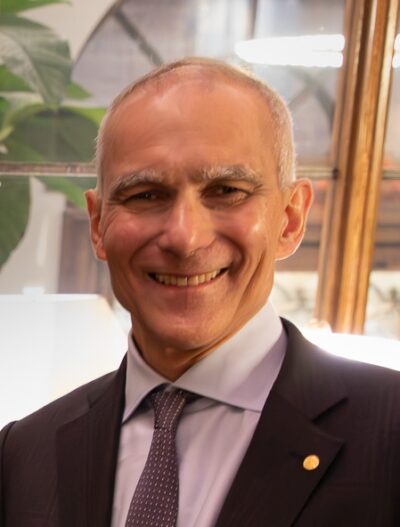 Moungi Bawendi (2006)American chemist of French and Tunisian descent
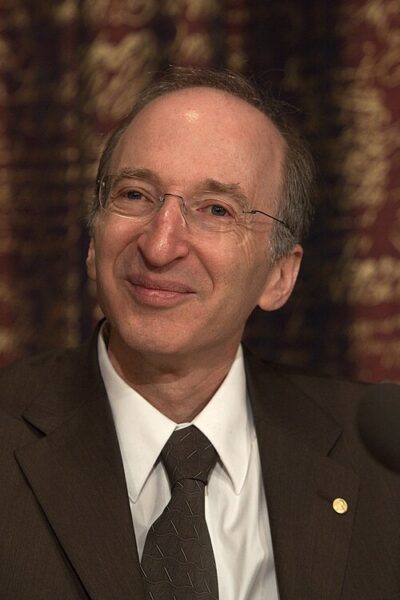 Saul Perlmutter (2002)American astrophysicist and Nobel laureate
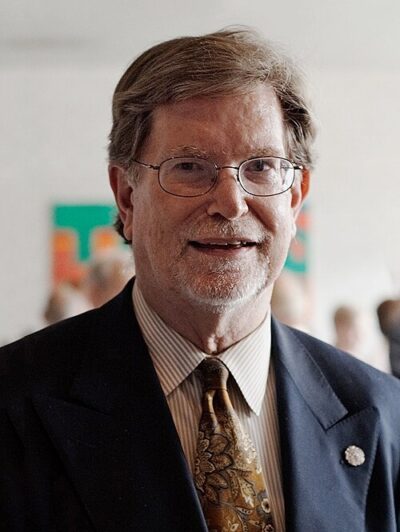 George F. Smoot (1994)American astrophysicist and cosmologist (1945–2025)
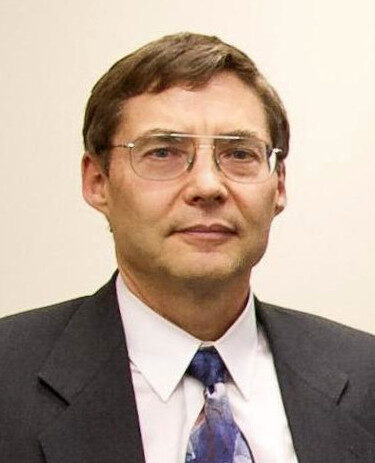 Carl Wieman (1993)Nobel prize winning US physicist
 Richard Smalley (1991)American chemist (1943–2005)
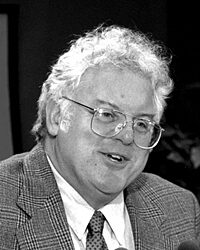 Robert B. Laughlin (1984)American physicist
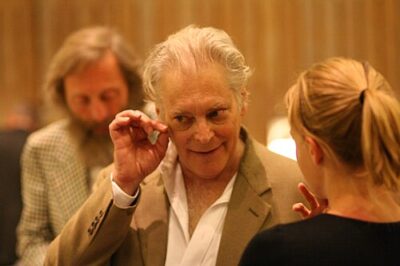 Mitchell Feigenbaum (1982)American mathematical physicist (1944–2019)
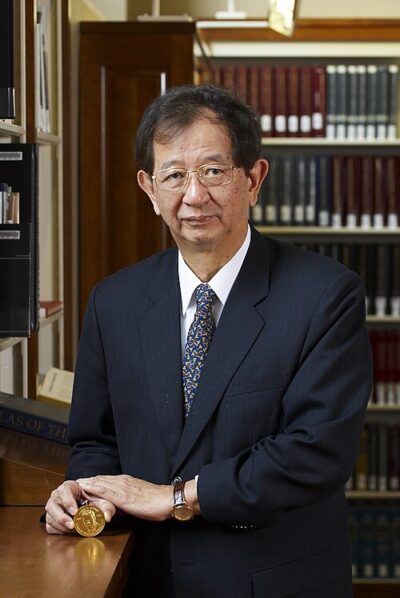 Yuan T. Lee (1981)Taiwanese chemist
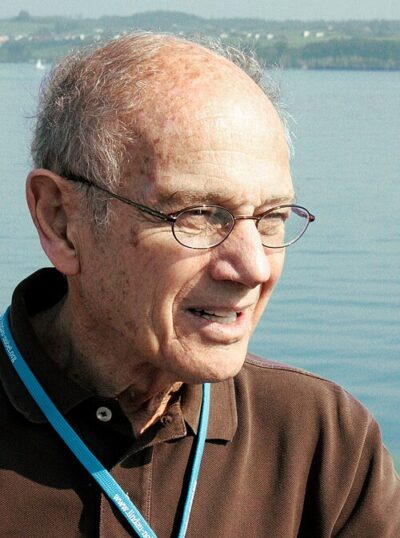 James Cronin (1976)American physicist
 Burton Richter (1975)American physicist
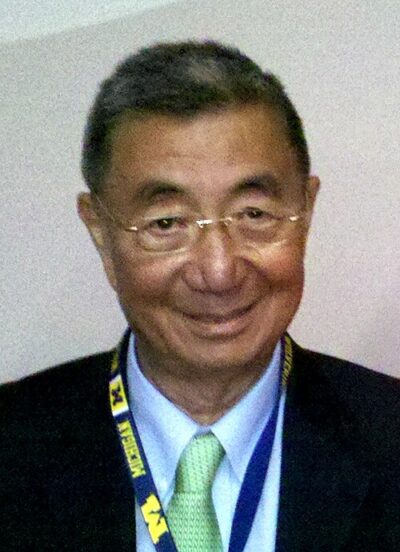 Samuel C. C. Ting (1975)Chinese-American physicist
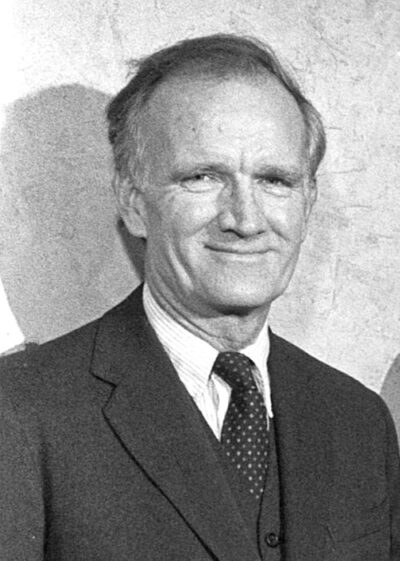 Val Logsdon Fitch (1968)American physicist
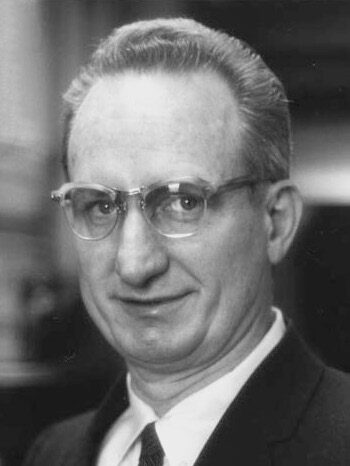 James Rainwater (1963)American physicist
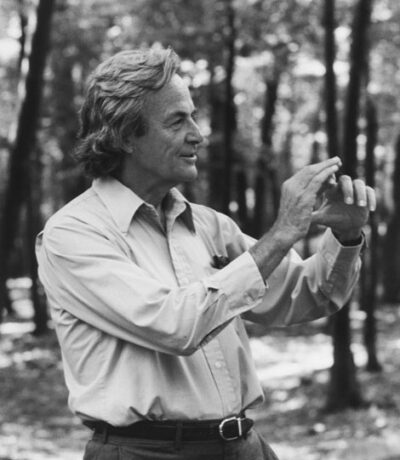 Richard Feynman (1962)American theoretical physicist (1918–1988)
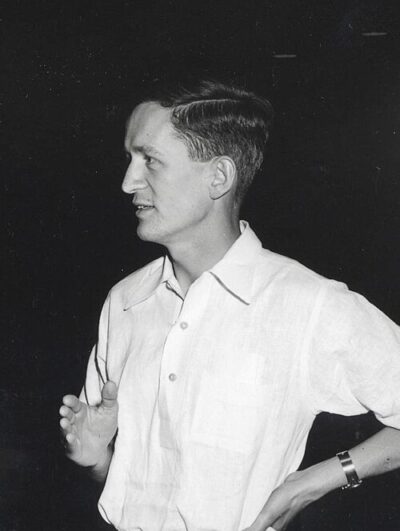 Norman Foster Ramsey (1960)American physicist (1915–2011)
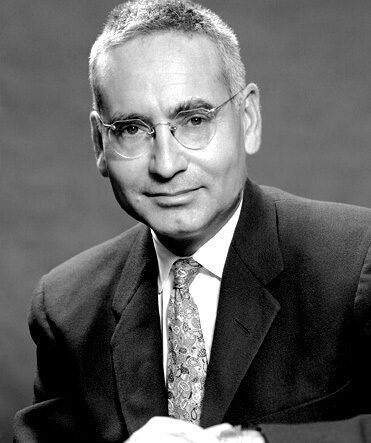 Alvin M. Weinberg (1960)American nuclear physicist (1915–2006)
