
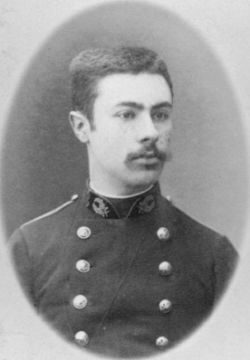
André Blondel
André Blondel was a French physicist. Born August 28, 1863, in Chaumont. Died November 15, 1938, in Paris. Educated at École polytechnique and École Nationale des Ponts et Chaussées. Awards include Commander of the Legion of Honour, Faraday Medal and John Scott Award.
Facts
20 facts · 2 confirmed by two sources · 4 cited · 14 from one source
Where this comes from
Papalocal keeps its own record. It started from these sources; what each one said is kept here as it was copied, so a change on their side never changes this page by itself. Tap one to read its version.
What Wikidata says · copied November 18, 2026 · revision 2523632610
- Described as
- French physicist (1863–1938)
- Other names
- Andre-Eugene Blondel, Andre Blondel
- Born
- August 28, 1863 · 5 references
- Died
- November 15, 1938 · 5 references
- Born in
- Chaumont
- Died in
- Paris
- Citizen of
- France
- Occupation
- physicist · 1 reference; civil engineer; inventor; electrical engineer; engineer · 1 reference
- Education
- École polytechnique; École Nationale des Ponts et Chaussées · 1 reference
- Member of
- French Academy of Sciences; Academy of Sciences of the USSR; Russian Academy of Sciences; Société des arts de Genève · 1 reference
- Awards
- Commander of the Legion of Honour; Faraday Medal (1937); John Scott Award (1898) · 1 reference
- Field
- physics
- Wikipedias with a page
- 20
Wikidata item Q516285 (wikidata.org/wiki/Q516285), public domain (CC0). Copied November 18, 2026.
What Wikipedia says · copied November 18, 2026 · revision 1371970990
André-Eugène Blondel (28 August 1863 – 15 November 1938) was a French engineer and physicist. He was the inventor of the electromechanical oscillograph and a system of photometric units of measurement.
- Born, in its opening lines
- August 28, 1863
- Died, in its opening lines
- November 15, 1938
From the Wikipedia article “André Blondel” (en.wikipedia.org/wiki/André_Blondel), by its contributors, under CC BY-SA 4.0 (creativecommons.org/licenses/by-sa/4.0/). Copied November 18, 2026; not changed.
Confirmed Two sources agree. Cited One source, and it names where it got it. One source One source, without a reference of its own. Sources disagree The sources disagree. We show the best-supported value and keep theirs below.
