
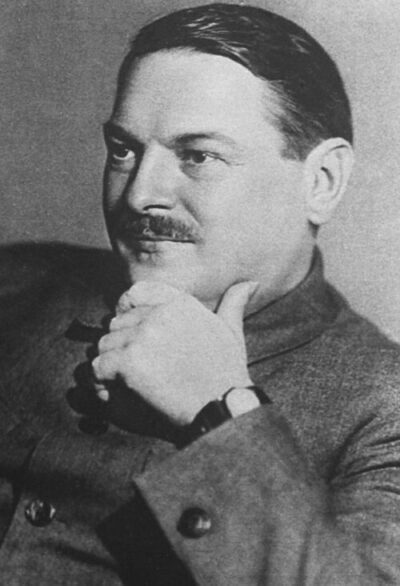
Andrej Aleksandroviç Zhdanov
Andrej Aleksandroviç Zhdanov was a Soviet politician. Born February 14, 1896, in Mariupol. Died August 31, 1948, in Moscow. Positions held include member of the Presidium of the Supreme Soviet of the USSR (1938–), deputy of the Supreme Soviet of the Soviet Union (1938–1948) and member of the Supreme Soviet of the Byelorussian SSR of the 1st convocation. Awards include Order of Lenin (2 times), Medal "For the Victory over Germany in the Great Patriotic War 1941–1945" and Order of the Red Banner.
Facts
40 facts · 1 confirmed by two sources · 7 cited · 30 from one source · 2 where the sources disagree
What’s different
- Born: we show February 14, 1896 (Sources disagree). Wikipedia says February 26, 1896
- Died in: we show Moscow (Sources disagree). Wikidata also lists Dolgiye Borody
Where this comes from
Papalocal keeps its own record. It started from these sources; what each one said is kept here as it was copied, so a change on their side never changes this page by itself. Tap one to read its version.
What Wikidata says · copied November 16, 2026 · revision 2564704062
- Described as
- Soviet politician (1896-1948)
- Other names
- Andrei Alexandrovich Zhdanov, Andrei Aleksandrovich Zhdanov, A. Abramenkov
- Born
- February 14, 1896
- Died
- August 31, 1948 · 8 references
- Born in
- Mariupol · 2 references
- Died in
- Dolgiye Borody · 1 reference; Moscow · 2 references
- Buried in
- Kremlin Wall Necropolis
- Cause of death
- myocardial infarction
- Citizen of
- Russian Empire; Soviet Union
- Occupation
- politician · 3 references; military personnel
- Positions held
- member of the Presidium of the Supreme Soviet of the USSR (1938–); deputy of the Supreme Soviet of the Soviet Union (1938–1948); member of the Supreme Soviet of the Byelorussian SSR of the 1st convocation; Member of the Politburo of the CPSU Central Committee (1939–1948) · 1 reference; Secretary of the Communist Party of the Soviet Union (1934–1948) · 1 reference
- Political party
- Communist Party of the Soviet Union (1915–); Russian Social Democratic Labour Party (bolshevik) · 1 reference
- Member of
- Politburo of the Central Committee of the Communist Party of the Soviet Union; All-Russian Central Executive Committee; All-Union Society of Old Bolsheviks
- Awards
- Order of Lenin (2 times) (1935, 1946); Medal "For the Victory over Germany in the Great Patriotic War 1941–1945"; Order of the Red Banner (1940); Order of Suvorov, 1st class (1944); Order of Kutuzov, 1st class (1944); Order of the Red Banner of Labour (1939); Medal "For the Defence of Leningrad"; Medal "For Valiant Labour in the Great Patriotic War 1941–1945"; Medal "In Commemoration of the 800th Anniversary of Moscow" · 1 reference
- Field
- political activity · 1 reference; ideology · 1 reference; communist propaganda · 1 reference; socialist realism · 1 reference; politics · 1 reference
- Spouse
- Zinaida Zhdanova
- Children
- Yuri Zhdanov
- Father
- Aleksandr Zhdanov
- Mother
- Ekaterina Zhdanova
- Siblings
- Anna Zhdanova
- Military rank
- colonel general (1944–) · 1 reference
- Wikipedias with a page
- 56
Wikidata item Q207879 (wikidata.org/wiki/Q207879), public domain (CC0). Copied November 16, 2026.
What Wikipedia says · copied November 16, 2026 · revision 1381783284
Andrei Aleksandrovich Zhdanov (Russian: Андрей Александрович Жданов, IPA: [ɐnˈdrʲej ɐlʲɪkˈsandrəvʲɪdʑ ˈʐdanəf] ; 26 February [O.S. 14 February] 1896 – 31 August 1948) was a Soviet politician. He was the Soviet Union's "propagandist-in-chief" after the Second World War, and was responsible for developing the Soviet cultural policy, the Zhdanov Doctrine, which remained in effect until the death of Joseph Stalin. Zhdanov was considered Stalin's most likely successor but died before him.
Zhdanov joined the Bolsheviks in 1915 and quickly rose through the party ranks. A close associate of Stalin, he became a secretary of the Central Committee in 1934, and later that year he was promoted to Leningrad party chief following the assassination of Sergei Kirov. He would go on to play a major role during the Great Purge. In 1939, he was promoted to full membership of the Politburo and as head of the Central Committee's Propaganda Department. Zhdanov's political standing was undermined during the Second World War due to his association with the Soviet–Finnish War and the failed Molotov–Ribbentrop Pact. Nevertheless, he played a leading role in the Soviet takeover of Estonia and defense of Leningrad.
After the war, Zhdanov was tasked by Stalin with directing cultural policy. His campaign, known as the Zhdanovshchina, was strictly enforced and led to the denouncement of artists including Anna Akhmatova and Dmitri Shostakovich. He also oversaw the creation of the Cominform in 1947. Initially considered the successor-in-waiting to Stalin, Zhdanov suffered from ill health and fell out of favour as a result of the Tito–Stalin split. He died of heart failure in 1948, resulting in a rise in the political fortunes of Georgy Malenkov.
- Born, in its opening lines
- February 26, 1896
- Died, in its opening lines
- August 31, 1948
From the Wikipedia article “Andrei Zhdanov” (en.wikipedia.org/wiki/Andrei_Zhdanov), by its contributors, under CC BY-SA 4.0 (creativecommons.org/licenses/by-sa/4.0/). Copied November 16, 2026; not changed.
Confirmed Two sources agree. Cited One source, and it names where it got it. One source One source, without a reference of its own. Sources disagree The sources disagree. We show the best-supported value and keep theirs below.
