
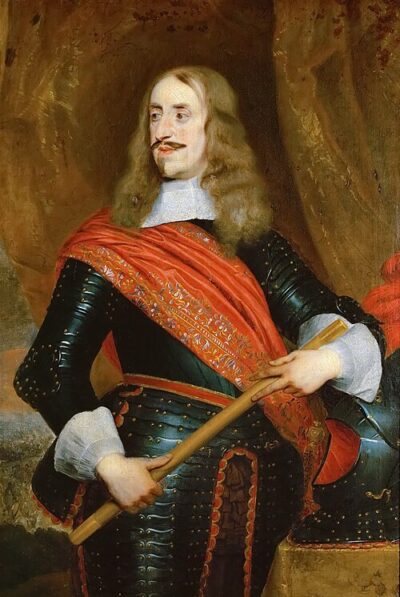
Archduke Leopold Wilhelm of Austria
Archduke Leopold Wilhelm of Austria was an Austrian archduke. Born January 5, 1614, in Wiener Neustadt. Died November 20, 1662, in Vienna. Positions held include Grand Master of the Teutonic Knights (1639–1662), Roman Catholic Bishop of Olomouc (1637–1662) and Roman Catholic Bishop of Wrocław (1656–). Known for Theatrum pictorium and Painting collection of Archduke Leopold Wilhelm of Austria.
Facts
34 facts · 2 confirmed by two sources · 9 cited · 22 from one source · 1 where the sources disagree
What’s different
- Born: we show January 5, 1614 (Confirmed). Wikidata also lists January 6, 1614
- Born in: we show Wiener Neustadt (Sources disagree). Wikidata also lists Graz
Where this comes from
Papalocal keeps its own record. It started from these sources; what each one said is kept here as it was copied, so a change on their side never changes this page by itself. Tap one to read its version.
What Wikidata says · copied November 17, 2026 · revision 2570027702
- Described as
- Austrian archduke (1614-1662)
- Other names
- Archduke of Austria Leopold William, Archduke of Austria Leopoldus Gulielmus, Archduke of Austria Leopold Wilhelm, Archduke of Austria Leopoldo Guglielmo, Archduke of Austria Guglielmo Leopoldo, Leopold, Archduke of Austria Wilhelm, Archduke of Austria Léopold Guillaume, Archduke of Austria Leopold Guillaume
- Born
- January 5, 1614 · 4 references; January 6, 1614 · 2 references
- Died
- November 20, 1662 · 7 references
- Born in
- Wiener Neustadt · 1 reference; Graz · 1 reference
- Died in
- Vienna · 2 references
- Buried in
- Imperial Crypt
- Citizen of
- Holy Roman Empire
- Occupation
- politician; Catholic priest; art collector; military leader · 1 reference; patron of the arts · 1 reference; bishop · 1 reference
- Positions held
- Grand Master of the Teutonic Knights (1639–1662); Roman Catholic Bishop of Olomouc (1637–1662) · 1 reference; Roman Catholic Bishop of Wrocław (1656–) · 2 references; Roman Catholic Bishop of Halberstadt (1627–1662) · 1 reference; Roman Catholic Bishop of Passau (1625–1662) · 2 references; Governor of the Spanish Netherlands (1647–1656); Roman Catholic Bishop of Strasbourg (1626–1662) · 2 references; stadtholder
- Known for
- Theatrum pictorium; Painting collection of Archduke Leopold Wilhelm of Austria
- Field
- Christian Church · 1 reference; military affairs · 1 reference; collecting · 1 reference
- Father
- Ferdinand II, Holy Roman Emperor · 1 reference
- Mother
- Maria Anna of Bavaria
- Siblings
- Archduchess Maria Anna of Austria; Cecilia Renata of Austria; Ferdinand III, Holy Roman Emperor; Archduke Johann Karl of Austria
- Religion
- Catholic Church · 1 reference
- Military branch
- Army of Flanders · 1 reference
- Military rank
- general
- Wikipedias with a page
- 27
Wikidata item Q437295 (wikidata.org/wiki/Q437295), public domain (CC0). Copied November 17, 2026.
What Wikipedia says · copied November 17, 2026 · revision 1379838314
Archduke Leopold Wilhelm of Austria (5 January 1614 – 20 November 1662), younger brother of Emperor Ferdinand III, was an Austrian soldier, administrator and patron of the arts.
He held a number of military commands, with limited success, and served as Governor of the Spanish Netherlands, before returning to Vienna in 1656. Despite being nominated as Holy Roman Emperor after Ferdinand's death in 1657, he stood aside in favour of his nephew Leopold I.
His main interest was in art, and he patronised artists including David Teniers the Younger, Frans Snyders, Peter Snayers, Daniel Seghers, Peter Franchoys, Frans Wouters, Jan van den Hoecke and Pieter Thijs. His collection of 17th century Venetian and Dutch paintings are now held by the Kunsthistorisches Museum in Vienna.
- Born, in its opening lines
- January 5, 1614
- Died, in its opening lines
- November 20, 1662
From the Wikipedia article “Archduke Leopold Wilhelm of Austria” (en.wikipedia.org/wiki/Archduke_Leopold_Wilhelm_of_Austria), by its contributors, under CC BY-SA 4.0 (creativecommons.org/licenses/by-sa/4.0/). Copied November 17, 2026; not changed.
Confirmed Two sources agree. Cited One source, and it names where it got it. One source One source, without a reference of its own. Sources disagree The sources disagree. We show the best-supported value and keep theirs below.
