
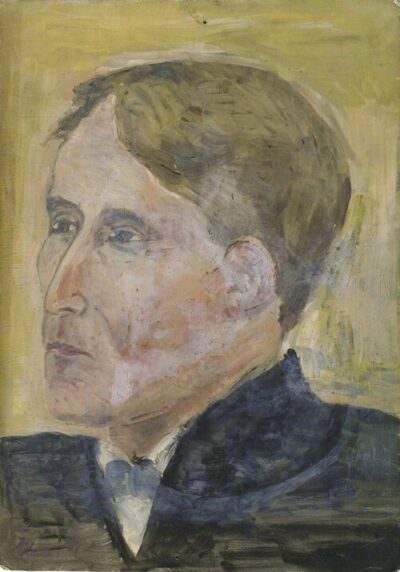
Arthur Waley
Arthur Waley was a British orientalist and sinologist. Born August 19, 1889, in Royal Tunbridge Wells. Died June 27, 1966, in London. Educated at Rugby School and King's College. Awards include James Tait Black Memorial Prize, King’s / Queen’s Gold Medal for Poetry and Companion of Honour.
Facts
31 facts · 2 confirmed by two sources · 11 cited · 18 from one source
Where this comes from
Papalocal keeps its own record. It started from these sources; what each one said is kept here as it was copied, so a change on their side never changes this page by itself. Tap one to read its version.
What Wikidata says · copied November 17, 2026 · revision 2557797765
- Described as
- British orientalist and sinologist (1889–1966)
- Other names
- Sir Arthur Waley, Arthur David Waley, Sir Arthur David Waley, Arthur David Schloss
- Born
- August 19, 1889 · 9 references
- Died
- June 27, 1966 · 9 references
- Born in
- Royal Tunbridge Wells · 1 reference
- Died in
- London · 1 reference
- Buried in
- Highgate Cemetery
- Name at birth
- Arthur David Schloss
- Citizen of
- United Kingdom
- Occupation
- poet; translator · 1 reference; writer · 2 references; sinologist · 2 references; orientalist; curator · 1 reference; art historian · 1 reference
- Worked for
- British Museum (1913–); SOAS, University of London
- Education
- Rugby School; King's College
- Member of
- Medieval Academy of America (1955–) · 1 reference; Japan Academy (1965–) · 1 reference
- Awards
- James Tait Black Memorial Prize (1942); King’s / Queen’s Gold Medal for Poetry; Companion of Honour; Commander of the Order of the British Empire; Prix Stanislas Julien (1950); Corresponding Fellow of the Medieval Academy of America (1955) · 1 reference
- Field
- Asian studies; sinology
- Spouse
- Alison Waley (1966) · 1 reference
- Father
- David F Schloss
- Siblings
- David Waley · 1 reference
- Wikipedias with a page
- 26
Wikidata item Q711869 (wikidata.org/wiki/Q711869), public domain (CC0). Copied November 17, 2026.
What Wikipedia says · copied November 17, 2026 · revision 1379534140
Arthur David Waley (né Schloss, 19 August 1889 – 27 June 1966) was an English orientalist and sinologist who achieved both popular and scholarly acclaim for his translations of Chinese and Japanese poetry. Among his honours were appointment as Commander of the Order of the British Empire in 1952, receiving the Queen's Gold Medal for Poetry in 1953, and being invested as a Member of the Order of the Companions of Honour in 1956.
Although highly learned, Waley avoided academic posts and most often wrote for a general audience. He chose not to be a specialist but to translate a wide and personal range of classical literature. Starting in the 1910s and continuing steadily almost until his death in 1966, these translations started with poetry, such as A Hundred and Seventy Chinese Poems (1918) and Japanese Poetry: The Uta (1919), then an equally wide range of novels, such as The Tale of Genji (1925–26), an 11th-century Japanese work, and Monkey, from 16th-century China. Waley also presented and translated Chinese philosophy, wrote biographies of literary figures, and maintained a lifelong interest in both Asian and Western paintings.
A 2004 profile by fellow sinologist E. Bruce Books called Waley "the great transmitter of the high literary cultures of China and Japan to the English-reading general public; the ambassador from East to West in the first half of the 20th century", and went on to say that he was "self-taught, but reached remarkable levels of fluency, even erudition, in both languages. It was a unique achievement, possible (as he himself later noted) only in that time, and unlikely to be repeated."
- Born, in its opening lines
- August 19, 1889
- Died, in its opening lines
- June 27, 1966
From the Wikipedia article “Arthur Waley” (en.wikipedia.org/wiki/Arthur_Waley), by its contributors, under CC BY-SA 4.0 (creativecommons.org/licenses/by-sa/4.0/). Copied November 17, 2026; not changed.
Confirmed Two sources agree. Cited One source, and it names where it got it. One source One source, without a reference of its own. Sources disagree The sources disagree. We show the best-supported value and keep theirs below.
