
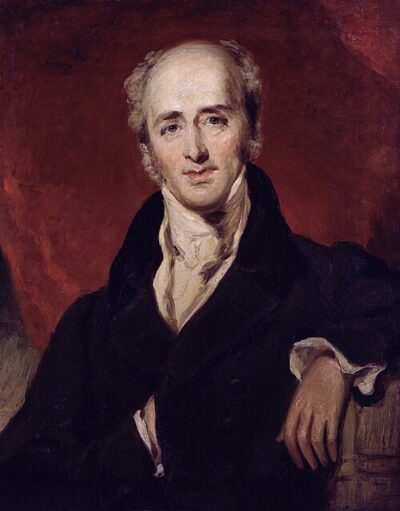
Charles Grey, 2nd Earl Grey
Charles Grey, 2nd Earl Grey was a Prime Minister of the United Kingdom from 1830 to 1834. Born March 13, 1764, in Fallodon. Died July 17, 1845, in Northumberland. Positions held include Prime Minister of the United Kingdom (1830–1834), member of the 4th Parliament of the United Kingdom and Leader of the House of Lords (1830–1834). Educated at Trinity College and Eton College. Awards include Order of the Garter.
Facts
47 facts · 2 confirmed by two sources · 21 cited · 24 from one source
Where this comes from
Papalocal keeps its own record. It started from these sources; what each one said is kept here as it was copied, so a change on their side never changes this page by itself. Tap one to read its version.
What Wikidata says · copied November 16, 2026 · revision 2567355939
- Described as
- Prime Minister of the United Kingdom from 1830 to 1834 (1764–1845)
- Other names
- Viscount Howick, The Earl Grey
- Born
- March 13, 1764 · 9 references
- Died
- July 17, 1845 · 9 references
- Born in
- Fallodon
- Died in
- Northumberland
- Buried in
- St Michael's Church, Alnwick · 1 reference
- Citizen of
- United Kingdom of Great Britain and Ireland (1801–); Kingdom of Great Britain (–1801)
- Occupation
- politician · 1 reference
- Positions held
- Prime Minister of the United Kingdom (1830–1834); member of the 4th Parliament of the United Kingdom; Leader of the House of Lords (1830–1834); Secretary of State for Foreign and Commonwealth Affairs (1806–1807); Leader of the House of Commons (1806–1807); member of the House of Lords; Member of the Privy Council of the United Kingdom; First Lord of the Admiralty (1806); member of the 1st Parliament of the United Kingdom; member of the 2nd Parliament of the United Kingdom; member of the 3rd Parliament of the United Kingdom; member of the 16th Parliament of Great Britain; member of the 17th Parliament of Great Britain; member of the 18th Parliament of Great Britain; Leader of the Opposition (1807) · 1 reference
- Political party
- Whigs
- Education
- Trinity College · 1 reference; Eton College · 1 reference; Richmond School
- Awards
- Order of the Garter · 1 reference
- Spouse
- Mary Grey, Countess Grey (1794–1845) · 2 references
- Children
- Eliza Courtney · 1 reference; Louisa Grey · 1 reference; Henry Grey, 3rd Earl Grey · 1 reference; Frederick Grey; Charles Grey · 1 reference; stillborn daughter Grey · 1 reference; Lady Caroline Grey · 1 reference; Lady Georgiana Grey · 1 reference; Lady Mary Grey · 1 reference; William Grey · 1 reference; George Grey · 1 reference; Thomas Grey · 1 reference
- Father
- Charles Grey, 1st Earl Grey · 1 reference
- Mother
- Elizabeth Grey, Countess Grey · 2 references
- Siblings
- Sir George Grey, 1st Baronet · 1 reference; Lady Elizabeth Grey · 1 reference; Edward Grey · 1 reference; Lady Hannah Grey · 1 reference
- Wikipedias with a page
- 52
Wikidata item Q294662 (wikidata.org/wiki/Q294662), public domain (CC0). Copied November 16, 2026.
What Wikipedia says · copied November 16, 2026 · revision 1385729090
Charles Grey, 2nd Earl Grey (13 March 1764 – 17 July 1845) was a British Whig politician who served as prime minister of the United Kingdom from 1830 to 1834. His government enacted the Reform Acts of 1832, which expanded the electorate in the United Kingdom, and the Slavery Abolition Act of 1833, which abolished slavery in the British Empire.
Born into a prominent family in Northumberland, Grey was educated at Eton College and the University of Cambridge. While travelling in Europe on a Grand Tour, his uncle secured his election as member of parliament (MP) for Northumberland in a 1786 by-election. Grey joined Whig circles in London and was a long-time leader of the reform movement. He briefly served as First Lord of the Admiralty and as foreign secretary in the Ministry of All the Talents from 1806 to 1807 and then served in opposition as a member of the House of Lords for nearly 24 years.
He was asked to form a ministry by William IV in 1830, following the resignation of Wellington. As prime minister, Grey oversaw the passage of the Reform Act 1832, which redistributed parliamentary seats and standardised and extended the franchise in England and Wales. It was accompanied by the Scottish Reform Act and the Irish Reform Act of the same year. Grey's government also enacted the Slavery Abolition Act 1833, which outlawed the practice of slavery in the British Empire. Grey resigned as prime minister in 1834 following cabinet disagreements over policy in Ireland, and he subsequently retired from politics.
After an affair with the married Duchess of Devonshire, which resulted in a daughter who was brought up by Grey's parents, Grey married Mary Ponsonby and had fifteen children. His name is associated with Earl Grey tea although it is unlikely he had any connection with it.
- Born, in its opening lines
- March 13, 1764
- Died, in its opening lines
- July 17, 1845
From the Wikipedia article “Charles Grey, 2nd Earl Grey” (en.wikipedia.org/wiki/Charles_Grey,_2nd_Earl_Grey), by its contributors, under CC BY-SA 4.0 (creativecommons.org/licenses/by-sa/4.0/). Copied November 16, 2026; not changed.
Confirmed Two sources agree. Cited One source, and it names where it got it. One source One source, without a reference of its own. Sources disagree The sources disagree. We show the best-supported value and keep theirs below.
