
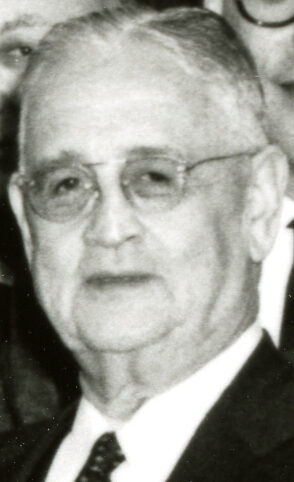
Charles Stark Draper
Charles Stark Draper was an American engineer. Born October 2, 1901, in Windsor. Died July 25, 1987, in Cambridge. Educated at Stanford University and University of Missouri. Awards include National Medal of Science, Daniel Guggenheim Medal and William Procter Prize for Scientific Achievement.
Facts
35 facts · 2 confirmed by two sources · 11 cited · 22 from one source
Where this comes from
Papalocal keeps its own record. It started from these sources; what each one said is kept here as it was copied, so a change on their side never changes this page by itself. Tap one to read its version.
What Wikidata says · copied November 16, 2026 · revision 2569022536
- Described as
- American engineer (1901–1987)
- Other names
- Charles S. Draper, C. S. Draper, C. S. DRAPER
- Born
- October 2, 1901 · 3 references
- Died
- July 25, 1987 · 3 references
- Born in
- Windsor
- Died in
- Cambridge · 1 reference
- Citizen of
- United States
- Occupation
- military flight engineer; inventor; university teacher; computer scientist; physicist · 1 reference; engineer · 1 reference
- Worked for
- Massachusetts Institute of Technology
- Education
- Stanford University; University of Missouri; Massachusetts Institute of Technology
- Member of
- French Academy of Sciences; American Academy of Arts and Sciences; National Academy of Engineering (1965–); National Academy of Sciences (1957–)
- Awards
- National Medal of Science (1964) · 1 reference; Daniel Guggenheim Medal (1966) · 1 reference; William Procter Prize for Scientific Achievement (1959) · 1 reference; Howard N. Potts Medal (1960) · 1 reference; National Aviation Hall of Fame (1981) · 1 reference; National Inventors Hall of Fame (1981) · 1 reference; Holley Medal (1957) · 1 reference; Langley Gold Medal (1981); Richard E. Bellman Control Heritage Award (1981) · 1 reference; Fellow of the American Physical Society; Magellanic Premium (1959); IEEE Lamme Medal (1973) · 1 reference; IEEE Fellow; Fellow of the American Society of Mechanical Engineers; Fellow of the American Academy of Arts and Sciences
- Mother
- Mattie Martha Washington Stark · 1 reference
- Wikipedias with a page
- 23
Wikidata item Q41378 (wikidata.org/wiki/Q41378), public domain (CC0). Copied November 16, 2026.
What Wikipedia says · copied November 16, 2026 · revision 1373232476
Charles Stark "Doc" Draper (October 2, 1901 – July 25, 1987) was an American scientist and engineer, known as the "father of inertial navigation". He was the founder and director of the Massachusetts Institute of Technology's Instrumentation Laboratory, which was later spun out of MIT to become the non-profit Charles Stark Draper Laboratory.
Beginning in the 1940s, Draper developed inertial guidance systems for aircraft. In World War II, Draper invented the first lead-computing gunsights for aircraft, and later applying similar technology to missile guidance systems. In 1954, Draper's application of inertial controls to computerized autopilot allowed the Instrumentation Lab to conduct the first coast-to-coast unmanned flight. The lab also made the Apollo Moon landings possible through the Apollo Guidance Computer it designed for NASA. In 1960, Draper was one of the scientists recognized as Time magazine's Men of the Year.
- Born, in its opening lines
- October 2, 1901
- Died, in its opening lines
- July 25, 1987
From the Wikipedia article “Charles Stark Draper” (en.wikipedia.org/wiki/Charles_Stark_Draper), by its contributors, under CC BY-SA 4.0 (creativecommons.org/licenses/by-sa/4.0/). Copied November 16, 2026; not changed.
Confirmed Two sources agree. Cited One source, and it names where it got it. One source One source, without a reference of its own. Sources disagree The sources disagree. We show the best-supported value and keep theirs below.
