
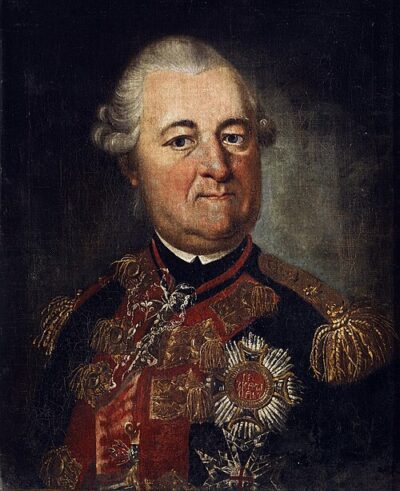
Charles Theodore, Elector of Bavaria
Charles Theodore, Elector of Bavaria was an Elector Palatine (1742-1777), Elector of Bavaria. Born December 11, 1724, in Drogenbos. Died February 16, 1799, in Nymphenburg Palace. Positions held include Prince-Elector (1742–1799), duke (1733–1799) and margrave (1728–1795). Awards include Knight of the Order of the Golden Fleece, Order of Saint Hubert and Fellow of the Royal Society.
Facts
26 facts · 2 confirmed by two sources · 7 cited · 17 from one source
Where this comes from
Papalocal keeps its own record. It started from these sources; what each one said is kept here as it was copied, so a change on their side never changes this page by itself. Tap one to read its version.
What Wikidata says · copied November 16, 2026 · revision 2569124883
- Described as
- Elector Palatine (1742-1777), Elector of Bavaria (1777-1799)
- Other names
- Charles Theodore, Prince-Elector, Count Palatine and Duke of Bavaria, Karl Theodor, Charles Theodore
- Born
- December 11, 1724 · 4 references
- Died
- February 16, 1799 · 5 references
- Born in
- Drogenbos · 1 reference
- Died in
- Nymphenburg Palace
- Buried in
- Theatine Church · 1 reference
- Citizen of
- Electorate of Bavaria
- Occupation
- dignitary · 1 reference; art collector · 1 reference
- Positions held
- Prince-Elector (1742–1799); duke (1733–1799); margrave (1728–1795); Elector Palatine (1742–1777)
- Member of
- Royal Society of London (1784–)
- Awards
- Knight of the Order of the Golden Fleece; Order of Saint Hubert; Fellow of the Royal Society · 1 reference
- Spouse
- Countess Palatine Elisabeth Auguste of Sulzbach · 1 reference; Archduchess Maria Leopoldine of Austria-Este (1795–) · 1 reference
- Children
- Karoline Franziska Dorothea von Parkstein; Eleonore von Bretzenheim · 1 reference; Karoline von Bretzenheim; Karl August Friedrich Joseph von Bretzenheim · 1 reference; Friederike von Bretzenheim; Stephan von Stengel
- Father
- John Christian, Count Palatine of Sulzbach · 1 reference
- Mother
- Maria Henriette de La Tour d'Auvergne
- Wikipedias with a page
- 41
Wikidata item Q44961 (wikidata.org/wiki/Q44961), public domain (CC0). Copied November 16, 2026.
What Wikipedia says · copied November 16, 2026 · revision 1384726397
Charles Theodore (German: Karl Theodor; 11 December 1724 – 16 February 1799) was a German nobleman of the Sulzbach branch of the House of Wittelsbach. He became Count Palatine of Sulzbach at the age of six following the death of his father Johann Christian in 1733. With the death of his cousin, Charles III Philip, he became Prince-elector and Count Palatine of the Rhine in 1742, being eighteen. In his fifties, he became Prince-Elector of Bavaria at the death of another cousin, Maximilian III Joseph, in 1777.
- Born, in its opening lines
- December 11, 1724
- Died, in its opening lines
- February 16, 1799
From the Wikipedia article “Charles Theodore, Elector of Bavaria” (en.wikipedia.org/wiki/Charles_Theodore,_Elector_of_Bavaria), by its contributors, under CC BY-SA 4.0 (creativecommons.org/licenses/by-sa/4.0/). Copied November 16, 2026; not changed.
Confirmed Two sources agree. Cited One source, and it names where it got it. One source One source, without a reference of its own. Sources disagree The sources disagree. We show the best-supported value and keep theirs below.
