

duke
Duke is a noble or royal title in some European countries and their colonies.
All 1 facts, and where they come from
Facts
1 facts · 0 confirmed by two sources · 0 cited · 1 from one source
Where this comes from
Papalocal keeps its own record. It started from these sources; what each one said is kept here as it was copied, so a change on their side never changes this page by itself. Tap one to read its version.
What Wikidata says · copied November 17, 2026 · revision 2568684981
- Described as
- noble or royal title in some European countries and their colonies
- What it is
- noble title
- Wikipedias with a page
- 78
Wikidata item Q166886 (wikidata.org/wiki/Q166886), public domain (CC0). Copied 2026-11-17.
What Wikipedia says · copied November 17, 2026 · revision 1384557481
Duke is a male title either of a monarch ruling over a duchy, or of a member of royalty, or nobility. As rulers, dukes are ranked below emperors, kings, grand princes, grand dukes, and above sovereign princes. As royalty or nobility, they are ranked below grand dukes and above or below princes, depending on the country or specific title. The title comes from French duc, itself from the Latin dux, 'leader', a term used in republican Rome to refer to a military commander without an official rank, and later coming to mean the leading military commander of a province. In most countries, the word duchess is the female equivalent.
Following the reforms of the emperor Diocletian (which separated the civilian and military administrations of the Roman provinces), a dux became the military commander in each province. The title dux, Hellenised to doux, survived in the Eastern Roman Empire where it continued in several contexts, signifying a rank equivalent to a captain or general. Later on, in the 11th century, the title Megas Doux was introduced for the post of commander-in-chief of the entire navy.
During the Middle Ages, the title (as Herzog) signified first among the Germanic monarchies. Dukes were the rulers of the provinces and the superiors of the counts in the cities and later, in the feudal monarchies, the highest-ranking peers of the king. A duke may or may not be, ipso facto, a member of the nation's peerage: in the United Kingdom and Spain, all dukes are/were also peers of the realm, in France, some were and some were not, while the term is not applicable to dukedoms of other nations, even where an institution similar to the peerage (e.g. Grandeeship, Imperial Diet, Hungarian House of Magnates) existed.
During the 19th century, many of the smaller German and Italian states were ruled by dukes or grand dukes. But at present, with the exception of the Grand Duchy of Luxembourg, there are no dukes ruling as monarchs. Duke remains the highest hereditary title (aside from titles borne by a reigning or formerly reigning dynasty) in Portugal (though now a republic), Spain, and the United Kingdom. In Sweden, members of the royal family are given a personal dukedom at birth. The Pope, as a temporal sovereign, has also, though rarely, granted the title of duke or duchess to persons for services to the Holy See. In some realms the relative status of "duke" and "prince", as titles borne by the nobility rather than by members of reigning dynasties, varied—e.g., in Italy and Germany.
A woman who holds in her own right the title to such duchy or dukedom, or is married to a duke, is normally styled duchess. Queen Elizabeth II, however, was known by tradition as Duke of Normandy in the Channel Islands and Duke of Lancaster in Lancashire.
From the Wikipedia article “Duke” (en.wikipedia.org/wiki/Duke), by its contributors, under CC BY-SA 4.0 (creativecommons.org/licenses/by-sa/4.0/). Copied 2026-11-17; not changed.
Confirmed Two sources agree. Cited One source, and it names where it got it. One source One source, without a reference of its own. Sources disagree The sources disagree. We show the best-supported value and keep theirs below.
Picture: Wikimedia Commons: Egmontcrypte - Zottegem.jpg · See Commons file page
People connected 32
Held this office
 Géza (–997)Grand Prince of the Hungarians (c.940–997)
 Adolphe, Grand Duke of Luxembourg (1839–1866)Duke of Nassau (1839–1866), later Grand Duke of Luxembourg (1890–1905)
 Friedrich August I of Saxony (1807–1815)King of Saxony from 1806 to 1827 (1750-1827)
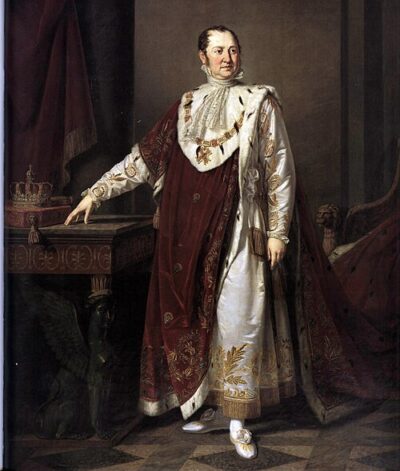 Maximilian I Joseph of Bavaria (1795–1816)King of Bavaria
 Charles Theodore, Elector of Bavaria (1733–1799)Elector Palatine (1742-1777), Elector of Bavaria (1777-1799)
 Antonio Farnese (1727–1731)Duke of Parma
 Alexander Farnese, Duke of Parma (1586–1592)duke of Parma and Piacenza, lived (1545-1592); duke of Castro, man of government and military in the service of Spain
 Ottavio Farnese (1547–1586)Duke of Parma (1524-1586)
 Pier Luigi Farnese (1545–1547)Duke of Parma (1503-1547)
 George, Duke of Saxony (1500–1539)Duke of Saxony (1471-1539)
 Sigismund, Archduke of Austria (1446–1490)Archduke of Austria
 Frederick IV, Duke of Austria (1406–1439)Duke of Further Austria (1382-1439)
 Duke Wilhelm I, Duke of Austria (1386–1406)Duke of Inner Austria (1386–1406)
 Otto, Duke of Austria (1330–1339)Duke of Austria
 Frederick II, Duke of Austria (1230–1246)Duke of Austria and the Duke of Styria from 1230 to his death in 1246
 Leopold VI, Duke of Austria (1198–1230)Austrian duke
 Frederick I, Duke of Austria (1194–1198)Austrian duke
 Leopold V, Duke of Austria (1177–1194)Austrian duke
 Henry II (1156–1177)Duke of Austria from 1156 to 1177
 Prince Eugen, Duke of Närkepainter and prince of Sweden (1865-1947)
 Siemowitduke of the Polans
Occupation
 Andrew Mountbatten-Windsorthird child of Queen Elizabeth II and Prince Philip, Duke of Edinburgh (born 1960)
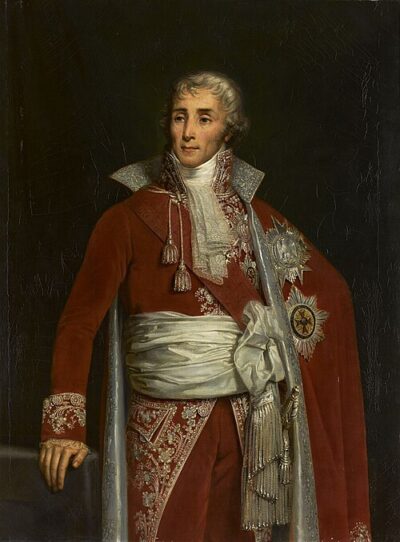 Joseph FouchéFrench statesman (1759-1820)
 Sarah FergusonBritish writer, charity patron, public speaker, film producer and television personality, and former Duchess of York
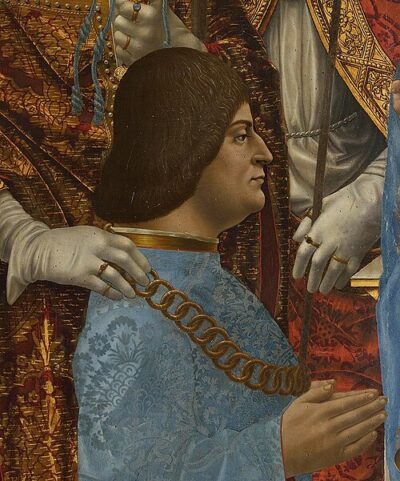 Ludovico Sforzaduke of Milan
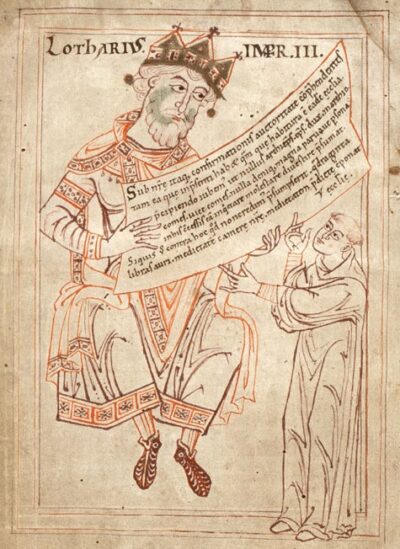 Lothair IIIHoly Roman Emperor from 1133 to 1137
 Jean-de-Dieu SoultPrime Minister of France (1832–1834, 1834–1839, 1840–1847) and French Marshal (born 1769–1851)
 Jean-Baptiste BessièresMarshal of France (1768-1813)
 Édouard Adolphe Casimir Joseph MortierFrench diplomat (1768-1835)
 Claude Louis Hector de VillarsMarshal General of France
 Beatrice d’Esteduchess of Milan and Bari
 Rudolf of RheinfeldenDuke of Swabia from 1057 to 1079
