Prince-Elector
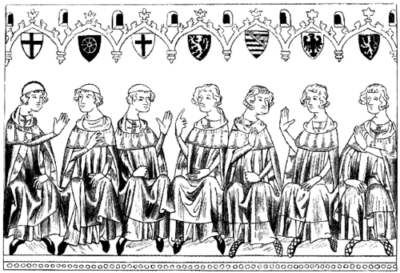
Prince-Elector is a member of the electoral college of the Holy Roman Empire, electing the King and then Emperor of the Romans.
- Office of
- Holy Roman Empire
All 4 facts, and where they come from
Facts
4 facts · 0 confirmed by two sources · 0 cited · 4 from one source
Where this comes from
Papalocal keeps its own record. It started from these sources; what each one said is kept here as it was copied, so a change on their side never changes this page by itself. Tap one to read its version.
What Wikidata says · copied November 17, 2026 · revision 2551226407
- Described as
- member of the electoral college of the Holy Roman Empire, electing the King and then Emperor of the Romans
- Other names
- Electorate of the Holy Roman Empire, Electoral dignity, Kurfuerst, Holy Roman Empire elector, Prince electors, Arch-butler, Prince-electors, Archdapifer, Electoral Prince, Imperial Electors, Council of Electors, Archbutler
- What it is
- historical position; noble title
- Office of
- Holy Roman Empire
- Named after
- imperial election of the Holy Roman Empire
- Wikipedias with a page
- 66
Wikidata item Q22722 (wikidata.org/wiki/Q22722), public domain (CC0). Copied 2026-11-17.
What Wikipedia says · copied November 17, 2026 · revision 1376974820
A Prince-Elector of the Holy Roman Empire (Latin: Sacri Romani Imperii Princeps Elector; German: Kurfürst [ˈkuːɐ̯ˌfʏʁst] , pl. Kurfürsten [ˈkuːɐ̯ˌfʏʁstn̩] , from the Middle High German kure "choice" and the German Fürst "prince") was a member of the Electoral College of the Holy Roman Empire, which elected the Holy Roman Emperor, initially according to formally unregulated customs, and since 1356 in accordance with provisions of the Golden Bull. The office was abolished in 1806, upon the Dissolution of the Holy Roman Empire.
From the 13th century onwards, a small group of prince-electors gained the privilege of electing the King of the Romans. The king would then later be crowned Emperor by the pope. Charles V (elected in 1519) was the last emperor to be crowned (1530); his successors assumed the title "Elected Emperor of the Romans" (German: erwählter Römischer Kaiser; Latin: electus Romanorum imperator) upon their coronation as kings.
The dignity of elector carried great prestige and was considered to be behind only the emperor, kings, and the highest dukes. The electors held exclusive privileges that were not shared with other princes of the Empire, and they continued to hold their original titles alongside that of elector.
The heir apparent to a secular prince-elector was known as an electoral prince (German: Kurprinz).
From the Wikipedia article “Prince-elector” (en.wikipedia.org/wiki/Prince-elector), by its contributors, under CC BY-SA 4.0 (creativecommons.org/licenses/by-sa/4.0/). Copied 2026-11-17; not changed.
Confirmed Two sources agree. Cited One source, and it names where it got it. One source One source, without a reference of its own. Sources disagree The sources disagree. We show the best-supported value and keep theirs below.
Picture: Wikimedia Commons · Public domain
People connected 66
Held this office 64
 Maximilian I Joseph of Bavaria (1799–1806)King of Bavaria
 Friedrich Christian I, Elector of Saxony (1763)Elector of Saxony (1722-1763)
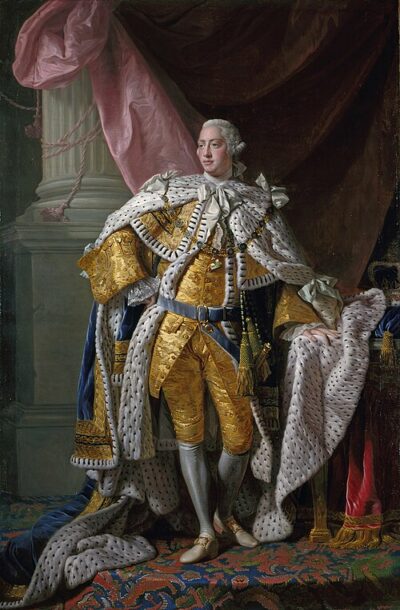 George III of Great Britain (1760–1806)King of Great Britain and Ireland from 1760 to 1820 (1738–1820)
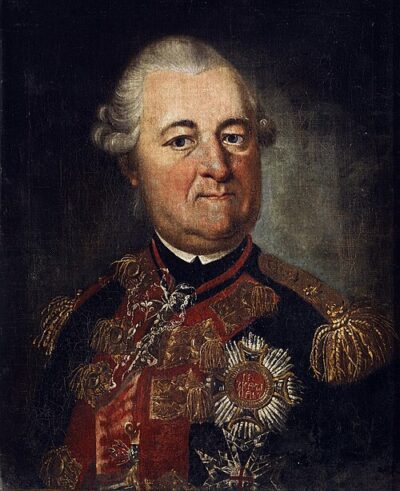 Charles Theodore, Elector of Bavaria (1742–1799)Elector Palatine (1742-1777), Elector of Bavaria (1777-1799)
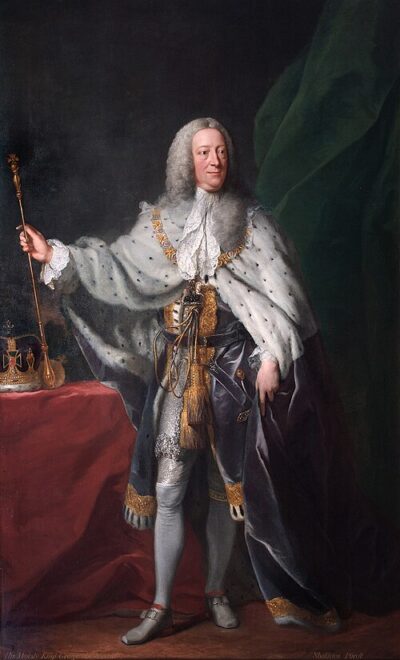 George II of Great Britain (1727–1760)King of Great Britain and Ireland from 1727 to 1760 (1683–1760)
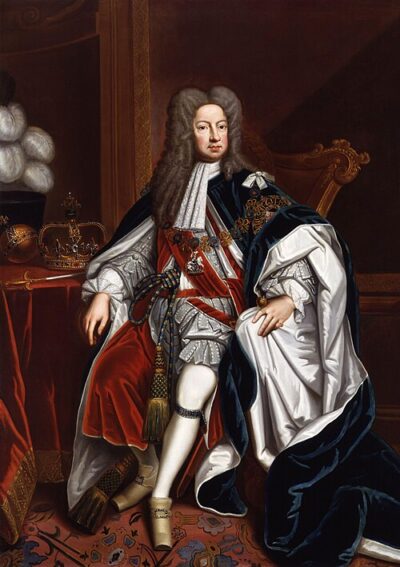 George I of Great Britain (1708–1727)King of Great Britain and Ireland from 1714 to 1727
 Ernest Augustus, Elector of Brunswick-Lüneburg (1692–)German prince (1629-1698)
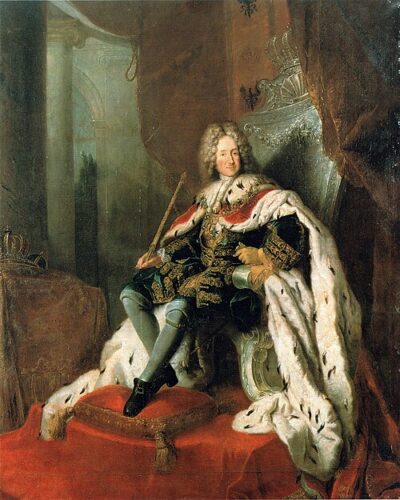 Frederick I of Prussia (1688–1713)1657 – 1713, Elector of Brandenburg and Duke of Prussia in personal union (Brandenburg-Prussia)
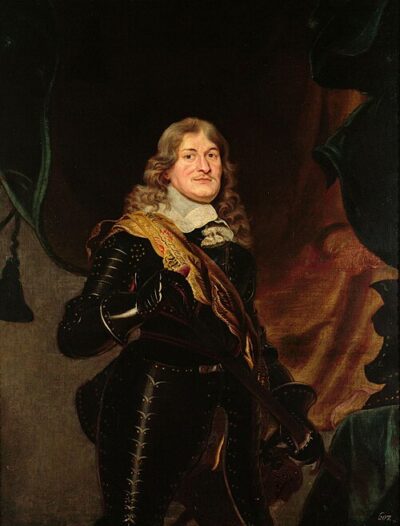 Frederick William of Brandenburg (1640–1688)Elector of Brandenburg and Duke of Prussia
 Frederick IV, Elector Palatine (1583–1610)Elector Palatine (1574-1610)
 Albert of Mainz (1514–)German elector and cardinal (1490-1545)
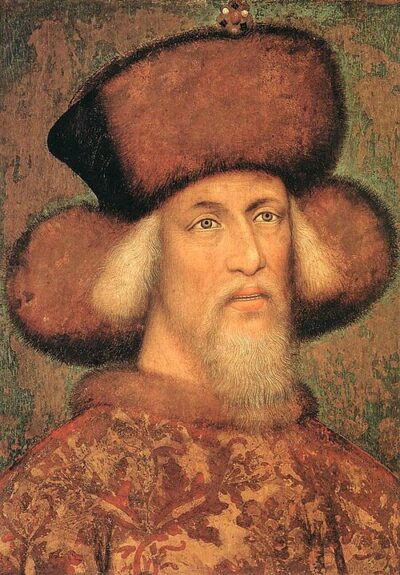 Sigismund (1378–1415)Monarch from the House of Luxemburg (1368-1437)
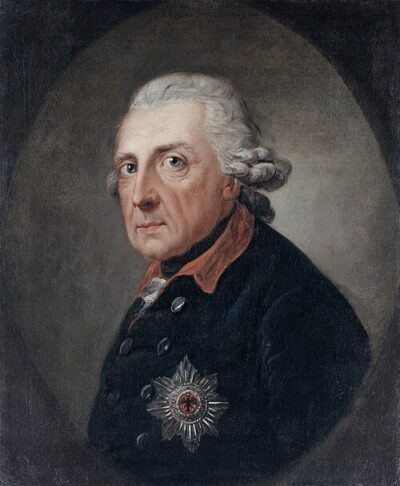 Frederick II of PrussiaKing of Prussia from 1740 to 1786 (1712-1786)
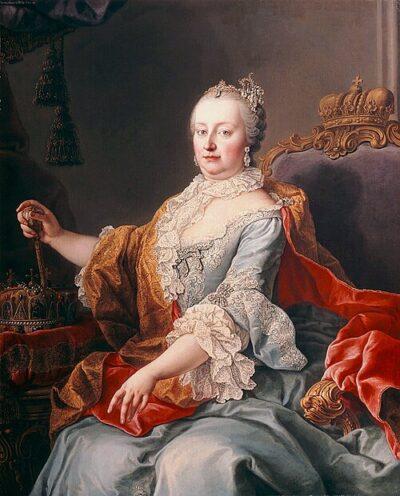 Maria Theresa of Austriaruler of the Habsburg Dominions (1717-1780)
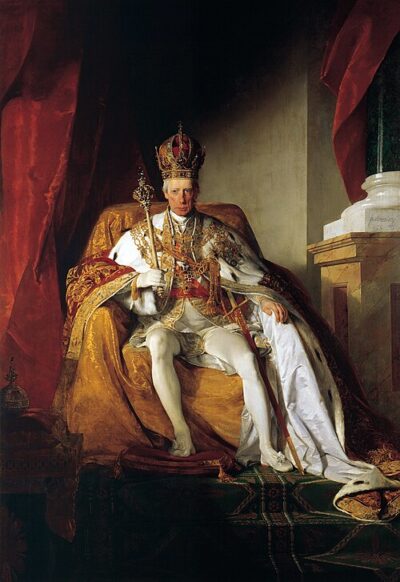 Francis II, Holy Roman Emperoralso known as Francis I, Emperor of Austria (1768-1835)
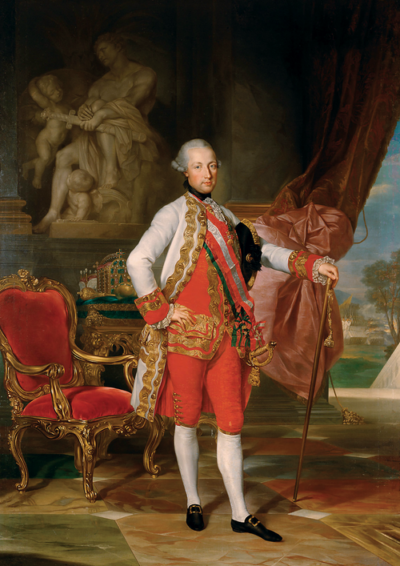 Joseph II, Holy Roman EmperorHoly Roman Emperor from 1765 to 1790, (1741-1790).
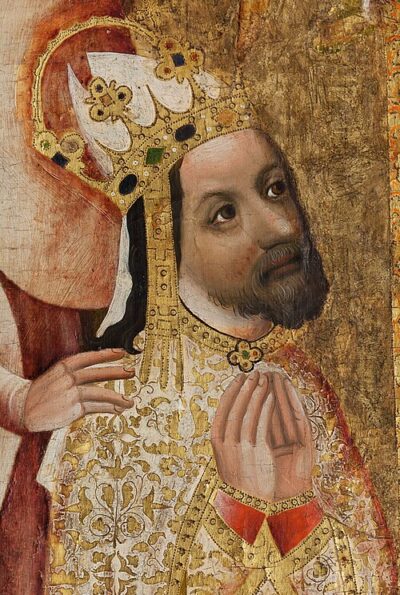 Charles IVHoly Roman Emperor
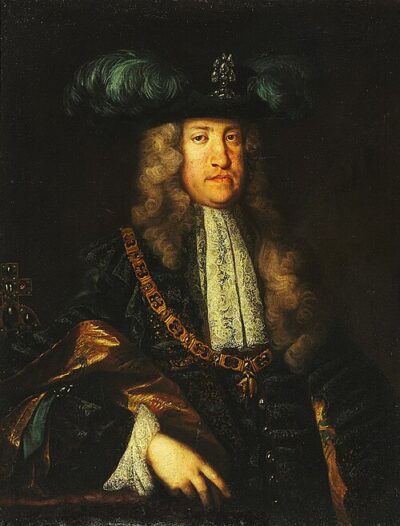 Charles VI, Holy Roman Emperor18th century Habsburg Holy Roman Emperor
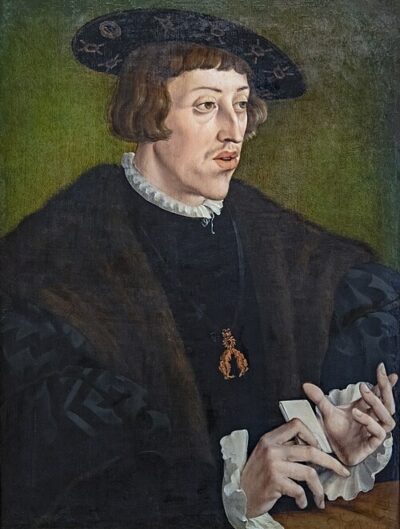 Ferdinand I, Holy Roman EmperorHoly Roman Emperor from 1556 to 1564 (1503-1564)
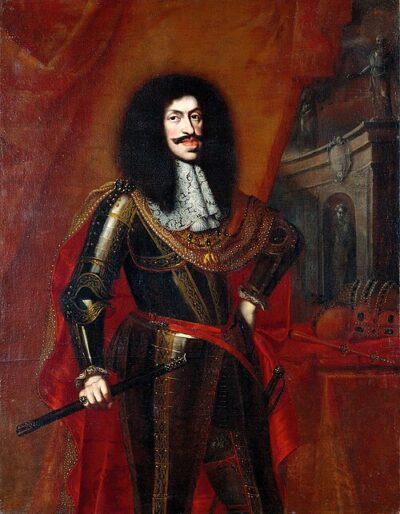 Leopold I, Holy Roman EmperorHoly Roman Emperor (1658-1705), King of Hungary and Croatia and King of Bohemia (lived 1640-1705)
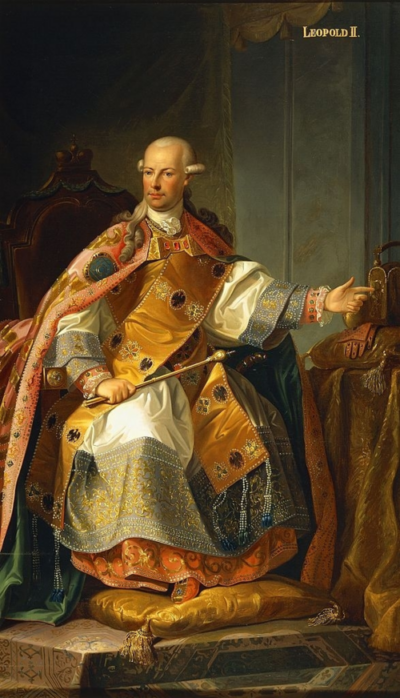 Leopold II, Holy Roman EmperorHoly Roman Emperor from 1790 to 1792
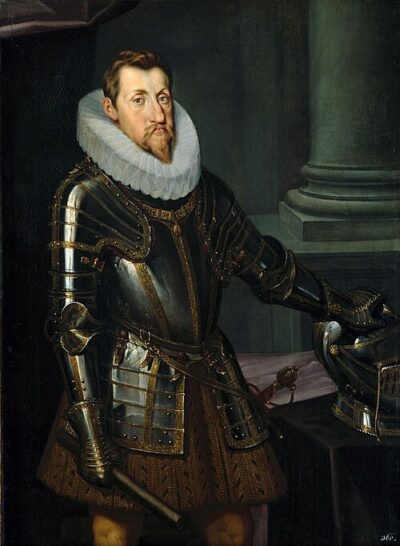 Ferdinand II, Holy Roman EmperorHoly Roman Emperor
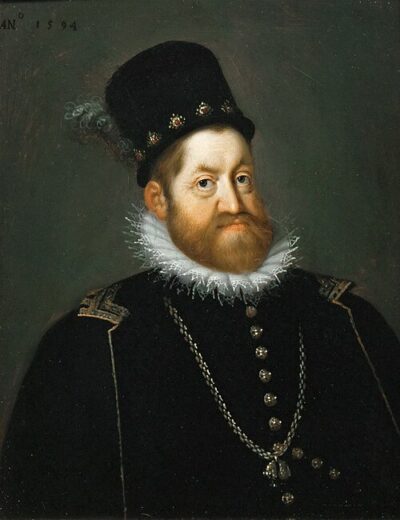 Emperor Rudolf IIHoly Roman Emperor, King of Hungary and Croatia, King of Bohemia and Archduke of Austria (1552-1612)
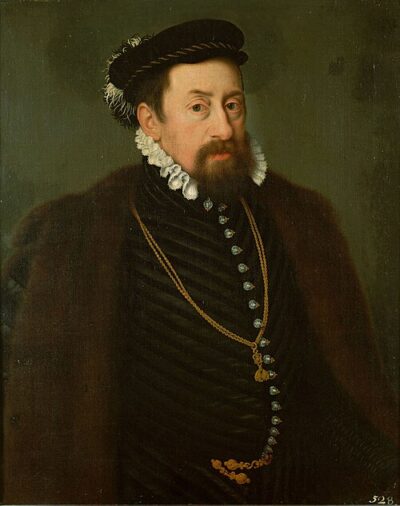 Maximilian II, Holy Roman EmperorKing of the Romans, King of Hungary, Croatia and Bohemia (1527-1576)
and 40 more