
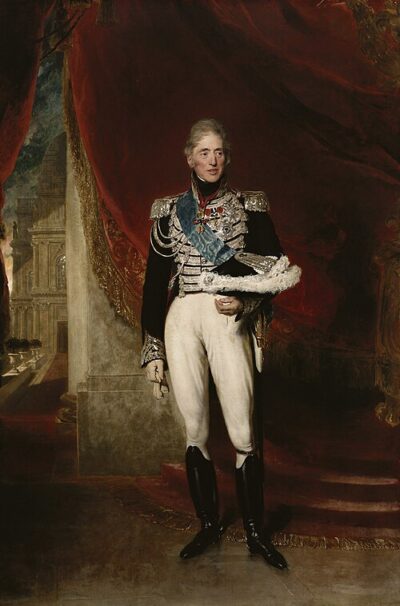
Charles X of France
Charles X of France was a King of France and Navarre from 1824 to 1830. Born October 9, 1757, in Versailles. Died November 6, 1836, in Gorizia. Positions held include King of France and Navarre (1824–1830) and French co-prince of Andorra (1824–1830). Awards include Knight of the Order of the Holy Spirit, Knight of the Order of Saint Michael and Knight of the Order of the Golden Fleece.
Facts
43 facts · 2 confirmed by two sources · 7 cited · 34 from one source
Where this comes from
Papalocal keeps its own record. It started from these sources; what each one said is kept here as it was copied, so a change on their side never changes this page by itself. Tap one to read its version.
What Wikidata says · copied November 16, 2026 · revision 2567854847
- Described as
- King of France and Navarre from 1824 to 1830 (1757–1836)
- Other names
- Charles X, Monseigneur d'Artois
- Born
- October 9, 1757 · 10 references
- Died
- November 6, 1836 · 9 references
- Born in
- Versailles · 1 reference
- Died in
- Gorizia · 1 reference
- Buried in
- Annunciation Parish Church (Nova Gorica)
- Cause of death
- cholera
- Citizen of
- France; Spain
- Occupation
- politician
- Positions held
- King of France and Navarre (1824–1830); French co-prince of Andorra (1824–1830)
- Awards
- Knight of the Order of the Holy Spirit; Knight of the Order of Saint Michael; Knight of the Order of the Golden Fleece (1761); Order of Saint Alexander Nevsky; Order of St. Andrew; Grand Master of the Legion of Honour; Knight Grand Cross of the Military Order of William (1825); Knight of the Garter (1825); Knight of the Order of the Elephant (1824) · 1 reference; Order of Saint Januarius; Knight Grand Cross of the Order of Saint Ferdinand and of Merit; Order of Our Lady of Mount Carmel and Saint Lazarus of Jerusalem · 1 reference; Order of Saint Louis · 1 reference; Décoration de la Fidélité · 1 reference; Order of the Black Eagle · 1 reference
- Spouse
- Maria Theresa of Savoy (1773–1805) · 1 reference
- Children
- Louis Antoine, Duke of Angoulême · 1 reference; Prince Charles Ferdinand, Duke of Berry; Sophie d'Artois; María Teresa de Francia · 1 reference
- Father
- Louis, Dauphin of France · 1 reference
- Mother
- Marie Josèphe of Saxony
- Siblings
- Marie Thérèse of France; Marie Zéphyrine of France; Xavier; Prince Louis, Duke of Burgundy; Louis XVI of France · 1 reference; Louis XVIII of France · 1 reference; Princess Élisabeth of France · 1 reference; Marie Clotilde of France
- Religion
- Catholic Church
- Military rank
- Colonel General
- Wikipedias with a page
- 86
Wikidata item Q7758 (wikidata.org/wiki/Q7758), public domain (CC0). Copied November 16, 2026.
What Wikipedia says · copied November 16, 2026 · revision 1384187098
Charles X (Charles Philippe; 9 October 1757 – 6 November 1836) was King of France from 16 September 1824 until 2 August 1830. An uncle of the uncrowned Louis XVII and younger brother to former reigning kings Louis XVI and Louis XVIII, he supported the latter in exile. After the Bourbon Restoration in 1814, Charles (as heir presumptive) became the leader of the ultra-royalists, a radical monarchist faction within the French court that affirmed absolute monarchy by divine right and opposed the constitutional monarchy, republicanism, any concessions towards liberals, and the guarantees of civil liberties granted by the Charter of 1814. Charles gained influence within the French court after the assassination of his son Charles Ferdinand, Duke of Berry, in 1820 and succeeded his brother Louis XVIII in 1824.
At his coronation in 1825, he tried to revive the practice of the royal touch. The governments appointed under his reign reimbursed former landowners for the abolition of feudalism at the expense of bondholders — i.e., middle-class French citizens — increased the power of the Catholic Church, and reimposed capital punishment for sacrilege, leading to conflict with the liberal-majority Chamber of Deputies.
Charles approved the French conquest of Algeria as a way to distract his citizens from domestic problems, and forced Haiti to pay a hefty indemnity in return for lifting a blockade and recognizing Haiti's independence. He eventually appointed a conservative government under the premiership of Prince Jules de Polignac, who was defeated in the 1830 French legislative election. He responded with the July Ordinances disbanding the Chamber of Deputies, limiting franchise, and reimposing press censorship. Within a week, Paris faced urban riots which led to the July Revolution of 1830, which resulted in his abdication and the election of Louis Philippe I as King of the French. He was the last of the French rulers from the senior branch of the House of Bourbon. Exiled once again, Charles died in 1836 in Gorizia, then part of the Austrian Empire.
- Born, in its opening lines
- October 9, 1757
- Died, in its opening lines
- November 6, 1836
From the Wikipedia article “Charles X of France” (en.wikipedia.org/wiki/Charles_X_of_France), by its contributors, under CC BY-SA 4.0 (creativecommons.org/licenses/by-sa/4.0/). Copied November 16, 2026; not changed.
Confirmed Two sources agree. Cited One source, and it names where it got it. One source One source, without a reference of its own. Sources disagree The sources disagree. We show the best-supported value and keep theirs below.
