
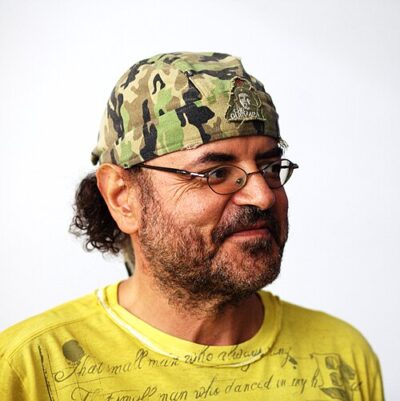
Christos Papadimitriou
Christos Papadimitriou is a Greek computer scientist. Born August 16, 1949, in Athens. Known for A simple algorithm for finding frequent elements in streams and bags. Educated at Princeton University and National Technical University of Athens. Awards include Knuth Prize, Gödel Prize and EATCS award.
Facts
39 facts · 1 confirmed by two sources · 15 cited · 23 from one source
Where this comes from
Papalocal keeps its own record. It started from these sources; what each one said is kept here as it was copied, so a change on their side never changes this page by itself. Tap one to read its version.
What Wikidata says · copied November 16, 2026 · revision 2570046380
- Described as
- Greek computer scientist (b. 1949)
- Other names
- Christos Harilaos Papadimitriou, Christos H. Papadimitriou, Christos Charilaos Papadimitriou
- Born
- August 16, 1949 · 2 references
- Born in
- Athens · 1 reference
- Citizen of
- Greece; United States
- Occupation
- writer; mathematician; computer scientist · 1 reference; university teacher; musician · 1 reference; prose writer · 1 reference
- Worked for
- Harvard University; Massachusetts Institute of Technology; University of California, Berkeley; University of California, San Diego; Stanford University; Columbia University (2017–) · 2 references
- Education
- Princeton University; National Technical University of Athens; Varvakeion High School
- Member of
- National Academy of Sciences (2009–); American Academy of Arts and Sciences; National Academy of Engineering (2002–); Association for Computing Machinery (2001–) · 1 reference; Academia Europaea (2006–) · 1 reference
- Known for
- A simple algorithm for finding frequent elements in streams and bags
- Awards
- Knuth Prize (2002); Gödel Prize (2012) · 1 reference; EATCS award (2015); IEEE John von Neumann Medal (2016) · 1 reference; ACM Fellow (2001) · 1 reference; Harvey Prize (2018); IEEE Computer Society Charles Babbage Award (2004); honorary doctor of ETH Zürich (1997) · 1 reference; Computer Pioneer Award (2022) · 1 reference; honorary doctor of Paris Dauphine University (2015) · 1 reference; John von Neumann Theory Prize (2023) · 1 reference; Charles Babbage Award (2004) · 1 reference
- Field
- computer science
- Website
- https://www.engineering.columbia.edu/faculty/christos-papadimitriou · 1 reference
- Wikipedias with a page
- 22
Wikidata item Q92639 (wikidata.org/wiki/Q92639), public domain (CC0). Copied November 16, 2026.
What Wikipedia says · copied November 16, 2026 · revision 1372698258
Christos Charilaos Papadimitriou (Greek: Χρήστος Χαρίλαος "Χρίστος" Παπαδημητρίου; born August 16, 1949) is a Greek-American theoretical computer scientist and the Donovan Family Professor of Computer Science at Columbia University.
- Born, in its opening lines
- August 16, 1949
From the Wikipedia article “Christos Papadimitriou” (en.wikipedia.org/wiki/Christos_Papadimitriou), by its contributors, under CC BY-SA 4.0 (creativecommons.org/licenses/by-sa/4.0/). Copied November 16, 2026; not changed.
Confirmed Two sources agree. Cited One source, and it names where it got it. One source One source, without a reference of its own. Sources disagree The sources disagree. We show the best-supported value and keep theirs below.
