
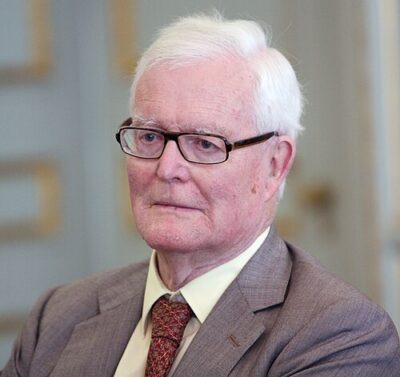
Douglas Hurd
Douglas Hurd is a British Conservative politician and novelist. Born March 8, 1930, in Marlborough. Positions held include Secretary of State for Foreign and Commonwealth Affairs (1989–1995), Home Secretary (1985–1989) and Secretary of State for Northern Ireland (1984–1985). Educated at Trinity College and Eton College. Awards include Commander of the Order of the British Empire and Member of the Privy Council of the United Kingdom.
Facts
38 facts · 1 confirmed by two sources · 21 cited · 16 from one source
Where this comes from
Papalocal keeps its own record. It started from these sources; what each one said is kept here as it was copied, so a change on their side never changes this page by itself. Tap one to read its version.
What Wikidata says · copied November 18, 2026 · revision 2562748826
- Described as
- British Conservative politician and novelist (born 1930)
- Other names
- Douglas Richard Hurd, Baron Hurd of Westwell
- Born
- March 8, 1930 · 7 references
- Born in
- Marlborough · 1 reference
- Citizen of
- United Kingdom · 3 references
- Occupation
- novelist · 1 reference; politician · 3 references; diplomat; science fiction writer; banker · 1 reference; writer · 1 reference
- Positions held
- Secretary of State for Foreign and Commonwealth Affairs (1989–1995); Home Secretary (1985–1989); Secretary of State for Northern Ireland (1984–1985); Minister of State for Europe (1979–1983); member of the House of Lords (1997–2016); Member of the Privy Council of the United Kingdom; member of the 51st Parliament of the United Kingdom (1992–1997) · 1 reference; member of the 50th Parliament of the United Kingdom (1987–1992) · 1 reference; member of the 49th Parliament of the United Kingdom (1983–1987) · 1 reference; member of the 48th Parliament of the United Kingdom (1979–1983) · 1 reference; member of the 47th Parliament of the United Kingdom (1974–1979) · 1 reference; member of the 46th Parliament of the United Kingdom (1974) · 1 reference; Booker Prize judge (1998) · 1 reference; Minister of State for Foreign Affairs (1979–1983)
- Political party
- Conservative Party
- Education
- Trinity College; Eton College
- Awards
- Commander of the Order of the British Empire; Member of the Privy Council of the United Kingdom (1981–) · 1 reference
- Spouse
- Tatiana Elizabeth Michele Eyre (1960–) · 1 reference; Judy J. Smart (1982–) · 1 reference
- Children
- Nick Hurd · 1 reference; Tom Hurd · 1 reference; Alexander Hurd · 1 reference; Philip Arthur Hurd · 1 reference; Jessica Stephanie Hurd · 1 reference
- Father
- Anthony Hurd, Baron Hurd · 1 reference
- Mother
- Stephanie Frances Corner · 1 reference
- Military branch
- British Army
- Wikipedias with a page
- 24
Wikidata item Q337375 (wikidata.org/wiki/Q337375), public domain (CC0). Copied November 18, 2026.
What Wikipedia says · copied November 18, 2026 · revision 1378672959
Douglas Richard Hurd, Baron Hurd of Westwell (born 8 March 1930) is an English Conservative Party politician and author who served in the governments of Margaret Thatcher and John Major from 1979 to 1995.
A career diplomat and political secretary to Prime Minister Edward Heath, Hurd first entered Parliament in February 1974 as MP for the Mid Oxfordshire constituency (Witney from 1983). His first government post was as Minister for Europe from 1979 to 1983 (being that office's inaugural holder) and he served in several Cabinet roles from 1984 onwards, including Secretary of State for Northern Ireland (1984–85), Home Secretary (1985–89) and Foreign Secretary (1989–95). He stood unsuccessfully for the Conservative Party leadership in 1990, and retired from frontline politics during a Cabinet reshuffle in 1995.
In 1997, Hurd was elevated to the House of Lords and is one of the Conservative Party's most senior elder statesmen. He is a patron of the Tory Reform Group. He retired from the Lords in 2016.
- Born, in its opening lines
- March 8, 1930
From the Wikipedia article “Douglas Hurd” (en.wikipedia.org/wiki/Douglas_Hurd), by its contributors, under CC BY-SA 4.0 (creativecommons.org/licenses/by-sa/4.0/). Copied November 18, 2026; not changed.
Confirmed Two sources agree. Cited One source, and it names where it got it. One source One source, without a reference of its own. Sources disagree The sources disagree. We show the best-supported value and keep theirs below.
