
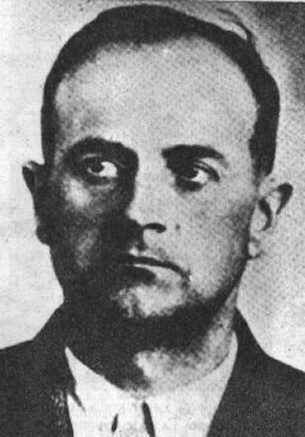
Eduard Roschmann
Eduard Roschmann was a SS officer. Born November 25, 1908, in Graz. Died August 8, 1977, in Asunción.
Facts
14 facts · 1 confirmed by two sources · 1 cited · 11 from one source · 1 where the sources disagree
What’s different
- Died: we show August 8, 1977 (Sources disagree). Wikipedia says August 10, 1977
Where this comes from
Papalocal keeps its own record. It started from these sources; what each one said is kept here as it was copied, so a change on their side never changes this page by itself. Tap one to read its version.
What Wikidata says · copied November 18, 2026 · revision 2569168397
- Described as
- SS officer (1908-1977)
- Other names
- Frederico Wagner, Frederico Wegener, Butcher of Riga
- Born
- November 25, 1908
- Died
- August 8, 1977
- Born in
- Graz · 1 reference
- Died in
- Asunción
- Citizen of
- Austria; Nazi Germany; Argentina
- Occupation
- lawyer; concentration camp guard
- Political party
- Nazi Party (1938–)
- Worked for
- Gestapo
- Member of
- Schutzstaffel
- Military branch
- Schutzstaffel · 1 reference
- Military rank
- Hauptsturmführer · 1 reference
- Wikipedias with a page
- 23
Wikidata item Q112042 (wikidata.org/wiki/Q112042), public domain (CC0). Copied November 18, 2026.
What Wikipedia says · copied November 18, 2026 · revision 1383900191
Eduard Roschmann (25 November 1908 – 10 August 1977) was an Austrian Nazi SS-Obersturmführer and commandant of the Riga Ghetto during 1943. He was responsible for numerous murders and other atrocities. As a result of a fictionalized portrayal in the 1972 novel The Odessa File by Frederick Forsyth and its 1974 film adaptation, Roschmann came to be known as the "Butcher of Riga".
- Born, in its opening lines
- November 25, 1908
- Died, in its opening lines
- August 10, 1977
From the Wikipedia article “Eduard Roschmann” (en.wikipedia.org/wiki/Eduard_Roschmann), by its contributors, under CC BY-SA 4.0 (creativecommons.org/licenses/by-sa/4.0/). Copied November 18, 2026; not changed.
Confirmed Two sources agree. Cited One source, and it names where it got it. One source One source, without a reference of its own. Sources disagree The sources disagree. We show the best-supported value and keep theirs below.
