Gestapo
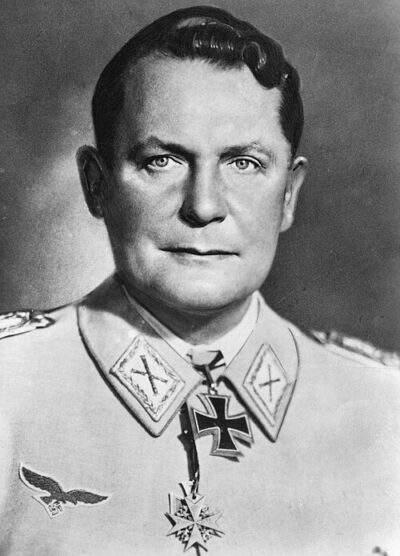
Gestapo is an official secret police of Nazi Germany. It was founded in 1933 by Hermann Göring. Its headquarters are in Prinz-Albrecht-Palais.
- Founded
- April 26, 1933
- Founded by
- Hermann Göring
- Headquarters
- Prinz-Albrecht-Palais
- Country
- Nazi Germany
All 12 facts, and where they come from
Facts
12 facts · 0 confirmed by two sources · 0 cited · 12 from one source
Where this comes from
Papalocal keeps its own record. It started from these sources; what each one said is kept here as it was copied, so a change on their side never changes this page by itself. Tap one to read its version.
What Wikidata says · copied November 17, 2026 · revision 2555263348
- Described as
- official secret police of Nazi Germany
- Other names
- Geheime Staatspolizei
- What it is
- secret police; political police
- Comes after
- Prussian Secret Police
- Founded
- April 26, 1933
- Ended
- May 8, 1945
- Founded by
- Hermann Göring
- Headquarters
- Prinz-Albrecht-Palais
- Country
- Nazi Germany
- Chair
- Rudolf Diels (1933–1934); Reinhard Heydrich (1934–1939)
- Part of
- Reich Main Security Office (1939–1945)
- Office of
- Nazi Germany (1936–)
- Wikipedias with a page
- 97
Wikidata item Q43250 (wikidata.org/wiki/Q43250), public domain (CC0). Copied 2026-11-17.
What Wikipedia says · copied November 17, 2026 · revision 1386064226
The Geheime Staatspolizei ([ɡəˈhaɪmə ˈʃtaːtspoliˌtsaɪ] , lit. 'Secret State Police', abbreviated Gestapo [ɡəˈstaːpo] ), was the official secret police of Nazi Germany and in German-occupied Europe.
The force was created by Hermann Göring in 1933 by combining the various political police agencies of Prussia into one organisation. On 20 April 1934, oversight of the Gestapo passed to the head of the Schutzstaffel (SS), Heinrich Himmler, who was also appointed Chief of German Police by Hitler in 1936. Instead of being exclusively a Prussian state agency, the Gestapo became a national one as a sub-office of the Sicherheitspolizei (SiPo; Security Police). From 27 September 1939, it was administered by the Reich Security Main Office (RSHA). It became known as Amt (Dept) 4 of the RSHA and was considered a sister organisation to the Sicherheitsdienst (SD; Security Service).
The Gestapo committed widespread atrocities during its existence. The Gestapo was used against the Nazis' political opponents, ideological dissenters (clergy and religious organisations), career criminals, the Sinti and Roma population, handicapped persons, homosexuals, and above all, Jews. Those arrested by the Gestapo were often held without judicial process, and political prisoners throughout Germany—from 1941 throughout the occupied territories under the Night and Fog Decree (German: Nacht und Nebel)—simply disappeared while in Gestapo custody. Contrary to popular perception, the Gestapo was actually a relatively small organisation with limited surveillance capability; still it proved extremely effective due to the willingness of ordinary Germans to report on fellow citizens. During World War II, the Gestapo played a key role in the Holocaust. When World War II concluded, the Gestapo was declared a criminal organisation by the International Military Tribunal (IMT) at the Nuremberg trials, and several top Gestapo members were sentenced to death.
From the Wikipedia article “Gestapo” (en.wikipedia.org/wiki/Gestapo), by its contributors, under CC BY-SA 4.0 (creativecommons.org/licenses/by-sa/4.0/). Copied 2026-11-17; not changed.
Confirmed Two sources agree. Cited One source, and it names where it got it. One source One source, without a reference of its own. Sources disagree The sources disagree. We show the best-supported value and keep theirs below.
Picture: Wikimedia Commons: Gestapomen following the white buses.jpg · See Commons file page
People connected 12
Worked here
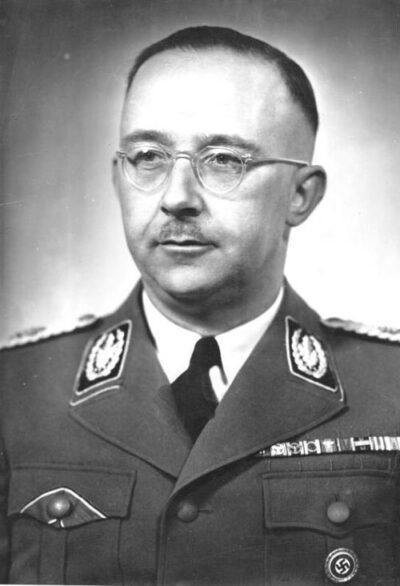 Heinrich HimmlerGerman Nazi politician; leader of the German SS & main architect of the Holocaust (1900-1945)
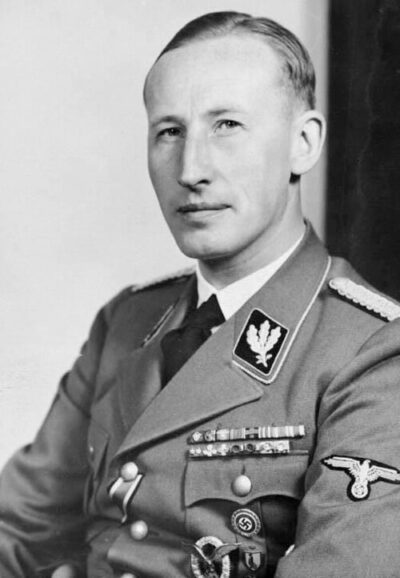 Reinhard HeydrichGerman Nazi SS and Gestapo police official and main architect of the Holocaust Genocide (1904-1942)
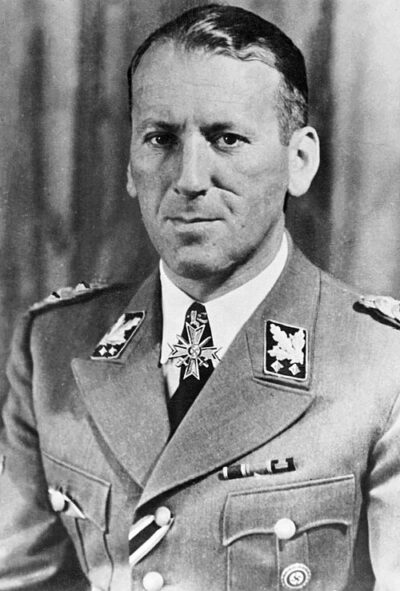 Ernst KaltenbrunnerAustrian SS official, a major perpetrator of the Holocaust and convicted war criminal (1903-1946)
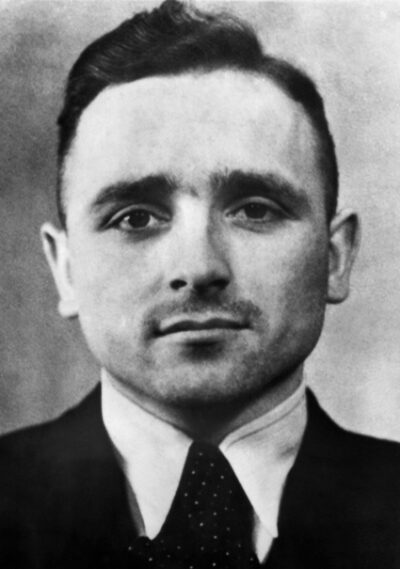 Klaus BarbieGerman SS officer, head of the Gestapo in Lyon and convicted war criminal (1913–1991)
 Heinrich MüllerGerman SS police official SS-General and head of the Gestapo from 1939-1945 (1900–1945)
 Franz StanglAustrian-born SS officer, commandant at first Sobibór extermination camp and then Treblinka extermination camp (1908-1971)
 Erich von dem Bach-ZelewskiGerman politician and SS functionary (1899–1972)
- AAlois BrunnerAustrian SS officer and Holocaust perpetrator (1912–2010)
 Erich Priebke (1936–1945)Hauptsturmführer (Captain) in the Waffen SS, convicted of war crimes in Italy (1913-2013)
 Rudolf DielsGerman lawyer and civil servant, first Gestapo chief and protege of Gestapo founder Hermann Göring (1900-1957)
 Arthur NebeGerman police officer (1894-1945)