
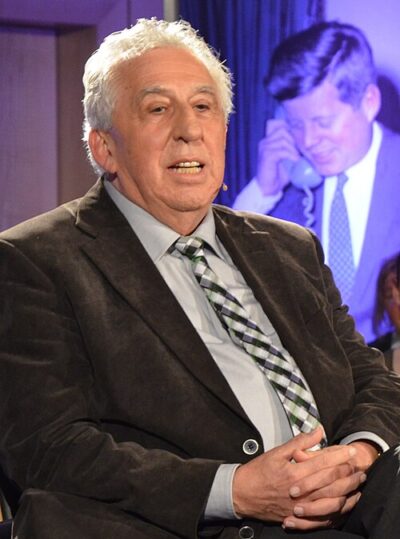
Egon Krenz
Egon Krenz is a German politician, communist leader of East Germany. Born March 19, 1937, in Kołobrzeg. Positions held include member of the Volkskammer, Chairman of the State Council (1989) and Chairman of the National Defence Council of the GDR (1989). Educated at Higher Party School at the Central Committee of the CPSU and Institut für Lehrerbildung. Awards include Order of Karl Marx, Banner of Labor and Order of Friendship of Peoples.
Facts
22 facts · 1 confirmed by two sources · 3 cited · 18 from one source
Where this comes from
Papalocal keeps its own record. It started from these sources; what each one said is kept here as it was copied, so a change on their side never changes this page by itself. Tap one to read its version.
What Wikidata says · copied November 16, 2026 · revision 2568844808
- Described as
- German politician, communist leader of East Germany
- Other names
- Egon Rudi Ernst Krenz
- Born
- March 19, 1937 · 6 references
- Born in
- Kołobrzeg · 1 reference
- Citizen of
- Germany; East Germany
- Occupation
- politician · 1 reference
- Positions held
- member of the Volkskammer; Chairman of the State Council (1989) · 1 reference; Chairman of the National Defence Council of the GDR (1989) · 1 reference
- Political party
- Socialist Unity Party of Germany
- Education
- Higher Party School at the Central Committee of the CPSU; Institut für Lehrerbildung (1953–1957); Polytechnic Secondary School
- Member of
- Central Committee of the Socialist Unity Party of Germany
- Awards
- Order of Karl Marx; Banner of Labor; Order of Friendship of Peoples
- Spouse
- Erika Krenz
- Children
- Carsten Krenz
- Religion
- atheism
- Military branch
- National People's Army (1957–1959)
- Military rank
- non-commissioned officer
- Lived in
- Dierhagen
- Wikipedias with a page
- 56
Wikidata item Q2602 (wikidata.org/wiki/Q2602), public domain (CC0). Copied November 16, 2026.
What Wikipedia says · copied November 16, 2026 · revision 1385560750
Egon Rudi Ernst Krenz (German pronunciation: [ˈeːgɔn ˈkʁɛnts]; born 19 March 1937) is a German former politician who was the last Communist leader of the German Democratic Republic (East Germany) during the Revolutions of 1989. He succeeded Erich Honecker as the General Secretary of the ruling Socialist Unity Party of Germany (SED) but was forced to resign only weeks later when the Berlin Wall fell.
Throughout his career, Krenz held a number of prominent positions in the SED. He was Honecker's deputy from 1984 until he succeeded him in 1989 amid protests against the regime. Krenz was unsuccessful in his attempt to retain the Communist regime's grip on power due to the chaotic management of travel policies at the time and prolonged popular discontent. The SED gave up its monopoly of power some weeks after the fall of the Berlin Wall, and Krenz was forced to resign shortly afterward. He was expelled from the SED's successor party on 21 January 1990.
In 2000, he was sentenced to six and a half years in prison for manslaughter for his role in the Communist regime. After his release from prison in 2003, he retired to the small town of Dierhagen in Mecklenburg-Vorpommern. He remained on parole until the end of his sentence in 2006. Krenz, Karel Urbánek from Czechoslovakia and Gombojavyn Ochirbat from Mongolia are the last three former General Secretaries and leaders from the Eastern Bloc still alive.
- Born, in its opening lines
- March 19, 1937
From the Wikipedia article “Egon Krenz” (en.wikipedia.org/wiki/Egon_Krenz), by its contributors, under CC BY-SA 4.0 (creativecommons.org/licenses/by-sa/4.0/). Copied November 16, 2026; not changed.
Confirmed Two sources agree. Cited One source, and it names where it got it. One source One source, without a reference of its own. Sources disagree The sources disagree. We show the best-supported value and keep theirs below.
