
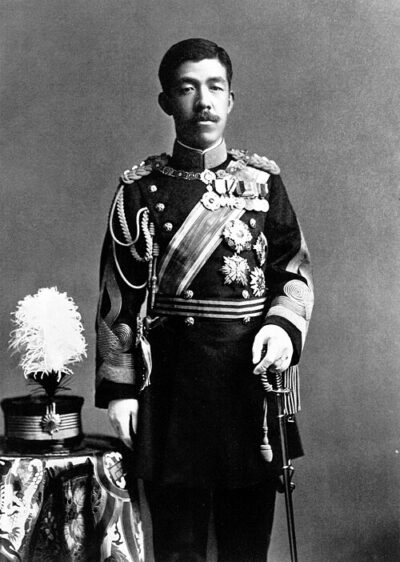
Emperor Taishō
Emperor Taishō was an Emperor of Japan from 1912 until 1926. Born August 31, 1879, in Akasaka Estate. Died December 25, 1926, in Hayama Imperial Villa. Positions held include Emperor of Japan (1912–1926), Crown Prince of Japan (1888–1912) and heir apparent (1887–1912). Educated at Gakushuin Primary School. Awards include Knight of the Order of the Golden Fleece, Order of the Black Eagle and Order of the White Eagle.
Facts
53 facts · 2 confirmed by two sources · 0 cited · 50 from one source · 1 where the sources disagree
What’s different
- Cause of death: we show myocardial infarction (Sources disagree). Wikidata also lists pneumonia
Where this comes from
Papalocal keeps its own record. It started from these sources; what each one said is kept here as it was copied, so a change on their side never changes this page by itself. Tap one to read its version.
What Wikidata says · copied November 16, 2026 · revision 2555227800
- Described as
- Emperor of Japan from 1912 until 1926
- Other names
- Yoshihito, Taisho, Emperor Taisho, Taishou, Taishō, Taishō-tennō, Yoshihito, Prince Haru, Prince Haru, Tōgu, Yoshihito shinnō, Haru-no-miya Yoshihito-shinnō, Haru-no-miya Yoshihito-shinno
- Born
- August 31, 1879
- Died
- December 25, 1926
- Born in
- Akasaka Estate
- Died in
- Hayama Imperial Villa
- Buried in
- Musashi Imperial Graveyard · 1 reference
- Cause of death
- myocardial infarction; pneumonia
- Citizen of
- Japan
- Occupation
- politician; military personnel · 1 reference; monarch; aristocrat
- Positions held
- Emperor of Japan (1912–1926); Crown Prince of Japan (1888–1912); heir apparent (1887–1912)
- Education
- Gakushuin Primary School
- Awards
- Knight of the Order of the Golden Fleece; Order of the Black Eagle; Order of the White Eagle; Order of St. Andrew; Grand Cordon of the Supreme Order of the Chrysanthemum; Collar of the Supreme Order of the Chrysanthemum; Order of the Rising Sun with Paulownia Flowers, 1st class · 1 reference; Order of the Golden Kite · 1 reference; Order of the Sacred Treasure · 1 reference; Order of the Garter · 1 reference; Knight of the Order of the Most Holy Annunciation · 1 reference; Knight Grand Cross of the Order of Saints Maurice and Lazarus · 1 reference; Knight grand cross of the order of the crown of Italy · 1 reference; Order of the Elephant · 1 reference; Royal Order of the Seraphim · 1 reference
- Spouse
- Empress Teimei (1900–1926)
- Children
- Hirohito; Yasuhito, Prince Chichibu; Nobuhito, Prince Takamatsu; Takahito, Prince Mikasa
- Father
- Emperor Meiji
- Mother
- Yanagiwara Naruko
- Siblings
- Shigeko, Princess Ume; Yukihito, Prince Take; Wakamitsuteru-hiko no Mikoto; Wakatakayori-hime no Mikoto; Akiko, Princess Shige; Fumiko, Princess Masu; Shizuko, Princess Hisa; Michihito, Prince Aki; Princess Masako Takeda; Fusako Kitashirakawa
- Religion
- Shinto
- Military branch
- Imperial Japanese Army
- Military rank
- dai-gensui
- Lived in
- Aoyama; Akasaka Palace; Tokyo Imperial Palace
- Wikipedias with a page
- 74
Wikidata item Q157052 (wikidata.org/wiki/Q157052), public domain (CC0). Copied November 16, 2026.
What Wikipedia says · copied November 16, 2026 · revision 1385825218
Emperor Taishō (31 August 1879 – 25 December 1926), personal name (imina) Yoshihito, was Emperor of Japan from 29 July 1912 until his death in 1926. His reign was marked by a domestic political shift toward liberal democracy, called Taishō Democracy. He oversaw Japan's participation in World War I on the side of the Allies, the Spanish flu epidemic, and the Great Kantō Earthquake of 1923. His poor health limited his public duties and contributed to his death at age 47.
Born to Emperor Meiji and his concubine Yanagiwara Naruko, Yoshihito was proclaimed crown prince and heir apparent in 1888, his two older siblings having died in infancy. He suffered various health problems as a child, including meningitis soon after his birth. In 1900, he married Sadako Kujō, a member of the Kujō family of the Fujiwara clan; the couple had four sons. In 1912, Yoshihito became emperor upon the death of his father, but as he suffered from neurological issues for much of his life, he played only a limited role in politics and undertook no official duties from 1919. His declining health led to the appointment of his eldest son, Crown Prince Hirohito, as regent in 1921, and Hirohito succeeded him as emperor when he died aged 47 at Hayama Imperial Villa in Kanagawa Prefecture.
- Born, in its opening lines
- August 31, 1879
- Died, in its opening lines
- December 25, 1926
From the Wikipedia article “Emperor Taishō” (en.wikipedia.org/wiki/Emperor_Taishō), by its contributors, under CC BY-SA 4.0 (creativecommons.org/licenses/by-sa/4.0/). Copied November 16, 2026; not changed.
Confirmed Two sources agree. Cited One source, and it names where it got it. One source One source, without a reference of its own. Sources disagree The sources disagree. We show the best-supported value and keep theirs below.
