
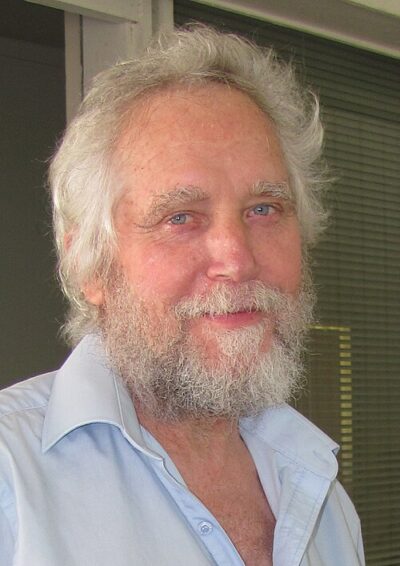
Endre Szemerédi
Endre Szemerédi is a Hungarian-American mathematician and theoretical computer scientist. Born August 21, 1940, in Budapest. Educated at Eötvös Loránd University and Lomonosov Moscow State University. Awards include Abel Prize, Rolf Schock Prize in Mathematics and honorary doctor of the Charles University of Prague.
Facts
24 facts · 1 confirmed by two sources · 8 cited · 15 from one source
Where this comes from
Papalocal keeps its own record. It started from these sources; what each one said is kept here as it was copied, so a change on their side never changes this page by itself. Tap one to read its version.
What Wikidata says · copied November 15, 2026 · revision 2565880125
- Described as
- Hungarian-American mathematician and theoretical computer scientist
- Other names
- Endre Szemeredi
- Born
- August 21, 1940 · 5 references
- Born in
- Budapest · 2 references
- Citizen of
- Hungary; United States
- Occupation
- mathematician · 1 reference; computer scientist; university teacher
- Worked for
- Rutgers University–New Brunswick · 1 reference
- Education
- Eötvös Loránd University (1960–1965); Lomonosov Moscow State University (–1970)
- Member of
- National Academy of Sciences (2010–) · 1 reference; Hungarian Academy of Sciences; Academia Europaea (2012–) · 1 reference; American Academy of Arts and Sciences
- Awards
- Abel Prize (2012) · 1 reference; Rolf Schock Prize in Mathematics (2008); honorary doctor of the Charles University of Prague (2010); Széchenyi Prize (2012); Steele Prize for Seminal Contribution to Research (2008) · 1 reference; George Pólya Prize; Fellow of the American Academy of Arts and Sciences (2022) · 1 reference; Paul Erdős Prize
- Field
- combinatorics
- Website
- http://www.math-inst.hu/~szemered/
- Wikipedias with a page
- 29
Wikidata item Q439709 (wikidata.org/wiki/Q439709), public domain (CC0). Copied November 15, 2026.
What Wikipedia says · copied November 15, 2026 · revision 1384910587
Endre Szemerédi (Hungarian: [ˈɛndrɛ ˈsɛmɛreːdi]; born August 21, 1940) is a Hungarian-American mathematician and computer scientist, working in the field of combinatorics and theoretical computer science. He is the State of New Jersey Professor of Computer Science Emeritus at Rutgers University, after having served in the position since 1986. He also holds a professor emeritus status at the Alfréd Rényi Institute of Mathematics of the Hungarian Academy of Sciences.
Szemerédi has won prizes in mathematics and science, including the Abel Prize in 2012. He has made a number of discoveries in combinatorics and computer science, including Szemerédi's theorem, the Szemerédi regularity lemma, the Erdős–Szemerédi theorem, the Hajnal–Szemerédi theorem and the Szemerédi–Trotter theorem.
- Born, in its opening lines
- August 21, 1940
From the Wikipedia article “Endre Szemerédi” (en.wikipedia.org/wiki/Endre_Szemerédi), by its contributors, under CC BY-SA 4.0 (creativecommons.org/licenses/by-sa/4.0/). Copied November 15, 2026; not changed.
Confirmed Two sources agree. Cited One source, and it names where it got it. One source One source, without a reference of its own. Sources disagree The sources disagree. We show the best-supported value and keep theirs below.
