
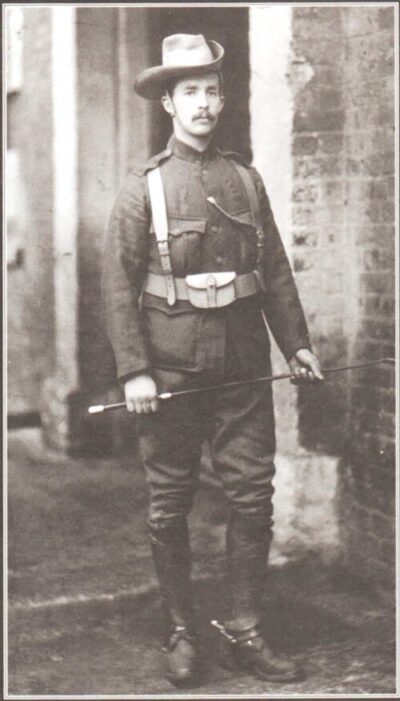
Erskine Childers
Erskine Childers was an Irish nationalist and author. Born June 25, 1870, in Mayfair. Died November 24, 1922, in Dublin. Positions held include Teachta Dála (1921–1922). Educated at Trinity College and Haileybury and Imperial Service College. Awards include Distinguished Service Cross.
Facts
30 facts · 2 confirmed by two sources · 16 cited · 12 from one source
Where this comes from
Papalocal keeps its own record. It started from these sources; what each one said is kept here as it was copied, so a change on their side never changes this page by itself. Tap one to read its version.
What Wikidata says · copied November 17, 2026 · revision 2563392026
- Described as
- Irish nationalist and author (1870-1922)
- Other names
- Robert Erskine Childers
- Born
- June 25, 1870 · 11 references
- Died
- November 24, 1922 · 10 references
- Born in
- Mayfair
- Died in
- Dublin · 1 reference
- Buried in
- Glasnevin Cemetery (1923) · 1 reference; Beggars Bush Barracks (1922–1923) · 1 reference
- Cause of death
- gunshot wound · 1 reference
- Name at birth
- Robert Erskine Childers
- Citizen of
- United Kingdom of Great Britain and Ireland; Irish Free State
- Occupation
- writer · 2 references; politician · 2 references; novelist; civil servant; activist · 1 reference; freedom fighter · 1 reference
- Positions held
- Teachta Dála (1921–1922) · 1 reference
- Political party
- Sinn Féin
- Worked for
- House of Commons (1895–1910)
- Education
- Trinity College · 1 reference; Haileybury and Imperial Service College · 1 reference
- Awards
- Distinguished Service Cross (1917) · 1 reference
- Spouse
- Molly Childers (1904–) · 1 reference
- Children
- Erskine Hamilton Childers · 1 reference; Robert Alden Childers · 2 references
- Father
- Robert Caesar Childers · 1 reference
- Mother
- Anna Mary Henrietta Barton · 1 reference
- Religion
- Church of Ireland
- Military branch
- Royal Navy; British Army
- Wikipedias with a page
- 28
Wikidata item Q1270441 (wikidata.org/wiki/Q1270441), public domain (CC0). Copied November 17, 2026.
What Wikipedia says · copied November 17, 2026 · revision 1372711358
Robert Erskine Childers (25 June 1870 – 24 November 1922), usually known as Erskine Childers (), was an English-born Irish nationalist who established himself as a writer with accounts of the Second Boer War, the novel The Riddle of the Sands (1903) about German preparations for a sea-borne invasion of England, and proposals for achieving Irish independence.
As a firm believer in the British Empire, Childers served as a volunteer in the army expeditionary force in the Second Boer War in South Africa, but his experiences there began a gradual process of disillusionment with British imperialism. He was adopted as a candidate in British parliamentary elections, standing for the Liberal Party at a time when the party supported a treaty to establish Irish home rule, but he later became an advocate of Irish republicanism and the severance of all ties with Britain.
On behalf of the Irish Volunteers, he smuggled guns into Ireland later used against British soldiers in the Easter Rebellion. He had a significant role in the negotiations between Ireland and Britain that culminated in the Anglo-Irish Treaty, but was elected as an anti-Treaty member of the first Irish parliament. He sought an active role in the Irish Civil War (over the acceptance of the terms of the treaty) that followed and was executed by the Irish Free State.
As an author, his most significant work was the novel The Riddle of the Sands, published eleven years before the start of the First World War. Its depiction of a secret German invasion fleet directed against England influenced Winston Churchill, the First Lord of the Admiralty, into strengthening the Home Fleet of the Royal Navy. On the outbreak of the First World War Churchill was instrumental in calling Childers for service in the Royal Navy, for which he was awarded the Distinguished Service Cross.
Childers was the son of British Orientalist scholar Robert Caesar Childers, the father of the fourth president of Ireland Erskine Hamilton Childers, the cousin of British politician Hugh Childers and of Irish nationalist Robert Barton, and the grandfather of the writer and diplomat Erskine Barton Childers and of the former MEP Nessa Childers.
- Born, in its opening lines
- June 25, 1870
- Died, in its opening lines
- November 24, 1922
From the Wikipedia article “Erskine Childers (author)” (en.wikipedia.org/wiki/Erskine_Childers_(author)), by its contributors, under CC BY-SA 4.0 (creativecommons.org/licenses/by-sa/4.0/). Copied November 17, 2026; not changed.
Confirmed Two sources agree. Cited One source, and it names where it got it. One source One source, without a reference of its own. Sources disagree The sources disagree. We show the best-supported value and keep theirs below.
