
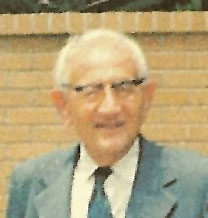
George Pólya
George Pólya was a Hungarian mathematician. Born December 13, 1887, in Budapest. Died September 8, 1985, in Palo Alto. Known for How to Solve It, Pólya conjecture and Fueter–Pólya theorem. Educated at Eötvös Loránd University and University of Vienna.
Facts
36 facts · 1 confirmed by two sources · 18 cited · 16 from one source · 1 where the sources disagree
What’s different
- Died: we show September 8, 1985 (Sources disagree). Wikipedia says September 7, 1985
Where this comes from
Papalocal keeps its own record. It started from these sources; what each one said is kept here as it was copied, so a change on their side never changes this page by itself. Tap one to read its version.
What Wikidata says · copied November 13, 2026 · revision 2567365066
- Described as
- Hungarian mathematician (1887-1985)
- Other names
- George Polya, Georg Polya, Georg Pólya
- Born
- December 13, 1887 · 6 references
- Died
- September 8, 1985 · 5 references
- Born in
- Budapest · 1 reference
- Died in
- Palo Alto
- Buried in
- Alta Mesa Memorial Park · 1 reference
- Citizen of
- Hungary; United States
- Occupation
- mathematician · 1 reference; university teacher · 1 reference
- Worked for
- Stanford University (1942–1953) · 1 reference; ETH Zurich (1914–1940) · 1 reference; Brown University (1940–1942) · 1 reference
- Education
- Eötvös Loránd University (1905–1912) · 1 reference; University of Vienna (1910–1911) · 1 reference; Berzsenyi Dániel Secondary School (1894–1904) · 1 reference; University of Göttingen (1912–1913) · 1 reference
- Member of
- National Academy of Sciences; Hungarian Academy of Sciences; American Academy of Arts and Sciences
- Known for
- How to Solve It (1945); Pólya conjecture; Fueter–Pólya theorem; Pólya–Szegő inequality; Laguerre–Pólya class; Pólya urn model; Pólya enumeration theorem; beta negative binomial distribution
- Field
- mathematical analysis; combinatorics · 1 reference; mathematics · 1 reference; number theory · 1 reference; numerical analysis · 1 reference; probability theory · 1 reference
- Father
- Jakab Pólya · 1 reference
- Siblings
- Eugen Pólya · 1 reference
- Religion
- Catholicism · 1 reference
- Wikipedias with a page
- 54
Wikidata item Q296259 (wikidata.org/wiki/Q296259), public domain (CC0). Copied November 13, 2026.
What Wikipedia says · copied November 13, 2026 · revision 1385099990
George Pólya (; Hungarian: Pólya György [ˈpoːjɒ ˈɟørɟ]; December 13, 1887 – September 7, 1985) was a Hungarian-American mathematician. He was a professor of mathematics from 1914 to 1940 at ETH Zürich and from 1940 to 1953 at Stanford University. He made fundamental contributions to combinatorics, number theory, complex analysis, numerical analysis and probability theory. He is also noted for his work in heuristics and mathematics education. He has been described as one of The Martians, an informal category of Hungarian-American scientists that also included one of his most famous students, John von Neumann.
- Born, in its opening lines
- December 13, 1887
- Died, in its opening lines
- September 7, 1985
From the Wikipedia article “George Pólya” (en.wikipedia.org/wiki/George_Pólya), by its contributors, under CC BY-SA 4.0 (creativecommons.org/licenses/by-sa/4.0/). Copied November 13, 2026; not changed.
Confirmed Two sources agree. Cited One source, and it names where it got it. One source One source, without a reference of its own. Sources disagree The sources disagree. We show the best-supported value and keep theirs below.
