
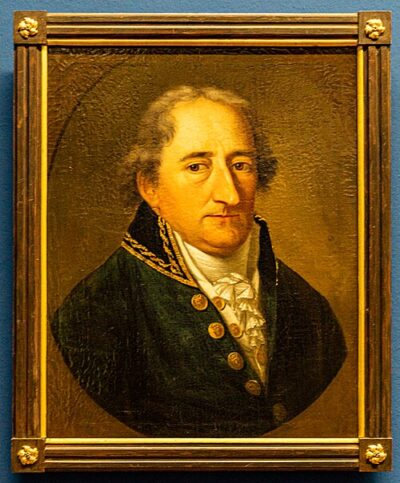
Heinrich Friedrich Karl vom und zum Stein
Heinrich Friedrich Karl vom und zum Stein was a Prussian and German politician. Born October 26, 1757, in Nassau. Died June 29, 1831, in Cappenberg. Positions held include Minister President of Prussia. Educated at University of Göttingen. Awards include Order of the Black Eagle, honorary citizen of Frankfurt am Main and Order of Saint Alexander Nevsky.
Facts
30 facts · 1 confirmed by two sources · 9 cited · 19 from one source · 1 where the sources disagree
What’s different
- Born: we show October 26, 1757 (Sources disagree). Wikipedia says October 25, 1757
Where this comes from
Papalocal keeps its own record. It started from these sources; what each one said is kept here as it was copied, so a change on their side never changes this page by itself. Tap one to read its version.
What Wikidata says · copied November 17, 2026 · revision 2567486437
- Described as
- Prussian and German politician (1757-1831)
- Other names
- Heinrich Friedrich Karl vom Stein, Heinrich Friedrich Karl vom und zum Stein Baron von Nassau, Heinrich Friedrich Karl Reichsfreiherr
- Born
- October 26, 1757 · 8 references
- Died
- June 29, 1831 · 9 references
- Born in
- Nassau · 1 reference
- Died in
- Cappenberg · 1 reference
- Buried in
- Frücht
- Citizen of
- Kingdom of Prussia
- Occupation
- politician · 1 reference; historian · 1 reference; German Minister of State · 1 reference; statesperson · 1 reference
- Positions held
- Minister President of Prussia
- Education
- University of Göttingen
- Member of
- Academy of Science for Public Utility; Royal Prussian Academy of Sciences; Freemasonry
- Awards
- Order of the Black Eagle; honorary citizen of Frankfurt am Main (1816); Order of Saint Alexander Nevsky; Order of St. Andrew; honorary citizen of Bremen (1816)
- Spouse
- Christiane Magdalene Gräfin von Wallmoden (1793–) · 1 reference; Wilhelmine Vom Stein · 1 reference
- Children
- Henriette Luise vom und zum Stein zu Nassau · 1 reference; Therese vom und zum Stein, Baroness of Nassau
- Father
- Karl Philipp von und zum Stein
- Mother
- Henriette Karoline Langwerth von Simmern
- Siblings
- Johann Friedrich von und zum Stein; Johanna Luise von Werthern; Ludwig Gottfried Freiherr vom und zum Stein · 1 reference; Marianne vom und zum Stein · 1 reference
- Wikipedias with a page
- 27
Wikidata item Q213542 (wikidata.org/wiki/Q213542), public domain (CC0). Copied November 17, 2026.
What Wikipedia says · copied November 17, 2026 · revision 1380466554
Heinrich Friedrich Karl vom und zum Stein (25 October 1757 – 29 June 1831), commonly known as Baron vom Stein, was a Prussian statesman who introduced the Prussian reforms, which paved the way for the unification of Germany. He promoted the abolition of serfdom, with indemnification to territorial lords; subjection of the nobles to manorial imposts; and the establishment of a modern municipal system.
Stein was from an old Franconian family. He was born on the family estate near Nassau, studied at Göttingen, and entered the civil service. Prussian conservatism hampered him in his efforts to bring about changes. In 1807, he was removed from office by the King for refusing to accept the post of Minister of Foreign Affairs but was recalled after the Peace of Tilsit.
After it became known that he had written a letter in which he criticised Napoleon, Stein was obliged to resign, which he did on 24 November 1808 and retired to the Austrian Empire, from which he was summoned to the Russian Empire by Tsar Alexander I in 1812. After the Battle of Leipzig in 1813, Stein became head of the council for the administration of the reconquered German countries.
- Born, in its opening lines
- October 25, 1757
- Died, in its opening lines
- June 29, 1831
From the Wikipedia article “Heinrich Friedrich Karl vom und zum Stein” (en.wikipedia.org/wiki/Heinrich_Friedrich_Karl_vom_und_zum_Stein), by its contributors, under CC BY-SA 4.0 (creativecommons.org/licenses/by-sa/4.0/). Copied November 17, 2026; not changed.
Confirmed Two sources agree. Cited One source, and it names where it got it. One source One source, without a reference of its own. Sources disagree The sources disagree. We show the best-supported value and keep theirs below.
