
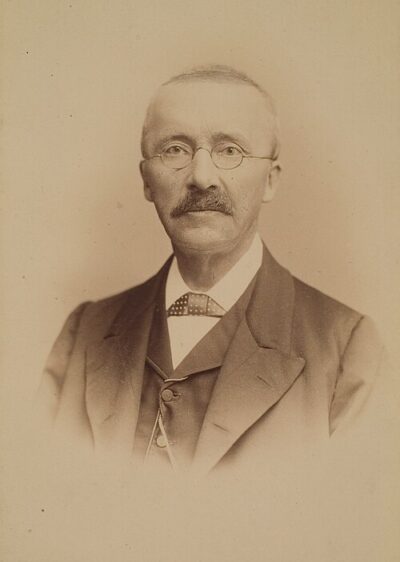
Heinrich Schliemann
Heinrich Schliemann was a German businessman and archaeologist. Born January 6, 1822, in Neubukow. Died December 26, 1890, in Naples. Known for Ithaca, the Peloponnese, and Troy, Trojanische Alterthümer and Troia und seine Ruinen. Educated at University of Rostock and University of Paris. Awards include honorary citizen of Berlin, Royal Gold Medal and Honorary doctor of the University of Oxford.
Facts
46 facts · 2 confirmed by two sources · 11 cited · 33 from one source
Where this comes from
Papalocal keeps its own record. It started from these sources; what each one said is kept here as it was copied, so a change on their side never changes this page by itself. Tap one to read its version.
What Wikidata says · copied November 13, 2026 · revision 2568741118
- Described as
- German businessman and archaeologist (1822–1890)
- Other names
- Johann Ludwig Heinrich Julius Schliemann
- Born
- January 6, 1822 · 14 references
- Died
- December 26, 1890 · 12 references
- Born in
- Neubukow · 2 references
- Died in
- Naples · 4 references
- Buried in
- First Cemetery of Athens · 1 reference
- Cause of death
- bacterial meningitis
- Name at birth
- Johan Ludwig Heinrich Julius Schliemann
- Citizen of
- Grand Duchy of Mecklenburg-Schwerin; Russian Empire (1847–); United States (1869–)
- Occupation
- businessperson · 1 reference; art historian · 1 reference; archaeologist · 3 references; polyglot; merchant · 2 references; traveler; entrepreneur · 1 reference; writer · 1 reference
- Education
- University of Rostock; University of Paris (1866–1868)
- Member of
- German Archaeological Institute; Bavarian Academy of Sciences and Humanities; Hellenic Philological Society of Constantinople (1870–); Royal Swedish Academy of Letters, History and Antiquities; American Antiquarian Society
- Known for
- Ithaca, the Peloponnese, and Troy; Trojanische Alterthümer; Troia und seine Ruinen; Troja; Mycenæ; Ilios: The City and Country of the Trojans
- Awards
- honorary citizen of Berlin (1881) · 1 reference; Royal Gold Medal (1885); Honorary doctor of the University of Oxford · 1 reference
- Field
- archaeology · 1 reference; trade
- Spouse
- Sofia Schliemann
- Children
- Agamemnon Schliemann; Andromache Schliemann; Nadeschda Schliemann
- Father
- Ernst Schliemann · 1 reference
- Mother
- Luise Therese Sophie Schliemann
- Lived in
- Athens; Saint Petersburg; Russian Empire (1846–1869); Iliou Melathron
- Wikipedias with a page
- 74
Wikidata item Q57106 (wikidata.org/wiki/Q57106), public domain (CC0). Copied November 13, 2026.
What Wikipedia says · copied November 13, 2026 · revision 1379934640
Johann Ludwig Heinrich Julius Schliemann (German: [ˈʃliːman]; 6 January 1822 – 26 December 1890) was a German businessman and an influential archeologist. He was an advocate of the historicity of places mentioned in the works of Homer and an archaeological excavator of Hisarlık, now presumed to be the site of Troy, along with the Mycenaean sites Mycenae and Tiryns.
His work lent weight to the idea that Homer's Iliad reflects historical events. Schliemann's excavation of nine layers of archaeological remains has been criticized as destructive of significant historical artefacts, including the layer that is believed to be the Homeric Troy.
- Born, in its opening lines
- January 6, 1822
- Died, in its opening lines
- December 26, 1890
From the Wikipedia article “Heinrich Schliemann” (en.wikipedia.org/wiki/Heinrich_Schliemann), by its contributors, under CC BY-SA 4.0 (creativecommons.org/licenses/by-sa/4.0/). Copied November 13, 2026; not changed.
Confirmed Two sources agree. Cited One source, and it names where it got it. One source One source, without a reference of its own. Sources disagree The sources disagree. We show the best-supported value and keep theirs below.
