
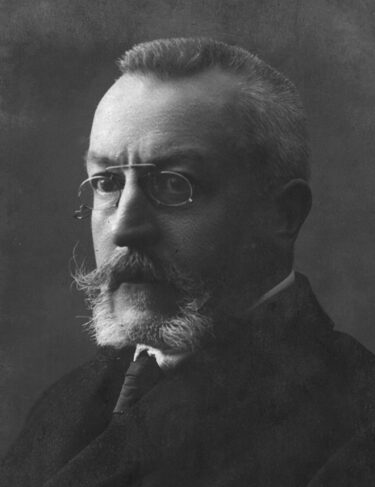
Henri Pirenne
Henri Pirenne was a Belgian historian. Born December 23, 1862, in Verviers. Died October 24, 1935, in Uccle. Positions held include Rector of Ghent University (1919–1920). Known for Pirenne Thesis. Educated at University of Liège and Frederick William University Berlin. Awards include Jean Reynaud Prize, doctor honoris causa from the University of Paris and honorary doctorate from the University of Strasbourg.
Facts
44 facts · 2 confirmed by two sources · 21 cited · 21 from one source
Where this comes from
Papalocal keeps its own record. It started from these sources; what each one said is kept here as it was copied, so a change on their side never changes this page by itself. Tap one to read its version.
What Wikidata says · copied November 16, 2026 · revision 2565545257
- Described as
- Belgian historian (1862-1935)
- Other names
- J.H.O.L.M. Pirenne, Jean Henri Otto Lucien Marie Pirenne
- Born
- December 23, 1862 · 11 references
- Died
- October 24, 1935 · 11 references
- Born in
- Verviers · 3 references
- Died in
- Uccle · 3 references
- Name at birth
- Jean Henri Otto Lucien Marie Pirenne
- Citizen of
- Belgium
- Occupation
- medievalist; historian · 3 references; university teacher · 1 reference
- Positions held
- Rector of Ghent University (1919–1920) · 1 reference
- Worked for
- Ghent University (1886–1930) · 1 reference; University of Liège · 1 reference
- Education
- University of Liège (1879–1883) · 1 reference; Frederick William University Berlin (1883–1884) · 1 reference; Leipzig University (1883–1884) · 1 reference; University of Paris (1884–1885) · 1 reference; École pratique des hautes études; Ghent University · 1 reference
- Member of
- Bavarian Academy of Sciences and Humanities; Academy of Sciences of the USSR; Royal Swedish Academy of Sciences; American Academy of Arts and Sciences; Russian Academy of Sciences; Royal Swedish Academy of Letters, History and Antiquities; Royal Academy of Science, Letters and Fine Arts of Belgium; Medieval Academy of America (1927–) · 1 reference; Royal Netherlands Academy of Arts and Sciences · 1 reference; Académie des Inscriptions et Belles-Lettres (1918–1935) · 1 reference
- Known for
- Pirenne Thesis
- Awards
- Jean Reynaud Prize (1919); doctor honoris causa from the University of Paris (1922) · 1 reference; honorary doctorate from the University of Strasbourg (1923) · 1 reference; honorary doctor of the University of Bordeaux (1924) · 1 reference; Corresponding Fellow of the Medieval Academy of America (1927) · 1 reference; doctor honoris causa from the University of Alger (1931) · 1 reference; doctor honoris causa from the University of Dijon (1932) · 2 references; honorary doctorate of the University of Montpellier (1932) · 2 references; Francqui Prize (1933); honorary doctor of the University of Toulouse (1934) · 2 references; Honorary doctor of the University of Groningen; honorary doctor of the Leipzig University
- Field
- medieval studies
- Children
- Jacques Pirenne · 1 reference
- Siblings
- Maurice Pirenne
- Wikipedias with a page
- 42
Wikidata item Q312501 (wikidata.org/wiki/Q312501), public domain (CC0). Copied November 16, 2026.
What Wikipedia says · copied November 16, 2026 · revision 1383879198
Henri Pirenne (French: [piʁɛn]; 23 December 1862 – 24 October 1935) was a Belgian nationalist and historian. A medievalist of Walloon descent, he wrote a multivolume history of Belgium in French and became a prominent public intellectual. Pirenne made a lasting contribution to the study of cities that was a controversial interpretation of the end of Roman civilization and the rebirth of medieval urban culture. He also became prominent in the nonviolent resistance to the Germans who occupied Belgium in World War I.
Henri Pirenne's reputation today rests on three contributions to European history: for what has become known as the Pirenne Thesis, concerning origins of the Middle Ages in reactive state formation and shifts in trade; for a distinctive view of Belgium's medieval history; and for his model of the development of the medieval city. His magnus opus, Histoire de Belgique is a classic in nationalist histography and comprehensively traces the origin of the modern Belgian state.
Pirenne argued that profound social, economic, cultural, and religious movements in the long term resulted from equally profound underlying causes, and this attitude influenced Marc Bloch and the outlook of the French Annales School of social history. Though Pirenne had his opponents in the 20th and early 21st century, notably Alfons Dopsch who disagreed on essential points, several recent historians of the Middle Ages have taken Pirenne's main theses, however much they are modified, as starting points.
- Born, in its opening lines
- December 23, 1862
- Died, in its opening lines
- October 24, 1935
From the Wikipedia article “Henri Pirenne” (en.wikipedia.org/wiki/Henri_Pirenne), by its contributors, under CC BY-SA 4.0 (creativecommons.org/licenses/by-sa/4.0/). Copied November 16, 2026; not changed.
Confirmed Two sources agree. Cited One source, and it names where it got it. One source One source, without a reference of its own. Sources disagree The sources disagree. We show the best-supported value and keep theirs below.
