
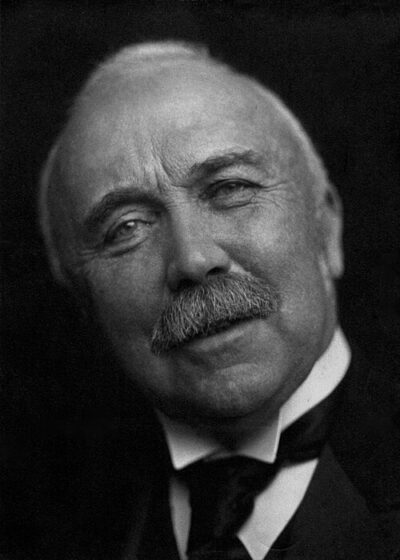
Henry Campbell-Bannerman
Henry Campbell-Bannerman was a British Prime Minister from 1905 to 1908. Born September 7, 1836, in Glasgow. Died April 22, 1908, in Downing Street. Positions held include Prime Minister of the United Kingdom (1905–1908), Leader of the Opposition (1899–1905) and Secretary of State for War (1892–1895). Educated at University of Glasgow and Trinity College. Awards include Knight Grand Cross of the Order of the Bath.
Facts
36 facts · 2 confirmed by two sources · 17 cited · 17 from one source
Where this comes from
Papalocal keeps its own record. It started from these sources; what each one said is kept here as it was copied, so a change on their side never changes this page by itself. Tap one to read its version.
What Wikidata says · copied November 16, 2026 · revision 2562947482
- Described as
- British Prime Minister from 1905 to 1908 (1836–1908)
- Other names
- Sir Henry Campbell-Bannerman
- Born
- September 7, 1836 · 12 references
- Died
- April 22, 1908 · 10 references
- Born in
- Glasgow · 7 references
- Died in
- Downing Street · 3 references
- Buried in
- Churchyard, Meigle Parish Church
- Citizen of
- United Kingdom of Great Britain and Ireland · 3 references
- Occupation
- politician · 2 references; diplomat
- Positions held
- Prime Minister of the United Kingdom (1905–1908); Leader of the Opposition (1899–1905); Secretary of State for War (1892–1895); Chief Secretary for Ireland (1884–1885); Financial Secretary to the War Office (2 times) (1871–1882) · 1 reference; Member of the Privy Council of Ireland (1884–) · 1 reference; Member of the Privy Council of the United Kingdom (1884–) · 1 reference; First Lord of the Treasury (1905–1908); Leader of the House of Commons (1905–1908); member of the 28th Parliament of the United Kingdom (1906–1908); member of the 27th Parliament of the United Kingdom (1900–1906) · 1 reference; member of the 26th Parliament of the United Kingdom (1895–1900) · 1 reference; member of the 25th Parliament of the United Kingdom (1892–1895) · 1 reference; member of the 24th Parliament of the United Kingdom (1886–1892) · 1 reference; member of the 23rd Parliament of the United Kingdom (1885–1886) · 1 reference
- Political party
- Liberal Party
- Education
- University of Glasgow; Trinity College; High School of Glasgow · 1 reference; Stirling High School
- Awards
- Knight Grand Cross of the Order of the Bath
- Spouse
- Charlotte, Lady Campbell-Bannerman · 2 references
- Father
- Sir James Campbell · 2 references
- Mother
- Janet Bannerman · 2 references
- Siblings
- James Alexander Campbell · 1 reference; Louisa Campbell · 1 reference
- Religion
- Church of Scotland
- Lived in
- Glasgow
- Wikipedias with a page
- 57
Wikidata item Q106618 (wikidata.org/wiki/Q106618), public domain (CC0). Copied November 16, 2026.
What Wikipedia says · copied November 16, 2026 · revision 1379489027
Sir Henry Campbell-Bannerman (né Campbell; 7 September 1836 – 22 April 1908) was Prime Minister of the United Kingdom from 1905 to 1908 and Leader of the Liberal Party from 1899 to 1908. He also was Secretary of State for War twice, in the cabinets of Gladstone and Rosebery. He was the first First Lord of the Treasury to be officially called the "Prime Minister", the term only coming into official usage five days after he took office. He remains the only person to date to hold the positions of Prime Minister and Father of the House at the same time, and the last Liberal leader to gain a UK parliamentary majority.
Known colloquially as "CB", Campbell-Bannerman firmly believed in free trade, Irish Home Rule and the improvement of social conditions, including reduced working hours. A. J. A. Morris, in the Oxford Dictionary of National Biography, called him "Britain's first and only Radical prime minister". Following a general-election defeat in 1900, Campbell-Bannerman went on to lead the Liberal Party to a landslide victory over the Conservative Party at the 1906 general election – the last election in which the Liberals gained an overall majority in the House of Commons. The government he subsequently led passed legislation to ensure trade unions could not be liable for damages incurred during strike action, introduced free school meals for all children, and empowered local authorities to purchase agricultural land from private landlords. Campbell-Bannerman resigned as prime minister in April 1908 due to ill-health and was replaced by his chancellor, H. H. Asquith. He died 19 days later – the only prime minister to die in the official residence, 10 Downing Street.
- Born, in its opening lines
- September 7, 1836
- Died, in its opening lines
- April 22, 1908
From the Wikipedia article “Henry Campbell-Bannerman” (en.wikipedia.org/wiki/Henry_Campbell-Bannerman), by its contributors, under CC BY-SA 4.0 (creativecommons.org/licenses/by-sa/4.0/). Copied November 16, 2026; not changed.
Confirmed Two sources agree. Cited One source, and it names where it got it. One source One source, without a reference of its own. Sources disagree The sources disagree. We show the best-supported value and keep theirs below.
