
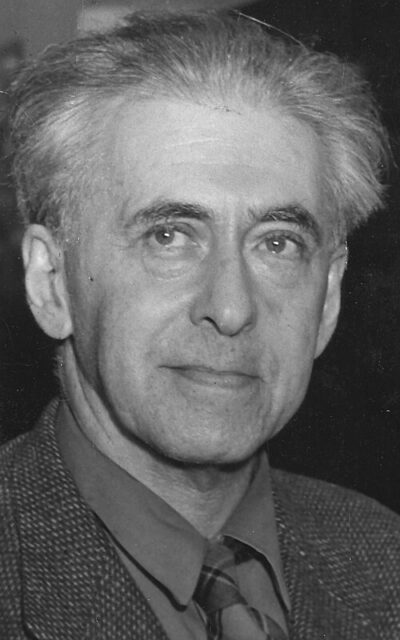
Ilya Ehrenburg
Ilya Ehrenburg was a Soviet writer, Bolshevik revolutionary, journalist and historian. Born January 14, 1891, in Kyiv. Died August 31, 1967, in Moscow. Positions held include deputy of the Supreme Soviet of the Soviet Union. Known for The Extraordinary Adventures of Julio Jurenito, The Thaw and Black Book. Educated at First Moscow gymnasium. Awards include Knight of the Legion of Honour, Order of Lenin (2 times) and Order of the Red Banner of Labour.
Facts
51 facts · 1 confirmed by two sources · 12 cited · 37 from one source · 1 where the sources disagree
What’s different
- Born: we show January 14, 1891 (Sources disagree). Wikipedia says January 26, 1891
Where this comes from
Papalocal keeps its own record. It started from these sources; what each one said is kept here as it was copied, so a change on their side never changes this page by itself. Tap one to read its version.
What Wikidata says · copied November 16, 2026 · revision 2570022552
- Described as
- Soviet writer, Bolshevik revolutionary, journalist and historian (1891–1967)
- Other names
- Ilya Grigoryevich Ehrenburg
- Born
- January 14, 1891 · 4 references
- Died
- August 31, 1967 · 15 references
- Born in
- Kyiv · 4 references
- Died in
- Moscow · 4 references
- Buried in
- Novodevichy Cemetery · 1 reference
- Cause of death
- myocardial infarction
- Name at birth
- Илья Гиршевич (Гершевич) Эренбург
- Citizen of
- Russian Empire; Soviet Union · 1 reference
- Occupation
- journalist · 2 references; writer · 4 references; poet · 1 reference; novelist; screenwriter · 2 references; translator · 2 references; politician; children's writer · 1 reference
- Positions held
- deputy of the Supreme Soviet of the Soviet Union
- Political party
- Russian Social Democratic Labour Party
- Education
- First Moscow gymnasium (1901–)
- Member of
- Jewish Anti-Fascist Committee (1942–); USSR Union of Writers; World Peace Council (1950–); Supreme Soviet of the Soviet Union (1950–)
- Genre
- short novel; sketch story; essay
- Known for
- The Extraordinary Adventures of Julio Jurenito; The Thaw; Black Book; People, Years and Life
- Awards
- Knight of the Legion of Honour (1944); Order of Lenin (2 times) (1944, 1961); Order of the Red Banner of Labour; Order of the Red Star (1937); Medal "For the Defence of Moscow"; Medal "For the Victory over Germany in the Great Patriotic War 1941–1945"; Medal "For Valiant Labour in the Great Patriotic War 1941–1945"; State Stalin Prize, 1st degree (2 times) (1942, 1948); International Stalin Prize for Peace (1952); Lenin Peace Prize; Medal "In Commemoration of the 800th Anniversary of Moscow" · 1 reference; Jubilee Medal "Twenty Years of Victory in the Great Patriotic War 1941–1945" · 1 reference; Officer of the Legion of Honour · 1 reference
- Field
- creative and professional writing · 1 reference; prose · 1 reference; poetry · 1 reference; translation · 1 reference; opinion journalism · 1 reference
- Spouse
- Lyubov Kozintseva (1919–)
- Children
- Irina Erenburg
- Wikipedias with a page
- 66
Wikidata item Q348497 (wikidata.org/wiki/Q348497), public domain (CC0). Copied November 16, 2026.
What Wikipedia says · copied November 16, 2026 · revision 1385265334
Ilya Grigoryevich Ehrenburg (Russian: Илья Григорьевич Эренбург, pronounced [ɪˈlʲja ɡrʲɪˈɡorʲjɪvɪtɕ ɪrʲɪnˈburk] ; 26 January [O.S. 14 January] 1891 – 31 August 1967) was a Soviet writer, poet, revolutionary, journalist, translator, and cultural figure.
Ehrenburg was among the most prolific and notable authors of the Soviet Union; he published around one hundred titles. He became known first and foremost as a novelist and a journalist – in particular, as a reporter in three wars (First World War, Spanish Civil War and the Second World War). His incendiary articles calling for violence against Germans during the Great Patriotic War won him a huge following among frontline Soviet soldiers, but also caused much controversy due to their perceived anti-German sentiment. Ehrenburg later clarified that his writings were about "German aggressors who set foot on Soviet soil with weapons", not the whole German people.
The novel The Thaw gave its name to an entire era of Soviet politics, namely, the liberalization which occurred after the death of Joseph Stalin. Ehrenburg's travel writing also had great resonance, and to an arguably greater extent, so did his memoir People, Years, Life, which may be his best known and most discussed work. The Black Book, edited by him and Vasily Grossman, has special historical significance; it describes the Holocaust in the Soviet Union, the genocide which was committed against Soviet citizens of Jewish ancestry by the Nazis; it was denounced as "anti-Soviet" and banned from publication. It was first published in Jerusalem in 1980.
In addition, Ehrenburg wrote a succession of works of poetry.
- Born, in its opening lines
- January 26, 1891
- Died, in its opening lines
- August 31, 1967
From the Wikipedia article “Ilya Ehrenburg” (en.wikipedia.org/wiki/Ilya_Ehrenburg), by its contributors, under CC BY-SA 4.0 (creativecommons.org/licenses/by-sa/4.0/). Copied November 16, 2026; not changed.
Confirmed Two sources agree. Cited One source, and it names where it got it. One source One source, without a reference of its own. Sources disagree The sources disagree. We show the best-supported value and keep theirs below.
