
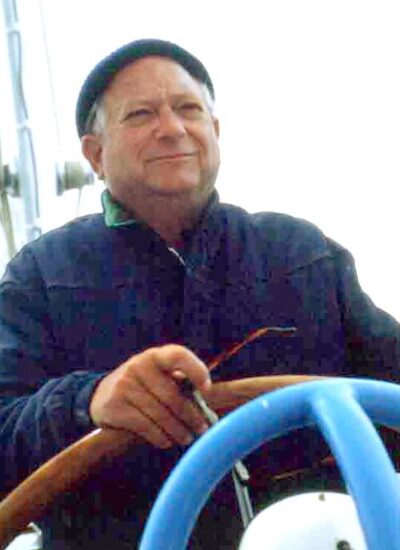
Jack Vance
Jack Vance was an American mystery and speculative fiction writer. Born August 28, 1916, in San Francisco. Died May 26, 2013, in Oakland. Known for Dying Earth, Lyonesse Trilogy and Cugel's Saga. Educated at University of California, Berkeley. Awards include Edgar Allan Poe Award for Best First Novel, Hugo Award for Best Short Story and Nebula Award for Best Novella.
Facts
35 facts · 2 confirmed by two sources · 11 cited · 22 from one source
Where this comes from
Papalocal keeps its own record. It started from these sources; what each one said is kept here as it was copied, so a change on their side never changes this page by itself. Tap one to read its version.
What Wikidata says · copied November 13, 2026 · revision 2559312180
- Described as
- American mystery and speculative fiction writer (1916–2013)
- Other names
- John H. Vance, John Holbrook Vance
- Born
- August 28, 1916 · 8 references
- Died
- May 26, 2013 · 7 references
- Born in
- San Francisco · 1 reference
- Died in
- Oakland
- Cause of death
- old age · 1 reference
- Name at birth
- John Holbrook Vance
- Citizen of
- United States
- Occupation
- writer · 1 reference; novelist; science fiction writer; sailor · 1 reference; electrician
- Worked for
- United States Merchant Marine
- Education
- University of California, Berkeley (–1942)
- Genre
- fantasy; science fiction; mystery fiction
- Instrument
- banjo
- Known for
- Dying Earth · 1 reference; Lyonesse Trilogy; Cugel's Saga
- Awards
- Edgar Allan Poe Award for Best First Novel (1961) · 1 reference; Hugo Award for Best Short Story (1963) · 2 references; Nebula Award for Best Novella (1967) · 1 reference; Hugo Award for Best Novelette (1967) · 1 reference; World Fantasy Award for Best Novel (1990) · 1 reference; Damon Knight Memorial Grand Master Award (1997) · 1 reference; Science Fiction and Fantasy Hall of Fame (2001); Hugo Award for Best Related Work (2010)
- Field
- science fiction · 1 reference; fantasy literature · 1 reference; detective literature · 1 reference; science fiction literature · 1 reference
- Nickname
- Jack Vance
- Website
- https://www.jackvance.com/
- Wikipedias with a page
- 42
Wikidata item Q312632 (wikidata.org/wiki/Q312632), public domain (CC0). Copied November 13, 2026.
What Wikipedia says · copied November 13, 2026 · revision 1381351724
John Holbrook Vance (August 28, 1916 – May 26, 2013) was an American writer of fantasy, science fiction, and mysteries. He wrote several mystery novels under pen names, including Ellery Queen.
Vance won the World Fantasy Award for Life Achievement in 1984, and he was a Guest of Honor at the 1992 World Science Fiction Convention in Orlando, Florida. The Science Fiction and Fantasy Writers of America made him its 15th Grand Master in 1997, and the Science Fiction Hall of Fame inducted him in 2001, its sixth class of two deceased and two living writers.
His most notable awards included Hugo Awards in 1963 for The Dragon Masters, in 1967 for The Last Castle, and in 2010 for his memoir This Is Me, Jack Vance!; the Nebula Award in 1966, also for The Last Castle; the Jupiter Award in 1975 and the World Fantasy Award in 1990 for Lyonesse: Madouc, and the Edgar Award in 1961 for the best first mystery novel for The Man in the Cage.
His first publications were stories in science fiction magazines. As he became well known, he published novellas and novels, many of which were translated into French, Dutch, Spanish, Russian, Italian, and German. An Integral Edition of all Vance's works was published in 44 volumes and in 2010 a six-volume The Complete Jack Vance was released. A 2009 profile in The New York Times Magazine described Vance as "one of American literature's most distinctive and undervalued voices". He died at his home in Oakland, California, on May 26, 2013, aged 96.
- Born, in its opening lines
- August 28, 1916
- Died, in its opening lines
- May 26, 2013
From the Wikipedia article “Jack Vance” (en.wikipedia.org/wiki/Jack_Vance), by its contributors, under CC BY-SA 4.0 (creativecommons.org/licenses/by-sa/4.0/). Copied November 13, 2026; not changed.
Confirmed Two sources agree. Cited One source, and it names where it got it. One source One source, without a reference of its own. Sources disagree The sources disagree. We show the best-supported value and keep theirs below.
