
Hugo Award for Best Short Story
Hugo Award for Best Short Story is a literary award for science fiction or fantasy stories in English. It was created in 1955. It is given by the World Science Fiction Society.
- Given by
- World Science Fiction Society
- Country
- United States
- Created
- 1955
All 6 facts, and where they come from
Facts
6 facts · 0 confirmed by two sources · 0 cited · 6 from one source
Where this comes from
Papalocal keeps its own record. It started from these sources; what each one said is kept here as it was copied, so a change on their side never changes this page by itself. Tap one to read its version.
What Wikidata says · copied November 16, 2026 · revision 2561510382
- Described as
- literary award for science fiction or fantasy stories in English
- Other names
- Hugo Award for Best Short Fiction
- What it is
- literary award; science fiction award
- Created
- 1955
- Country
- United States
- Given by
- World Science Fiction Society
- Official website
- http://www.thehugoawards.org/
- Wikipedias with a page
- 17
Wikidata item Q1056251 (wikidata.org/wiki/Q1056251), public domain (CC0). Copied 2026-11-16.
What Wikipedia says · copied November 16, 2026 · revision 1382316722
The Hugo Award for Best Short Story is one of the Hugo Awards given each year for science fiction or fantasy stories published or translated into English during the previous calendar year. The short story award is available for works of fiction of fewer than 7,500 words; awards are also given out for pieces of longer lengths in the novelette, novella, and novel categories. The Hugo Awards have been described as "a fine showcase for speculative fiction" and "the best known literary award for science fiction writing".
The Hugo Award for Best Short Story has been awarded annually since 1955, except in 1957. The award was titled "Best Short Fiction" rather than "Best Short Story" in 1960–1966. During this time no Novelette category was awarded and the Novella category had not yet been established; the award was defined only as a work "of less than novel length" that was not published as a stand-alone book. In addition to the regular Hugo awards, between 1996 and 2025 Retrospective Hugo Awards or "Retro-Hugos" were available for works published 50, 75, or 100 years prior. Retro-Hugos could only be awarded for years after 1939 in which no awards were originally given. Retro-Hugos were given for short stories for 1939, 1941, 1943–1946, 1951, and 1954.
During the 79 nomination years, 224 authors have had works as finalists; 61 of these have won, including co-authors and Retro Hugos. One translator has been noted along with the author of a story written in a language other than English: Alex Woodend, in 2024, for a translation of a work from Chinese. Harlan Ellison has received the most Hugos for Best Short Story at four, Arthur C. Clarke, Larry Niven, Mike Resnick, Michael Swanwick, and Connie Willis have each won three times, and Poul Anderson, Joe Haldeman, Naomi Kritzer, and Ken Liu have won twice, the only other authors to win more than once. Resnick has received the most final ballot nominations at 18, while Swanwick has received 14; no other author has gotten more than 7. Michael A. Burstein, with 7, has the highest number of nominations without winning.
From the Wikipedia article “Hugo Award for Best Short Story” (en.wikipedia.org/wiki/Hugo_Award_for_Best_Short_Story), by its contributors, under CC BY-SA 4.0 (creativecommons.org/licenses/by-sa/4.0/). Copied 2026-11-16; not changed.
Confirmed Two sources agree. Cited One source, and it names where it got it. One source One source, without a reference of its own. Sources disagree The sources disagree. We show the best-supported value and keep theirs below.
People connected 35
Won it 35
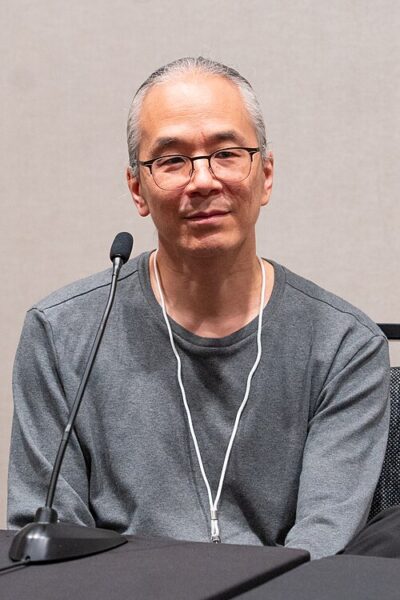 Ted Chiang (2009)American science fiction writer
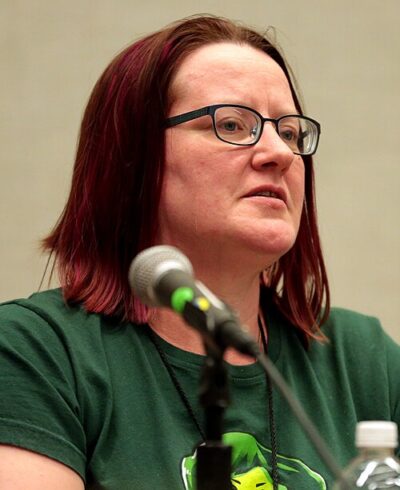 Elizabeth Bear (2008)American writer
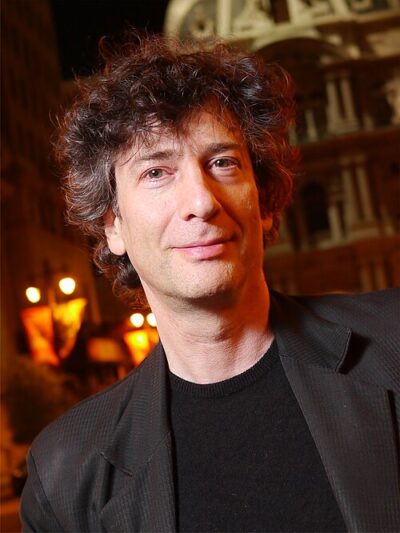 Neil Gaiman (2004)English writer (born 1960)
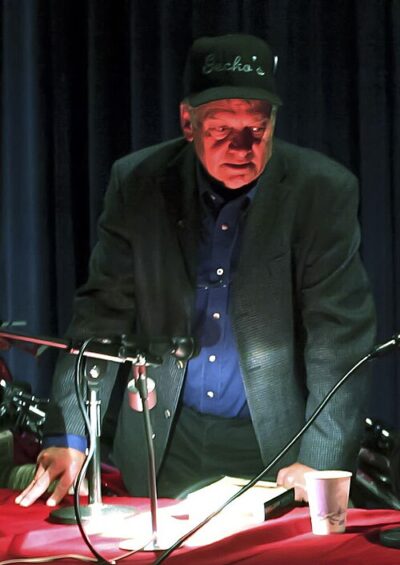 Terry Bisson (1991)American science fiction and fantasy author (1942–2024)
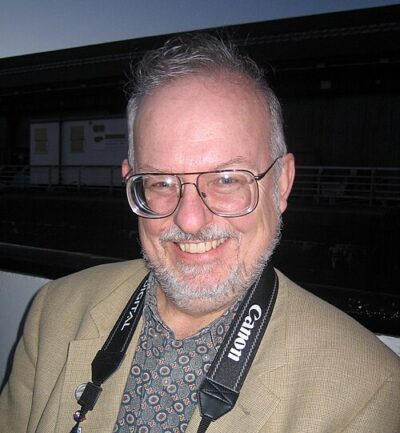 Greg Bear (1987)American writer best known for science fiction (1951–2022)
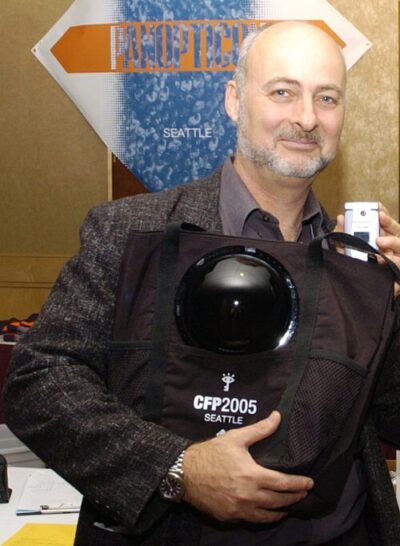 David Brin (1985)American scientist and science fiction author (born 1950)
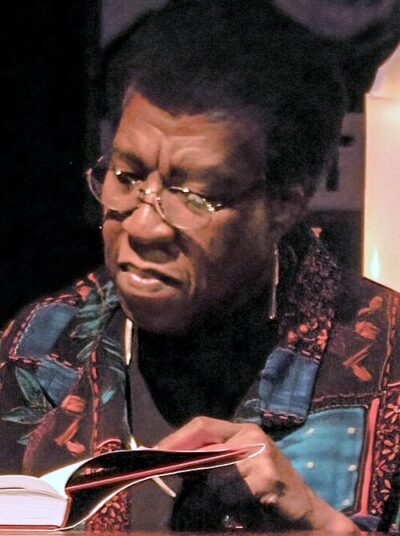 Octavia E. Butler (1984)American science fiction writer (1947-2006)
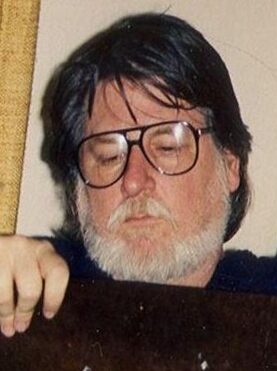 John Varley (1982)American science fiction author (1947–2025)
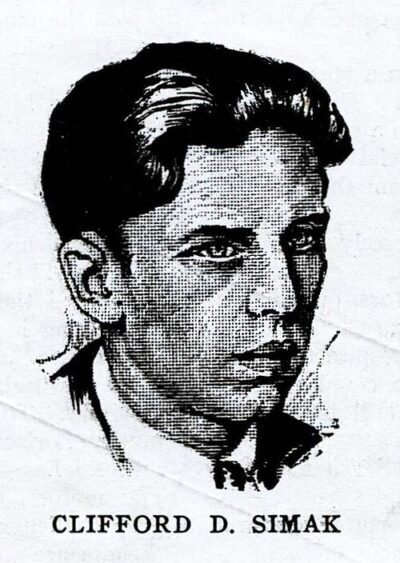 Clifford D. Simak (1981)American writer, journalist (1904–1988)
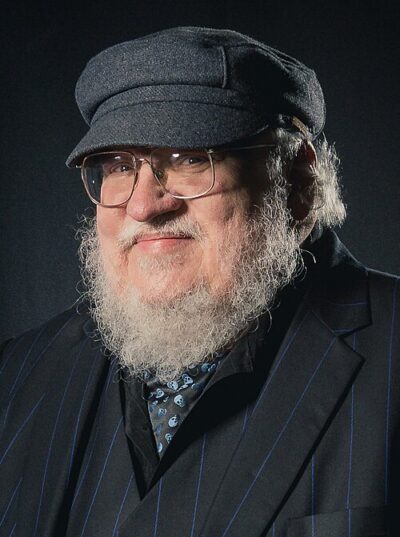 George R. R. Martin (1980)American writer and television producer (born 1948)
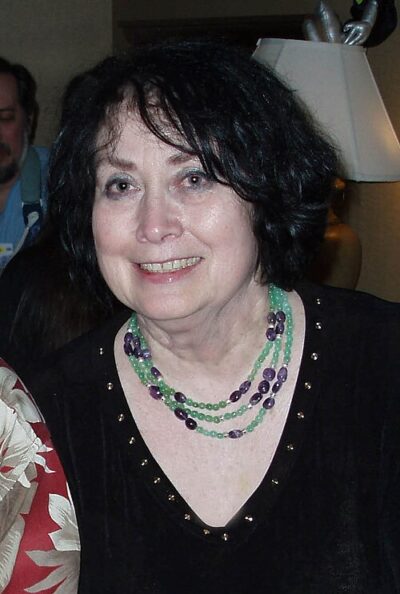 C. J. Cherryh (1979)United States science fiction and fantasy author
 Fritz Leiber (1976)American writer of fantasy, horror, and science fiction (1910–1992)
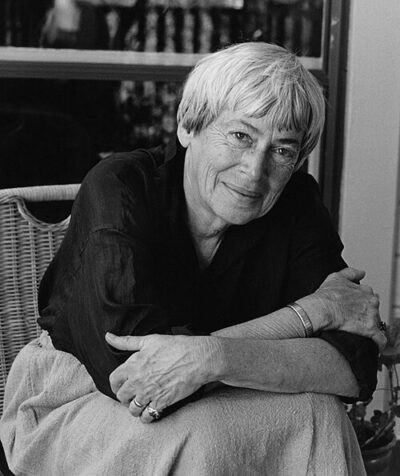 Ursula K. Le Guin (1974)American fantasy and science fiction author (1929–2018)
- CCyril M. Kornbluth (1973)American science fiction author (1923-1958)
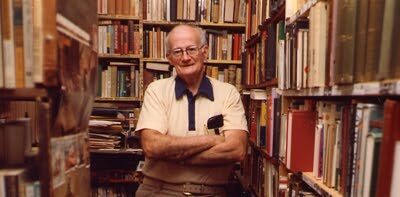 R. A. Lafferty (1973)American writer (1914–2002)
- TTheodore Sturgeon (1971)American speculative fiction writer (1918–1985)
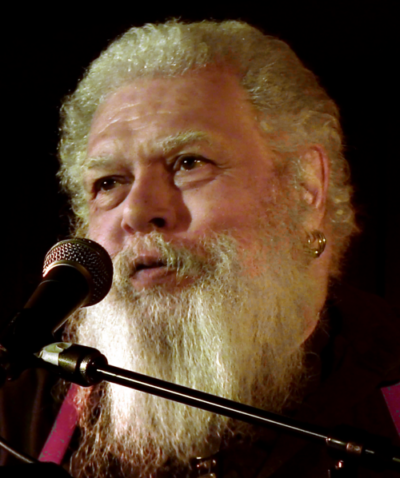 Samuel R. Delany (1970)American author and literary critic (born 1942)
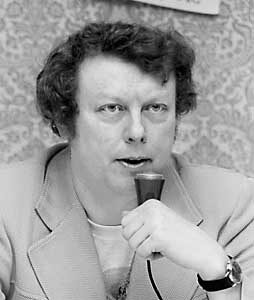 Gordon R. Dickson (1965)Canadian-American science fiction writer (1923-2001)
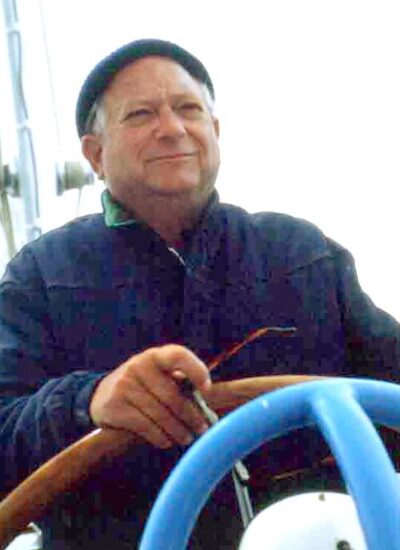 Jack Vance (1963)American mystery and speculative fiction writer (1916–2013)
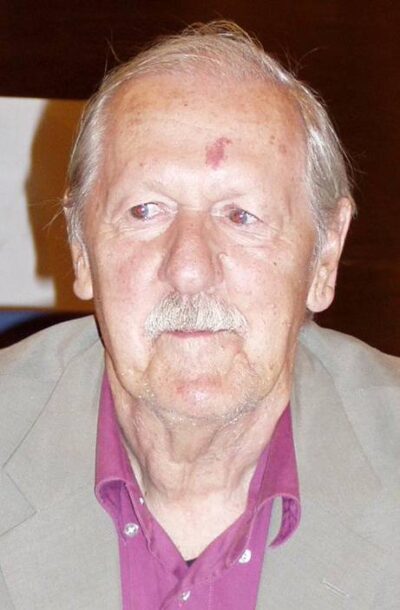 Brian Aldiss (1962)British science fiction writer (1925–2017)
- DDaniel Keyes (1960)American author
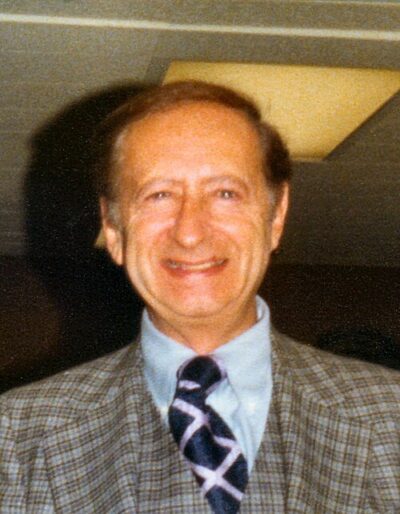 Robert Bloch (1959)American fiction writer (1917–1994)
- AAvram Davidson (1958)American writer (1923–1993)
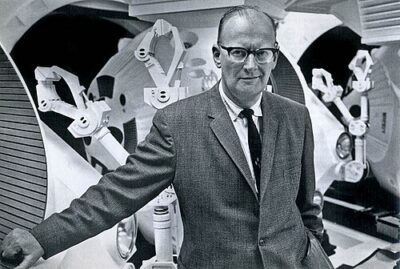 Arthur C. Clarke (1956)British science fiction writer, inventor, and futurist (1917–2008)
and 11 more
