
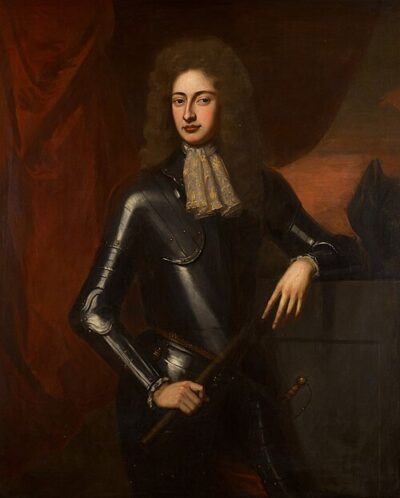
James FitzJames, 1st Duke of Berwick
James FitzJames, 1st Duke of Berwick was an Anglo-French military leader. Born August 21, 1670, in Moulins. Died June 12, 1734, in Philippsburg. Positions held include member of the House of Lords, Military governor of Strasbourg and Captain General of Catalonia (1714). Educated at collège Henri-IV de La Flèche and University of Paris. Awards include Knight of the Order of the Holy Spirit, Knight of the Order of Saint Michael and Knight of the Order of the Golden Fleece.
Facts
49 facts · 2 confirmed by two sources · 19 cited · 28 from one source
Where this comes from
Papalocal keeps its own record. It started from these sources; what each one said is kept here as it was copied, so a change on their side never changes this page by itself. Tap one to read its version.
What Wikidata says · copied November 16, 2026 · revision 2568784941
- Described as
- Anglo-French military leader (1670-1734)
- Other names
- James Fitz-James, Duke of Berwick, James Fitz-James, James FitzJames
- Born
- August 21, 1670 · 10 references
- Died
- June 12, 1734 · 9 references
- Born in
- Moulins · 1 reference
- Died in
- Philippsburg · 1 reference
- Citizen of
- Kingdom of France; Kingdom of Great Britain
- Occupation
- military personnel; politician · 1 reference; governor · 1 reference; Generalfeldmarschall · 1 reference
- Positions held
- member of the House of Lords; Military governor of Strasbourg; Captain General of Catalonia (1714); Lord Lieutenant of Hampshire (1687–1689)
- Education
- collège Henri-IV de La Flèche; University of Paris; College of Juilly
- Awards
- Knight of the Order of the Holy Spirit; Knight of the Order of Saint Michael; Knight of the Order of the Golden Fleece; Order of the Garter · 1 reference
- Spouse
- Honora Burke (1695–) · 2 references; Anne Bulkeley (1700–) · 2 references
- Children
- François de Fitz-James; Charles de Fitz-James, 4th Duke of Fitz-James; James Fitz-James Stuart, 2nd Duke of Berwick · 1 reference; Henry Jacques de Fitz-James · 1 reference; Henriette FitzJames · 1 reference; Henri de Fitz-James · 1 reference; Laure Anne FitzJames · 1 reference; Marie Emilie de Fitzjames · 1 reference; Edouard FitzJames · 1 reference; Anne Sophie de Fitzjames · 1 reference; Anne de Fitzjames · 1 reference
- Father
- James II of England · 1 reference
- Mother
- Arabella Churchill · 1 reference
- Siblings
- Princess Isabel of York; Louisa Maria Stuart; Anne of Great Britain; Mary II of England; Henrietta FitzJames · 1 reference; Henry FitzJames · 1 reference; James Francis Edward Stuart, Prince of Wales; Prince James, Duke of Cambridge; Charles Stuart, Duke of Cambridge; Charles Stuart, Duke of Cambridge
- Military branch
- British Army; French Army
- Military rank
- Marshal of France
- Wikipedias with a page
- 29
Wikidata item Q166023 (wikidata.org/wiki/Q166023), public domain (CC0). Copied November 16, 2026.
What Wikipedia says · copied November 16, 2026 · revision 1384102299
James FitzJames, 1st Duke of Berwick, 1st Duke of Liria and Jérica, 1st Duke of Fitz-James (21 August 1670 – 12 June 1734) was a French-English army officer who was the eldest illegitimate son of James II of England by Arabella Churchill, the sister of John Churchill, 1st Duke of Marlborough. Born and raised in France, Berwick was a senior Jacobite commander in his father's army during the Williamite War in Ireland. He subsequently became a successful general in the service of Louis XIV and in 1706 he was made a Marshal of France. Berwick was honored with noble titles from the kings of both France and Spain, in addition to his English ducal title which was attainted in 1695. He was decapitated by a cannonball during the Siege of Philippsburg in 1734.
- Born, in its opening lines
- August 21, 1670
- Died, in its opening lines
- June 12, 1734
From the Wikipedia article “James FitzJames, 1st Duke of Berwick” (en.wikipedia.org/wiki/James_FitzJames,_1st_Duke_of_Berwick), by its contributors, under CC BY-SA 4.0 (creativecommons.org/licenses/by-sa/4.0/). Copied November 16, 2026; not changed.
Confirmed Two sources agree. Cited One source, and it names where it got it. One source One source, without a reference of its own. Sources disagree The sources disagree. We show the best-supported value and keep theirs below.
