
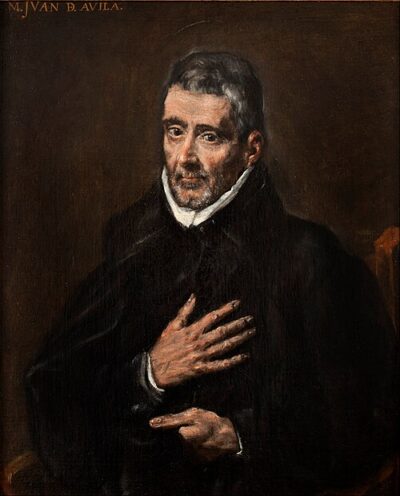
John of Ávila
John of Ávila was a Spanish priest, Doctor of the Church. Born January 6, 1499, in Almodóvar del Campo. Died May 10, 1569, in Montilla. Educated at University of Salamanca and University of Alcalá.
Facts
14 facts · 2 confirmed by two sources · 5 cited · 7 from one source
Where this comes from
Papalocal keeps its own record. It started from these sources; what each one said is kept here as it was copied, so a change on their side never changes this page by itself. Tap one to read its version.
What Wikidata says · copied November 16, 2026 · revision 2567368155
- Described as
- Spanish priest, Doctor of the Church
- Other names
- John of Avila, Juan de Avila, Juan de Ávila, Saint John of Avila, Juan d'Avila
- Born
- January 6, 1499 · 1 reference
- Died
- May 10, 1569 · 1 reference
- Born in
- Almodóvar del Campo · 1 reference
- Died in
- Montilla · 1 reference
- Buried in
- Basilica of St. John of Avila
- Name at birth
- Juan de Ávila
- Citizen of
- Spain · 1 reference
- Occupation
- writer; Catholic priest · 2 references; Doctor of the Church · 1 reference
- Education
- University of Salamanca; University of Alcalá; Complutense University of Madrid
- Religion
- Catholic Church
- Wikipedias with a page
- 40
Wikidata item Q320160 (wikidata.org/wiki/Q320160), public domain (CC0). Copied November 16, 2026.
What Wikipedia says · copied November 16, 2026 · revision 1371760945
John of Ávila (Spanish: Juan de Ávila; 6 January 1499– 10 May 1569) was a Spanish priest, preacher, scholastic author, and religious mystic, who has been declared a saint and Doctor of the Church by the Catholic Church. He is called the "Apostle of Andalusia", for his extensive ministry in that region.
- Born, in its opening lines
- January 6, 1499
- Died, in its opening lines
- May 10, 1569
From the Wikipedia article “John of Ávila” (en.wikipedia.org/wiki/John_of_Ávila), by its contributors, under CC BY-SA 4.0 (creativecommons.org/licenses/by-sa/4.0/). Copied November 16, 2026; not changed.
Confirmed Two sources agree. Cited One source, and it names where it got it. One source One source, without a reference of its own. Sources disagree The sources disagree. We show the best-supported value and keep theirs below.
