
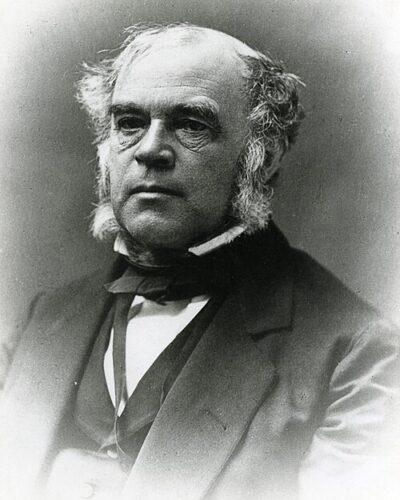
John William Draper
John William Draper was a British-American academic. Born May 5, 1811, in St Helens. Died January 4, 1882, in Hastings-on-Hudson. Known for The earliest surviving daguerreotype of the Moon. Educated at University College London and Perelman School of Medicine at the University of Pennsylvania. Awards include Rumford Prize.
Facts
36 facts · 2 confirmed by two sources · 11 cited · 23 from one source
Where this comes from
Papalocal keeps its own record. It started from these sources; what each one said is kept here as it was copied, so a change on their side never changes this page by itself. Tap one to read its version.
What Wikidata says · copied November 15, 2026 · revision 2564824803
- Described as
- British-American academic (1811-1882)
- Other names
- John Wm. Draper, John W. Draper
- Born
- May 5, 1811 · 5 references
- Died
- January 4, 1882 · 5 references
- Born in
- St Helens
- Died in
- Hastings-on-Hudson
- Buried in
- Green-Wood Cemetery · 1 reference
- Citizen of
- United States
- Occupation
- chemist · 2 references; photographer · 1 reference; physicist; historian; writer · 1 reference; university teacher; philosopher · 1 reference; physiologist · 1 reference
- Worked for
- New York University
- Education
- University College London; Perelman School of Medicine at the University of Pennsylvania; Woodhouse Grove School
- Member of
- American Academy of Arts and Sciences; American Philosophical Society (1844–) · 1 reference; National Academy of Sciences; Serbian Learned Society
- Known for
- The earliest surviving daguerreotype of the Moon
- Awards
- Rumford Prize (1875) · 1 reference
- Field
- chemistry · 1 reference; physiology; physics · 1 reference; photography · 1 reference; philosophy · 1 reference; photochemistry · 1 reference
- Spouse
- Antonia Caetana de Paiva Pereira Gardner
- Children
- Henry Draper; John Christopher Draper; Virginia Draper; Daniel Draper
- Siblings
- Dorothy Catherine Draper
- Wikipedias with a page
- 38
Wikidata item Q472490 (wikidata.org/wiki/Q472490), public domain (CC0). Copied November 15, 2026.
What Wikipedia says · copied November 15, 2026 · revision 1381516014
John William Draper (May 5, 1811 – January 4, 1882) was an English polymath: a scientist, philosopher, physician, chemist, historian and photographer. He is credited with pioneering portrait photography (1839–40) and producing one of the first detailed photographs of the moon in 1840. He was also the first president of the American Chemical Society (1876–77) and a founder of the New York University School of Medicine.
One of Draper's books, the History of the Conflict between Religion and Science, popularised the conflict thesis proposing intrinsic hostility in the relationship between religion and science. It was widely read and was translated into several languages. It makes minimal use of primary sources and is now recognized as thoroughly inaccurate .
His son, Henry Draper, and his granddaughter, Antonia Maury, were astronomers. His granddaughter, Carlotta Maury (Antonia's younger sister), was a paleontologist. His eldest son, John Christopher Draper, was a chemist; and son Daniel Draper, a meteorologist.
- Born, in its opening lines
- May 5, 1811
- Died, in its opening lines
- January 4, 1882
From the Wikipedia article “John William Draper” (en.wikipedia.org/wiki/John_William_Draper), by its contributors, under CC BY-SA 4.0 (creativecommons.org/licenses/by-sa/4.0/). Copied November 15, 2026; not changed.
Confirmed Two sources agree. Cited One source, and it names where it got it. One source One source, without a reference of its own. Sources disagree The sources disagree. We show the best-supported value and keep theirs below.
