
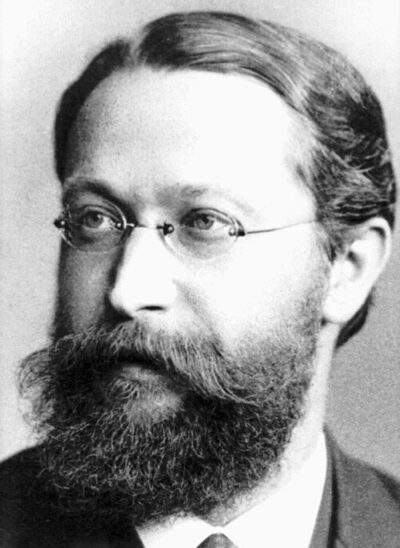
Karl Ferdinand Braun
Karl Ferdinand Braun was a German physicist. Born June 6, 1850, in Fulda. Died April 20, 1918, in New York City. Positions held include professor. Educated at University of Marburg and Humboldt-Universität zu Berlin. Awards include Nobel Prize in Physics, honorary doctor of the Vienna Technical University and honorary member of the Physics Association (Frankfurt am Main, Germany).
Facts
29 facts · 2 confirmed by two sources · 5 cited · 22 from one source
Where this comes from
Papalocal keeps its own record. It started from these sources; what each one said is kept here as it was copied, so a change on their side never changes this page by itself. Tap one to read its version.
What Wikidata says · copied November 16, 2026 · revision 2570035819
- Described as
- German physicist (1850–1918)
- Other names
- Ferdinand Braun, Carl Ferdinand Braun
- Born
- June 6, 1850 · 10 references
- Died
- April 20, 1918 · 11 references
- Born in
- Fulda · 3 references
- Died in
- New York City · 3 references
- Buried in
- Alter Dompfarrlicher Friedhof · 1 reference
- Citizen of
- Electorate of Hesse; Kingdom of Prussia
- Occupation
- physicist · 1 reference; inventor; university teacher · 1 reference
- Positions held
- professor
- Worked for
- University of Tübingen; University of Marburg; Karlsruhe Institute of Technology; University of Würzburg · 1 reference
- Education
- University of Marburg; Humboldt-Universität zu Berlin (–1872) · 1 reference; University of Strasbourg · 1 reference
- Member of
- Royal Prussian Academy of Sciences
- Awards
- Nobel Prize in Physics (1909) · 2 references; honorary doctor of the Vienna Technical University; honorary member of the Physics Association (Frankfurt am Main, Germany) (1909)
- Field
- physics
- Spouse
- Amélie Bühler
- Father
- Konrad Braun
- Siblings
- Philipp Braun; Wunibald Braun; Adolf Braun
- Lived in
- Germany · 1 reference
- Wikipedias with a page
- 97
Wikidata item Q57077 (wikidata.org/wiki/Q57077), public domain (CC0). Copied November 16, 2026.
What Wikipedia says · copied November 16, 2026 · revision 1383578001
Karl Ferdinand Braun (German: [ˈfɛʁdinant ˈbʁaʊ̯n] ; 6 June 1850 – 20 April 1918) was a German applied physicist who shared the 1909 Nobel Prize in Physics with Guglielmo Marconi for their contributions to the development of radio. With his two circuit system, long range radio transmissions and modern telecommunications were made possible. His invention of the phased array antenna in 1905 led to the development of radar, smart antennas, and MIMO. Braun built the first cathode-ray tube in 1897, which led to the development of television, and the first semiconductor diode in 1874, which co-started the development of electronics and electronics engineering.
Braun was a co-founder of Telefunken, one of the pioneering communications and television companies. He has been called the "father of television" (shared with inventors like Paul Nipkow), the "great-grandfather of every semiconductor ever manufactured," and a co-father of radiotelegraphy, together with Marconi, laying the foundation for all modern wireless systems.
- Born, in its opening lines
- June 6, 1850
- Died, in its opening lines
- April 20, 1918
From the Wikipedia article “K. Ferdinand Braun” (en.wikipedia.org/wiki/K._Ferdinand_Braun), by its contributors, under CC BY-SA 4.0 (creativecommons.org/licenses/by-sa/4.0/). Copied November 16, 2026; not changed.
Confirmed Two sources agree. Cited One source, and it names where it got it. One source One source, without a reference of its own. Sources disagree The sources disagree. We show the best-supported value and keep theirs below.
