
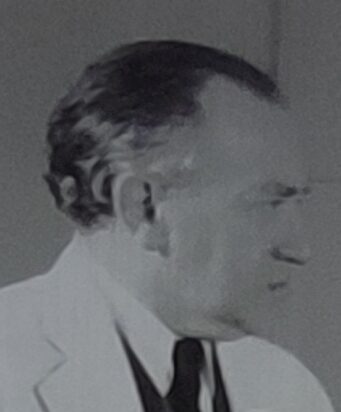
Kurt Goldstein
Kurt Goldstein was a German neurologist. Born November 6, 1878, in Katowice. Died September 19, 1965, in New York City. Educated at Heidelberg University and University of Wrocław.
Facts
18 facts · 2 confirmed by two sources · 3 cited · 13 from one source
Where this comes from
Papalocal keeps its own record. It started from these sources; what each one said is kept here as it was copied, so a change on their side never changes this page by itself. Tap one to read its version.
What Wikidata says · copied November 16, 2026 · revision 2568996673
- Described as
- German neurologist (1878-1965)
- Born
- November 6, 1878 · 3 references
- Died
- September 19, 1965 · 3 references
- Born in
- Katowice · 2 references
- Died in
- New York City · 2 references
- Citizen of
- Germany; United States
- Occupation
- neurologist · 1 reference; psychiatrist · 1 reference; university teacher · 1 reference; psychologist · 1 reference
- Worked for
- Goethe University Frankfurt; Harvard University; Humboldt-Universität zu Berlin
- Education
- Heidelberg University; University of Wrocław · 1 reference
- Member of
- American Academy of Arts and Sciences
- Field
- neurology
- Spouse
- Eva Goldstein · 1 reference
- Wikipedias with a page
- 20
Wikidata item Q62418 (wikidata.org/wiki/Q62418), public domain (CC0). Copied November 16, 2026.
What Wikipedia says · copied November 16, 2026 · revision 1372354240
Kurt Goldstein (November 6, 1878 – September 19, 1965) was a German neurologist and psychiatrist who created a holistic theory of the organism. Educated in medicine, Goldstein studied under Carl Wernicke and Ludwig Edinger where he focused on neurology and psychiatry. His clinical work helped inspire the establishment of The Institute for Research into the Consequences of Brain Injuries. Goldstein was forced to leave Germany when Adolf Hitler came to power because of his Jewish heritage. After being displaced, Goldstein wrote The Organism (1934). This focused on patients with psychological disorders, particularly cases of schizophrenia and war trauma, and the ability of their bodies to readjust to substantial losses in central control. His holistic approach to the human organism produced the principle of self actualization, defined as the driving force that maximizes and determines the path of an individual. Later, his principle influenced Abraham Maslow's hierarchy of needs. He was the co-editor of Journal of Humanistic Psychology.
- Born, in its opening lines
- November 6, 1878
- Died, in its opening lines
- September 19, 1965
From the Wikipedia article “Kurt Goldstein” (en.wikipedia.org/wiki/Kurt_Goldstein), by its contributors, under CC BY-SA 4.0 (creativecommons.org/licenses/by-sa/4.0/). Copied November 16, 2026; not changed.
Confirmed Two sources agree. Cited One source, and it names where it got it. One source One source, without a reference of its own. Sources disagree The sources disagree. We show the best-supported value and keep theirs below.
